
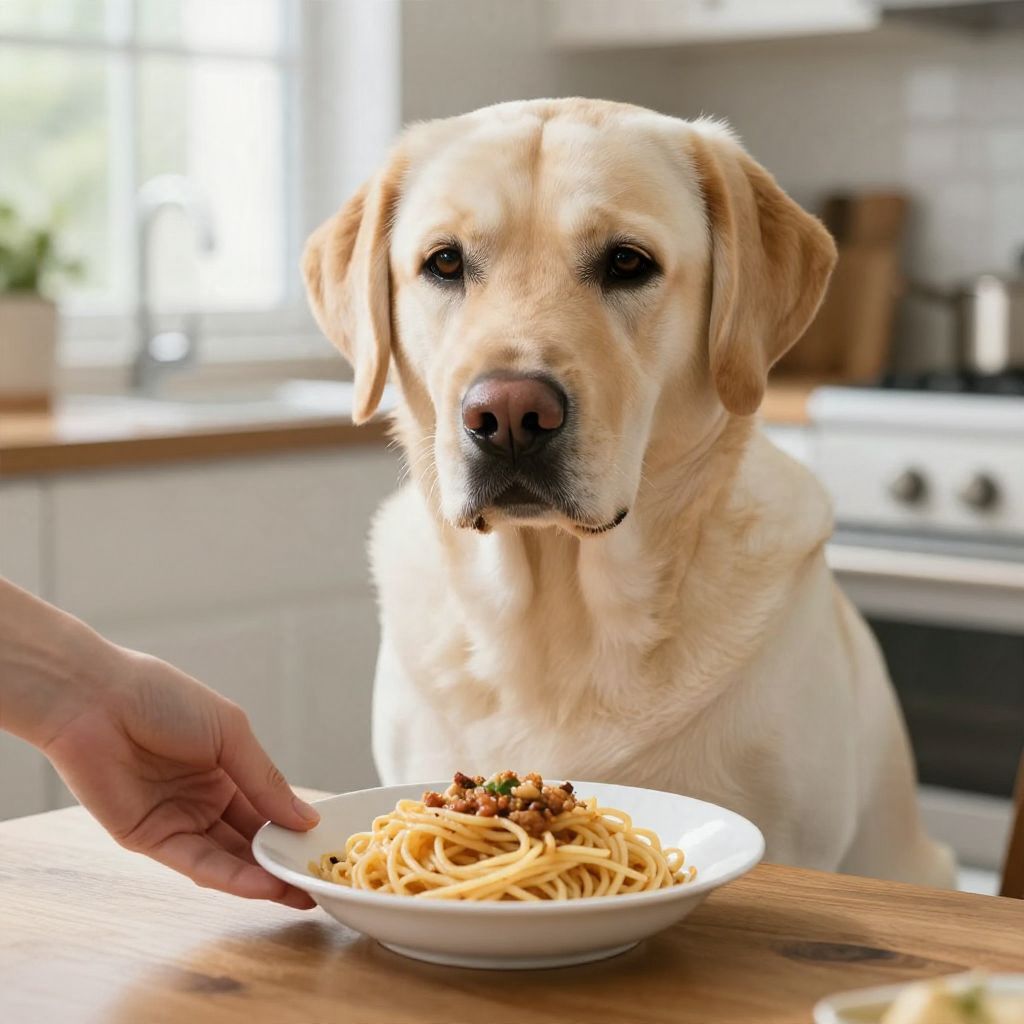
Can dogs have spaghetti? Sometimes, yes—but only in a simple, dog-safe form and in small amounts. Plain cooked pasta is not toxic to most dogs, but many spaghetti dishes contain ingredients that can upset your dog’s stomach or be dangerous.
The main concerns are sauce, seasoning, added fat, and extras like garlic, onion, cheese, or meatballs. If your dog ate spaghetti, what happens next depends on the ingredients, the amount, and your dog’s size and health.
Can Dogs Have Spaghetti?
Plain, fully cooked spaghetti noodles are generally safe for most dogs as an occasional treat, but spaghetti dishes with sauce, garlic, onion, heavy salt, or rich toppings are not. Dogs should only eat plain pasta in very small portions, and it should never replace a balanced dog food diet.
What Makes Spaghetti Safe or Unsafe for Dogs?
Spaghetti by itself is usually just cooked wheat pasta, which is not toxic. The problem is that most human spaghetti meals include ingredients dogs should not eat.
Generally safer
- Plain cooked spaghetti noodles
- Small amounts of plain pasta with no seasoning
- Very simple recipes with dog-safe ingredients, if approved by your veterinarian
Potentially unsafe or risky
- Tomato sauce with garlic or onion
- Spicy sauces or heavy seasoning
- Butter, cream, or lots of cheese
- Meatballs with onion, garlic, or high fat content
- Large portions that can cause stomach upset
Even if the noodles are plain, the rest of the meal may not be. When in doubt, assume the dish is unsafe until you check every ingredient.
Why Spaghetti Sauce Is the Biggest Concern
Many spaghetti sauces contain garlic and onion, including powders and seasonings. These ingredients can damage a dog’s red blood cells and may cause illness even when the pasta itself seems harmless.
Tomato sauce can also be a problem because it is often salty, acidic, and mixed with oil or spices. A small lick may not cause trouble in many dogs, but a full serving of sauced spaghetti is a different situation.
Watch for these hidden ingredients
- Garlic or onion in any form
- Chili flakes, pepper, or spicy seasoning
- High sodium sauces
- Fatty meats or sausage
- Sweeteners or other added flavorings
What If Your Dog Already Ate Spaghetti?
If your dog ate a small amount of plain spaghetti, monitor for mild stomach upset. If the spaghetti had sauce, garlic, onion, or a lot of fat, contact your veterinarian for advice, especially if your dog is small, young, elderly, or has a health condition.
Call your vet promptly if your dog ate:
- Spaghetti with garlic or onion
- A large amount of sauce
- Spicy, greasy, or heavily seasoned pasta
- Meatballs or other rich toppings
- Any pasta plus a known food allergy or sensitive stomach
Seek urgent veterinary care now if you notice:
- Repeated vomiting
- Severe diarrhea or blood in stool
- Weakness, collapse, or trouble breathing
- Swollen belly, pacing, or signs of pain
- Pale gums, extreme lethargy, or refusal to drink
Do not try to make your dog vomit unless a veterinarian specifically tells you to do so. If you are unsure what was in the spaghetti, call your vet or an emergency clinic right away.
How Much Plain Spaghetti Can Dogs Eat?
There is no perfect amount for every dog. Size, age, activity level, and medical history all matter, so treat pasta as an occasional extra, not a regular snack.
For many dogs, a few plain noodles are enough. Large servings can add unnecessary calories and may cause digestive upset, especially in dogs that are prone to weight gain or sensitive stomachs.
Use extra caution if your dog is:
- A puppy with a developing digestive system
- Overweight or on a weight-management plan
- Diabetic or prone to blood sugar issues
- Has pancreatitis or a history of stomach upset
- Has food allergies or a grain sensitivity
If your dog has a special diet or a chronic health condition, ask your veterinarian before offering pasta at all.
Can Dogs Eat Spaghetti With Meatballs?
Usually, not safely. Meatballs often contain onion, garlic, breadcrumbs, cheese, salt, and fat, all of which can be problematic for dogs. Even if the meat itself seems plain, the seasoning and preparation often make meatballs a poor choice.
If a dog steals one meatball, the risk depends on the recipe and the amount eaten. A single plain, unseasoned meatball is different from a heavily seasoned restaurant meatball, but you should still check with your vet if you are unsure.
Signs Your Dog’s Stomach Is Upset After Eating Spaghetti
Some dogs may only have mild, short-lived digestive upset after eating too much pasta. Others may react more strongly, especially if the meal was rich or contained unsafe ingredients.
Mild signs can include:
- Soft stool
- One or two episodes of vomiting
- Mild gas
- Temporary reduced appetite
More serious signs include:
- Repeated vomiting or diarrhea
- Abdominal pain or bloating
- Marked tiredness
- Dehydration
- Any neurologic or breathing changes
If signs last more than a day, worsen, or appear severe at any point, contact a veterinarian. Puppies and small dogs can become dehydrated faster than larger, healthy adults.
How to Safely Offer Pasta as an Occasional Treat
If you want to share a tiny amount of spaghetti, keep it plain and simple. The safest version is fully cooked pasta with no sauce, no seasoning, and no added fats.
- Cook the spaghetti until soft and easy to chew.
- Let it cool completely.
- Serve only a small amount.
- Offer it plain, without sauce or toppings.
- Watch your dog afterward for stomach upset.
It is best to keep treats, including pasta, to a small part of your dog’s daily intake. If you use human food rewards, make sure they do not crowd out a balanced dog food diet.
Better Alternatives to Spaghetti for Dogs
If you want a safe snack, there are usually better choices than pasta. Many dogs do well with simple, dog-appropriate treats that are easier to portion and less likely to cause digestive trouble.
- Plain cooked chicken or turkey, without seasoning
- Small pieces of plain cooked pumpkin
- Dog treats made for your dog’s size and diet
- Small amounts of plain cooked vegetables, if your vet approves
Choose treats based on your dog’s individual needs. A dog with a sensitive stomach, weight concerns, or allergies may need a more specific plan.
Common Mistakes to Avoid
Most problems happen when people assume “a little human food is fine” without checking ingredients. Spaghetti is a good example because the noodles may be harmless, but the dish often is not.
- Giving spaghetti with garlic or onion sauce
- Offering leftovers from a rich restaurant meal
- Feeding large portions as a snack
- Using pasta as a regular treat instead of balanced dog food
- Ignoring vomiting, diarrhea, or pain after eating
If your dog is a curious counter-surfer or scavenger, management matters too. Keep plates out of reach, secure trash, and clean up dropped food quickly.
When to Ask Your Veterinarian
Check with your veterinarian if your dog has eaten spaghetti and you are unsure about the ingredients, especially garlic, onion, or rich sauces. You should also ask for guidance if your dog has a medical condition that affects diet or digestion.
Veterinary advice is especially important for puppies, senior dogs, toy breeds, and dogs with pancreatitis, diabetes, kidney disease, or chronic gastrointestinal issues. These dogs may react more strongly to foods that seem harmless for others.
Bottom Line
Can dogs have spaghetti? Plain cooked noodles are usually okay in very small amounts, but most spaghetti dishes are not dog-safe because of sauce, garlic, onion, salt, fat, and seasonings. Keep it plain, keep portions tiny, and call your vet if your dog ate a questionable version or shows any concerning symptoms.
If you want to learn more about pasta and dogs, you may also find these guides helpful: can dogs eat pasta and can dogs eat spaghetti.