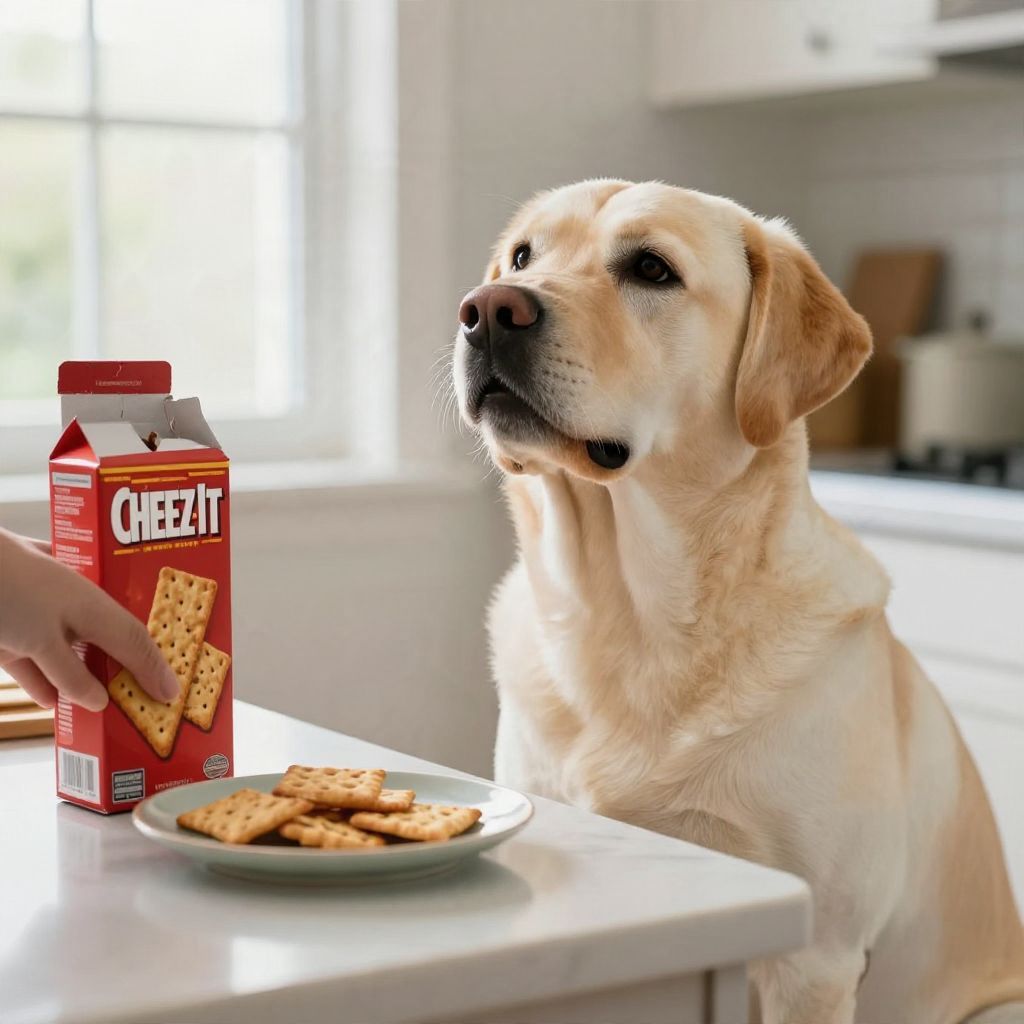
Can dogs eat Cheez Its? In small amounts, a plain Cheez-It is not usually toxic to dogs, but it is not a healthy snack. These crackers are high in salt, fat, and processed ingredients, which can upset your dog’s stomach and add unnecessary calories.
If your dog stole a few, they will often be fine, but larger amounts can be a problem—especially for puppies, small dogs, and dogs with pancreatitis, kidney disease, or weight issues. Watch for vomiting, diarrhea, or unusual thirst.
Can Dogs Eat Cheez Its?
Yes, dogs can usually eat a small amount of Cheez-Its without immediate poisoning, but they should not be a regular treat. The salt, fat, and seasoning can cause digestive upset, and too many can contribute to dehydration, excess calories, or more serious problems in sensitive dogs.
Why Cheez-Its Are Not a Good Dog Snack
Cheez-Its are made for people, not dogs. Even when a food is not toxic, it can still be a poor choice for canine nutrition.
Common concerns with Cheez-Its
- High sodium: Too much salt can make your dog thirsty and may be risky for dogs with certain medical conditions.
- High fat: Fatty snacks can trigger stomach upset and may be a concern for dogs prone to pancreatitis.
- Processed ingredients: Seasonings, flavorings, and additives are not ideal for dogs.
- Extra calories: Frequent snacking can lead to weight gain, especially in less active dogs.
What Happens If a Dog Eats Cheez-Its?
Most dogs that eat a few Cheez-Its will only have mild or no symptoms. If your dog eats a large amount, signs may include vomiting, soft stool, gas, thirst, restlessness, or a reduced appetite. The reaction depends on your dog’s size, age, and health.
Dogs that may be more sensitive
- Puppies: Smaller bodies are more easily affected by salty or rich foods.
- Toy and small breeds: A few crackers can represent a larger share of their daily intake.
- Dogs with pancreatitis history: Fatty snacks can be a poor choice.
- Dogs with kidney, heart, or blood pressure issues: Extra sodium may be especially undesirable.
- Overweight dogs: Frequent treats can make weight control harder.
How Many Cheez-Its Can a Dog Have?
There is no ideal amount because Cheez-Its are not a recommended dog treat. If your dog gets one or two plain crackers by accident, that is usually less concerning than a handful. Treats of any kind should stay a small part of your dog’s daily calories.
A safer way to think about treats
- Use Cheez-Its only as an occasional accidental snack, not a planned treat.
- Keep portions tiny if you choose to offer one.
- Break pieces into smaller bits for training only if your veterinarian says your dog can tolerate them.
- Choose healthier dog treats for routine rewards.
Are Any Types of Cheez-Its Better for Dogs?
Plain versions are less concerning than heavily seasoned or flavored varieties, but they are still not a good dog food. Avoid crackers with spicy seasoning, onion or garlic flavoring, extra cheese coatings, or other added ingredients that may upset your dog’s stomach.
Be especially careful with flavored varieties
- Spicy or zesty versions: May irritate the stomach.
- Onion or garlic seasonings: These ingredients are not appropriate for dogs.
- Very salty snack mixes: Can increase sodium intake quickly.
- Stuffed or coated crackers: Often contain more fat and additives.
What To Do If Your Dog Ate Cheez-Its
If your dog ate a small amount, monitor them and offer fresh water. If they ate a lot, or if the crackers contained unusual seasonings, contact your veterinarian for advice. The amount eaten, your dog’s size, and any existing health problems all matter.
At-home monitoring steps
- Check the package for flavorings or added ingredients.
- Estimate how many crackers were eaten.
- Watch for vomiting, diarrhea, bloating, or unusual lethargy.
- Make sure your dog has access to water.
- Call your vet if your dog has a medical condition or seems unwell.
When Cheez-Its Become an Emergency
Seek urgent veterinary care if your dog has repeated vomiting, severe diarrhea, abdominal pain, a swollen belly, trouble breathing, collapse, tremors, or extreme weakness. These signs are not normal after a snack and need prompt attention.
Call a veterinarian right away if you notice
- Repeated vomiting or inability to keep water down
- Bloody stool or black, tarry stool
- Marked lethargy or weakness
- Distended abdomen or signs of pain
- Unusual thirst or urination after a large salty snack
- Any sudden worsening in a dog with pancreatitis, kidney disease, or heart disease
Healthier Alternatives to Cheez-Its
If you want a crunchy reward, choose dog-safe options that fit your dog’s diet. The best treat is one that is simple, low in salt, and easy to digest.
Better snack ideas for most dogs
- Small pieces of plain cooked chicken
- Plain, cooked pumpkin in tiny amounts
- Dog-specific training treats
- Small pieces of carrot or green bean, if your dog tolerates them
- Vet-approved dental chews
How to choose a safer treat
- Look for low sodium and low fat.
- Keep ingredients simple.
- Match the treat size to your dog’s size.
- Use treats sparingly so they do not replace balanced meals.
Common Mistakes Dog Owners Make
It is easy to assume that a small human snack is harmless. The problem is that repeated “just a little” treats can add up, especially for small dogs or dogs with sensitive stomachs.
- Giving Cheez-Its regularly because they seem harmless
- Using salty crackers as a training staple
- Ignoring flavored varieties with extra seasonings
- Overlooking health conditions that make salty snacks riskier
- Not checking with a vet after a large accidental serving
Bottom Line for Puppies, Adults, and Senior Dogs
Age matters, but the safest answer stays the same: Cheez-Its are not a recommended dog treat. Puppies may have more digestive sensitivity, adult dogs may gain weight from frequent snacks, and senior dogs may be more vulnerable if they have chronic health issues.
If your dog ate a few Cheez-Its, they will probably be okay, but it is best to avoid making them a habit. For routine rewards, choose dog-safe treats and contact your veterinarian if your dog ate a large amount or shows any concerning symptoms. You can also read more about whether dogs can eat Cheez-Its and related snack safety topics like why white chocolate is dangerous for dogs.