
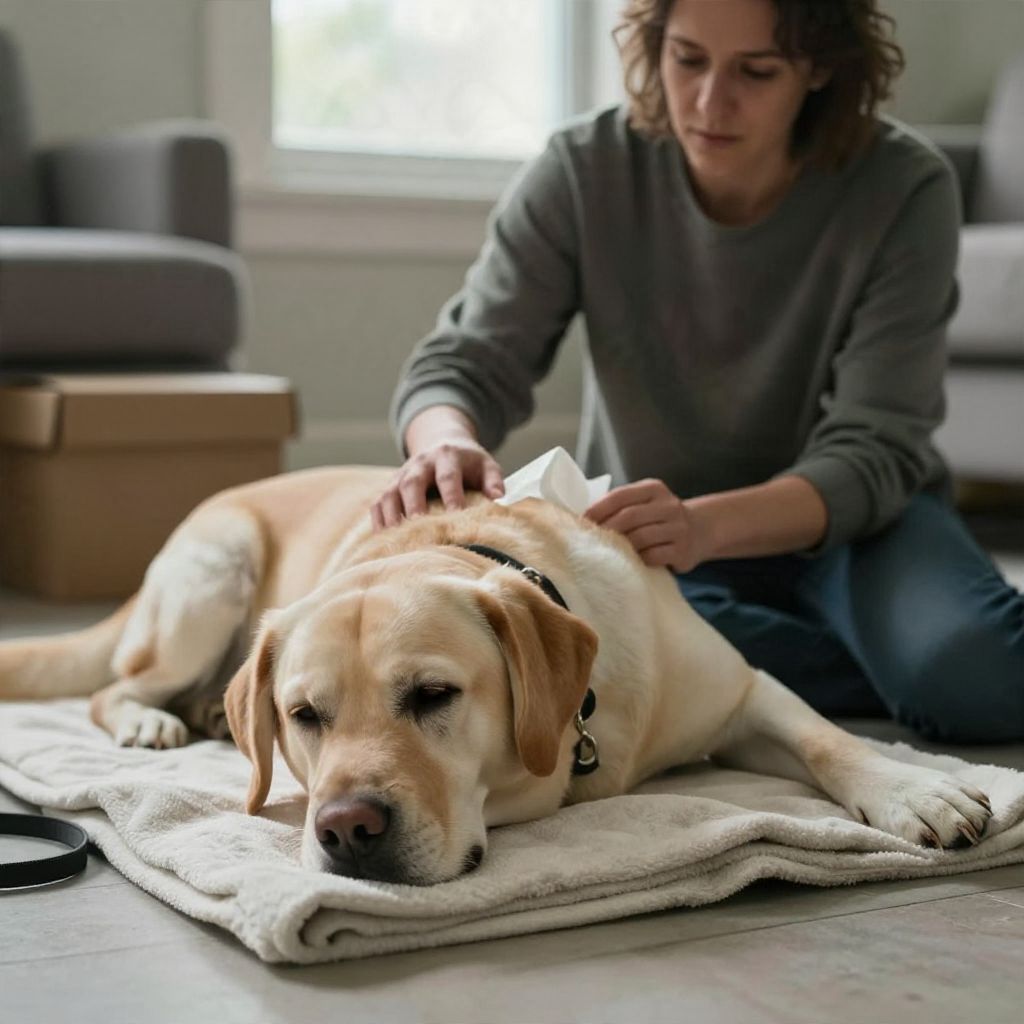
When your dog dies, the first thing to do is confirm that they have truly passed, then contact your veterinarian or an emergency clinic for guidance. If the death was expected, you can focus on aftercare, memorial choices, and support for your family.
If your dog may still be alive but is unresponsive, having trouble breathing, or collapsing, treat it as an emergency and seek urgent veterinary help right away. If death has already occurred, there are still practical steps you can take calmly and respectfully.
What do you do when your dog dies?
When your dog dies, confirm the death if you can, contact a veterinarian for next steps, and arrange safe aftercare such as burial, cremation, or a pet memorial service. Keep other pets away from the body, handle your dog gently, and ask for help if you feel overwhelmed or unsure.
First steps to take right away
It is normal to feel shocked, numb, or unsure what to do next. Focus on simple, practical steps first.
- Check for signs of life only if you are unsure and it is safe to do so.
- If your dog may still be alive, call a veterinarian or emergency clinic immediately.
- If death is confirmed, contact your regular vet for aftercare options.
- Move other pets and children away if needed, and keep the area calm.
- Handle your dog gently with a towel or blanket.
How to tell if your dog has died
If you are uncertain, look for obvious signs such as no breathing, no heartbeat, fixed pupils, and complete unresponsiveness. A dog who is extremely weak, collapsed, or gasping may still be alive and needs urgent veterinary care.
Do not assume death if your dog is cold, limp, or unresponsive. Some medical emergencies can look similar, especially after seizures, poisoning, heatstroke, or severe injury.
What to do if your dog dies at home
If your dog dies at home, keep the body in a cool place while you decide on aftercare. A veterinarian, pet crematory, or local animal services office can often explain your options and any local rules.
Practical aftercare options
- Private cremation if you want your dog’s ashes returned.
- Communal cremation if you do not need ashes back.
- Home burial if local laws allow it and the site is safe.
- Pet cemetery burial if you want a dedicated memorial place.
Each option has different costs, timing, and emotional meaning. Your veterinarian can usually explain what is available in your area.
How to handle your dog’s body respectfully
Use a blanket, towel, or sheet to wrap your dog. If possible, place them on a waterproof surface or in a shallow box while waiting for transport.
- Keep the body cool, especially in warm weather.
- Avoid direct sun, heat, or enclosed hot spaces.
- Do not use harsh chemicals or attempt to preserve the body yourself.
- If you need time before transport, ask your vet how to store the body safely.
If your dog had a contagious illness, your veterinarian may give special instructions for handling and transport.
When to call a veterinarian immediately
Sometimes a dog appears to have died, but urgent care may still be possible. Call a veterinarian or emergency clinic right away if your dog has any of these signs:
- Not breathing or breathing very weakly
- Collapsing or unable to stand
- Severe bleeding
- Blue, gray, or very pale gums
- Repeated seizures
- Possible poisoning
- Heatstroke signs such as heavy panting, weakness, or confusion
- Major trauma, such as being hit by a car or a fall from height
Do not wait to “see what happens” if your dog is still alive and showing emergency signs. Quick action matters.
Should you bury your dog at home?
Home burial can be meaningful, but it is not always allowed. Local laws, property rules, water-table concerns, and public health requirements vary, so check before you decide.
Things to consider before home burial
- Whether burial is legal where you live
- If you own the property or have permission
- How to keep the site away from water sources
- Whether wildlife or other animals could disturb the grave
- Whether you may move homes later and want a permanent memorial elsewhere
If you are unsure, a veterinarian or local pet crematory can help you compare options without pressure.
What to do if your dog dies at the vet clinic
If your dog dies at the clinic, the staff will usually explain the next steps and ask what aftercare you want. You can take time to decide if you need it, but the clinic may have storage limits, so ask about timing.
You can also ask for a paw print, a lock of fur, or a memorial item if the clinic offers one. These small keepsakes can be comforting later.
How to help children and other pets
Children often need simple, honest language. Use words they can understand, and avoid confusing phrases like “went to sleep” if that may make them afraid of bedtime or naps.
Other pets may also notice the loss. Some dogs seem to search for a companion, change their routine, or become quieter for a while. Keep feeding, walks, and household structure as consistent as possible.
Helping surviving pets adjust
- Keep their schedule steady.
- Offer extra calm attention and enrichment.
- Watch for appetite changes, clinginess, or withdrawal.
- See a veterinarian if behavior changes are severe or last a long time.
Common mistakes to avoid
Grief can make practical decisions harder. Try to avoid rushed choices if you can, but do not delay urgent care if your dog may still be alive.
- Assuming your dog has died without checking for signs of life
- Leaving the body in a warm area for too long
- Using unsafe or illegal burial methods
- Letting children or other pets interact with the body unsupervised
- Ignoring your own grief and trying to handle everything alone
What if your dog died unexpectedly?
An unexpected death can feel especially painful because you may have questions about what happened. If you want answers, ask your veterinarian whether a necropsy may be appropriate. This is the animal equivalent of an autopsy and may help explain the cause of death in some cases.
Do not attempt to diagnose the cause yourself. Sudden death can be related to heart disease, internal bleeding, toxins, trauma, or other serious problems that are not obvious from the outside.
How to cope after your dog dies
There is no single “right” way to grieve a dog. Some people want quiet time, while others want to talk, make a memorial, or keep a routine busy.
- Give yourself permission to feel sad, numb, relieved, or all of these.
- Reach out to a friend, family member, or grief support group.
- Make a small memorial if that feels helpful.
- Keep your dog’s collar, tag, photo, or blanket if you want a keepsake.
If your grief feels overwhelming, lasts a long time, or affects daily life, consider speaking with a counselor or grief professional. Losing a dog can be a major loss, and support can help.
Final thoughts
When your dog dies, focus first on confirming what has happened, then on safe aftercare and support for everyone affected. A veterinarian can guide you through the practical steps, while you decide what feels right for your family and your dog’s memory.
If you want more guidance, you may also find these related articles useful: how to know if your dog is dying and where dogs go when they die.