
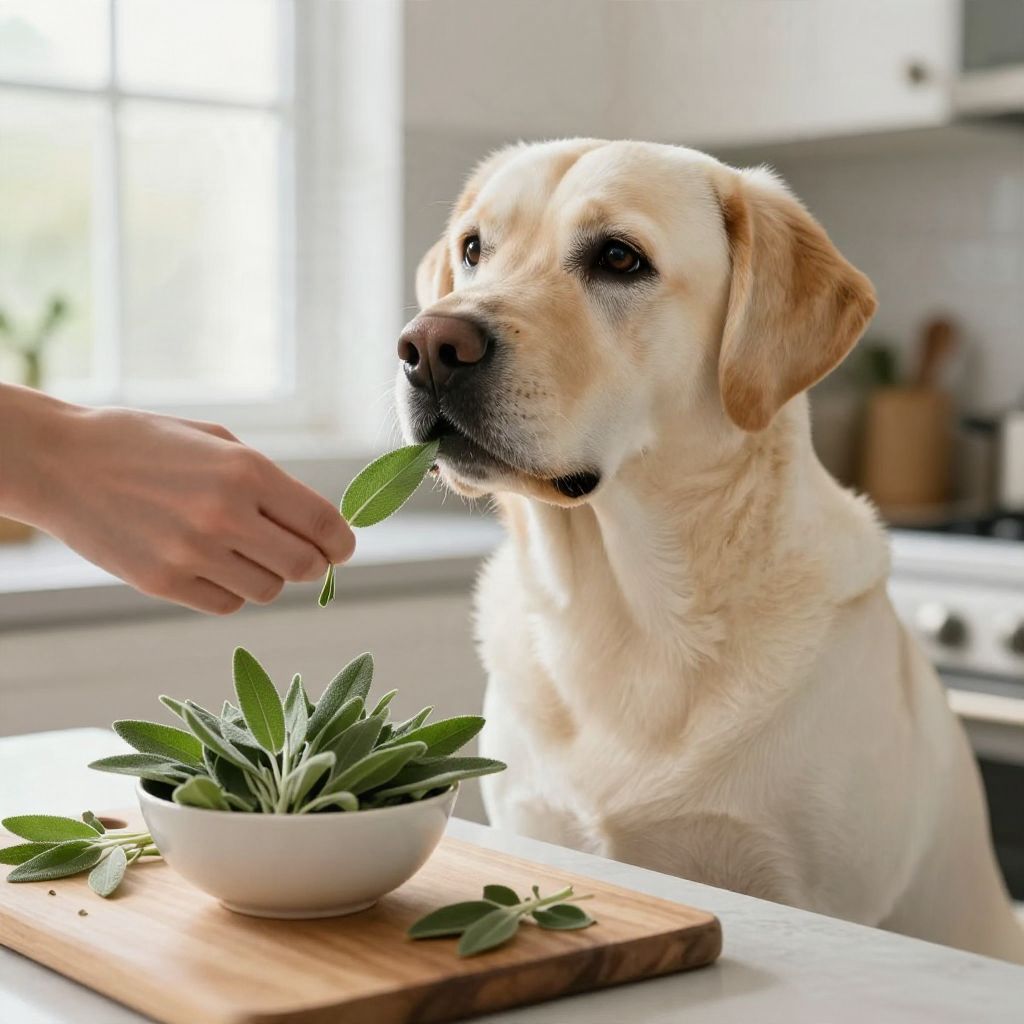
If you’re wondering, “Is sage safe for dogs?” the short answer is yes, plain sage is generally safe in small amounts for most healthy dogs. The main concern is how it’s prepared, how much your dog eats, and whether the herb is mixed with other ingredients that may be harmful.
Fresh or dried culinary sage is usually fine as an occasional flavoring, but concentrated forms, essential oils, and heavily seasoned foods can be risky. If your dog has eaten a large amount or shows vomiting, drooling, wobbliness, or trouble breathing, contact your veterinarian right away.
Is sage safe for dogs?
Yes, plain culinary sage is generally safe for dogs in small amounts. It is not a necessary part of a dog’s diet, but a little fresh or dried sage used in food is usually not a problem for most dogs. The bigger risks are large amounts, essential oils, and recipes that include onion, garlic, butter, salt, or other unsafe ingredients.
What kind of sage are we talking about?
“Sage” can mean several different things, and that matters for safety. The common kitchen herb used in cooking is usually the type dog owners mean, but other forms can be much more concentrated or potentially irritating.
Culinary sage
Fresh or dried culinary sage is the form most likely to be safe in tiny amounts. It may be included in a homemade meal or a treat recipe, but it should stay a minor ingredient rather than a regular supplement.
Sage essential oil
Essential oils are much more concentrated than the herb itself. Sage essential oil should not be given to dogs by mouth, and even topical use can be risky without veterinary guidance because dogs may lick it or absorb too much.
Seasoned foods containing sage
Stuffing, sausage, gravy, roasted meats, and holiday dishes often contain sage along with ingredients that are not dog-safe. In these cases, the problem is often not the herb alone, but the salt, fat, onion, garlic, or other additives.
How much sage is okay for dogs?
There is no universal “safe dose” that fits every dog, and it is best not to treat sage like a supplement. A small sprinkle of dried sage or a little fresh sage in a homemade dog meal is usually enough. Larger amounts can upset the stomach, especially in smaller dogs or dogs with sensitive digestion.
What counts as “small” depends on your dog’s size, age, and health. Toy breeds, puppies, and dogs with pancreatitis, gastrointestinal disease, or food sensitivities may react more easily than a healthy adult dog.
Possible benefits of sage for dogs
Some people like to add herbs for flavor or variety, but sage is not essential for canine health. While it contains plant compounds that are interesting from a nutrition standpoint, dogs do not need sage to stay healthy.
If you want to give your dog variety, focus first on a complete and balanced diet. Herbs should be occasional extras, not a replacement for proper food or veterinary care.
When sage can become a problem
Even safe herbs can cause trouble when the amount is too large or the product is too concentrated. Watch for these common situations:
- Your dog ate a large amount of fresh or dried sage.
- Your dog licked or swallowed sage essential oil.
- Your dog ate stuffing, gravy, or meat seasoned with sage plus onion or garlic.
- Your dog has a sensitive stomach and develops vomiting or diarrhea after eating it.
- Your dog is a puppy, senior, or has an ongoing medical condition.
Signs of mild stomach upset
Small dietary mistakes may lead to mild vomiting, soft stool, reduced appetite, or temporary drooling. These signs can happen with many foods, so they do not prove sage is the only cause.
Red-flag symptoms that need urgent veterinary care
Seek urgent help if your dog has repeated vomiting, severe lethargy, collapse, tremors, trouble walking, trouble breathing, swelling, or a distended abdomen. If your dog may have ingested essential oil or a heavily seasoned food with toxic ingredients, do not wait for symptoms to worsen.
What to do if your dog ate sage
If your dog ate a small amount of plain sage and seems normal, monitoring at home is often reasonable. Offer fresh water and keep an eye on appetite, stool, energy, and vomiting over the next day.
- Check what kind of sage your dog ate.
- Look for added ingredients such as onion, garlic, butter, salt, or xylitol.
- Estimate how much was eaten and whether your dog is small, young, or medically fragile.
- Call your veterinarian if the amount was large or your dog has symptoms.
- Go to an emergency clinic right away for severe symptoms or essential oil exposure.
Do not try to force vomiting unless a veterinarian specifically instructs you to do so. That can make some exposures more dangerous.
Can puppies eat sage?
Puppies can usually have tiny amounts of plain sage, but they are more likely than adult dogs to have stomach upset from new foods. Their smaller size also makes concentrated products more concerning.
For puppies, it is best to keep extras very limited and focus on a consistent, age-appropriate diet. If your puppy ate a seasoned dish or a large amount of herb, ask your veterinarian for advice.
Can senior dogs eat sage?
Older dogs may also tolerate small amounts of sage, but age-related health issues can make them more sensitive to dietary changes. Dogs with kidney disease, liver disease, pancreatitis, or chronic digestive problems may need stricter limits on extras and table food.
If your senior dog has a history of vomiting, diarrhea, or reduced appetite after new foods, keep sage out of the picture unless your veterinarian says otherwise.
How to give sage safely, if you choose to
If you want to use sage as an occasional flavoring, keep it simple and plain. The safest approach is to use a very small amount in a homemade dog meal or treat that contains only dog-safe ingredients.
- Use fresh or dried culinary sage only.
- Skip salt, onion, garlic, butter, and heavy seasoning.
- Keep portions tiny, especially for small dogs.
- Introduce any new food slowly.
- Stop if your dog shows stomach upset or itching.
If you are making homemade food regularly, talk with your veterinarian or a board-certified veterinary nutritionist first. Herbs should not create an unbalanced diet.
Common mistakes to avoid
Most sage-related problems happen because the herb is part of a larger food issue. A few simple mistakes can turn a harmless plant into a veterinary problem.
- Giving sage essential oil by mouth.
- Sharing stuffing, sausage, or gravy without checking ingredients.
- Assuming “natural” means automatically safe for dogs.
- Using herbs to mask an unbalanced homemade diet.
- Ignoring symptoms after a large exposure.
When to call your veterinarian
Call your veterinarian if your dog ate more sage than usual, has a sensitive stomach, or you are unsure what was in the food. You should also call if your dog swallowed an herb blend, seasoning mix, or any product containing essential oils.
Get urgent veterinary care if your dog has severe vomiting, weakness, tremors, breathing changes, collapse, or any sign that suggests a serious reaction. If you can, bring the packaging or a list of ingredients with you.
The bottom line on sage and dogs
Plain culinary sage is generally safe for dogs in very small amounts, but it should only be an occasional extra. Avoid sage essential oil and seasoned human foods, and contact your veterinarian promptly if your dog eats a large amount or develops symptoms.
If you want to compare sage with another common herb, you may also find is basil safe for dogs helpful, and for another food-safety topic, see can dogs eat raw salmon.