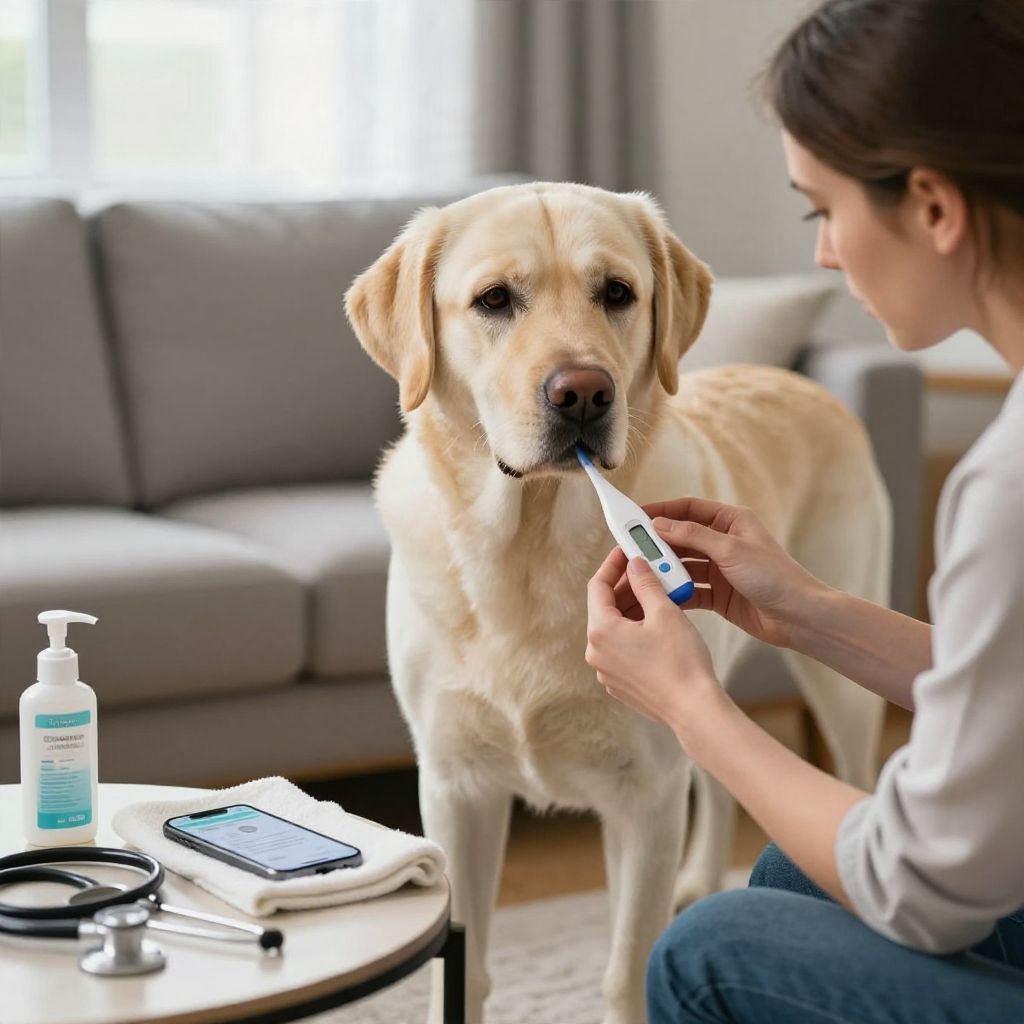
If you’re wondering how to tell if your dog has a fever, the most reliable answer is that you usually can’t confirm it by touch alone. A warm nose, panting, or a dry coat does not prove fever, and some dogs feel hot after exercise or stress.
The safest way to check is with a rectal thermometer made for pets, plus a look at your dog’s overall behavior. If your dog seems unwell, call your veterinarian for guidance, especially if other symptoms are present.
How To Tell If Your Dog Has A Fever
The best way to tell if your dog has a fever is to take a rectal temperature with a digital thermometer. A normal dog temperature is usually about 101 to 102.5°F. If it is higher, or your dog has signs like lethargy, shivering, or not eating, contact your veterinarian.
What counts as a fever in dogs?
Dogs naturally run warmer than people, so a temperature that feels “hot” to you may still be normal for your dog. A fever usually means the body temperature is above the normal range because of illness, inflammation, infection, or another medical problem.
- Normal range: commonly around 101 to 102.5°F
- Possible fever: above the normal range, especially if your dog seems sick
- Emergency concern: very high temperature, collapse, or severe distress
Breed, age, size, and activity level can affect how a dog looks and acts when unwell, but they do not change the need to confirm a fever with a thermometer.
Step-by-step: how to check your dog’s temperature
- Use a digital rectal thermometer made for pets or general use.
- Have someone help you if your dog is wiggly, anxious, or painful.
- Lubricate the tip with a small amount of pet-safe lubricant or plain petroleum jelly.
- Lift the tail gently and insert the thermometer carefully into the rectum.
- Wait for the reading and remove it once the thermometer signals completion.
- Clean the thermometer thoroughly after use.
If your dog resists strongly, seems painful, or has a rectal injury, do not force the check. Call your vet for the safest next step.
Tips to make temperature checks easier
- Keep your voice calm and movements slow.
- Reward cooperation with a treat after the check.
- Practice handling when your dog is healthy so the process is less stressful later.
- Use the same thermometer each time if possible for consistency.
Signs that may suggest your dog has a fever
Fever often comes with other signs of illness. These signs are not proof on their own, but they can help you decide whether to check temperature and call the vet.
- Lethargy or low energy
- Reduced appetite
- Shivering or trembling
- Warm ears or body
- Heavy panting when not hot or excited
- Seeking cool surfaces or hiding
- Vomiting or diarrhea
- Runny nose, coughing, or other infection signs
- Red or glassy eyes
Some dogs hide illness well, while others become noticeably clingy, restless, or withdrawn. Changes from your dog’s usual behavior matter more than a single symptom.
Why touching your dog is not enough
People often try to tell if a dog has a fever by feeling the nose, ears, or belly. That can be misleading because a dog may feel warm after exercise, sleeping in the sun, or being anxious. A cool nose also does not rule out fever.
Body temperature is the most useful measure. If you suspect illness, a thermometer gives you far more reliable information than touch alone.
When a fever needs urgent veterinary care
Some situations should be treated as urgent, not watched at home. A fever can be part of a serious infection, heat illness, poisoning, or inflammatory disease.
- Very high temperature or a temperature that keeps rising
- Collapse, weakness, or trouble standing
- Difficulty breathing or extreme panting
- Seizures
- Repeated vomiting or diarrhea
- Bloated abdomen or obvious abdominal pain
- Bleeding, pale gums, or blue gums
- Known toxin exposure or possible poisoning
- Heatstroke signs such as staggering, collapse, or severe overheating
If you see any of these, seek emergency veterinary care right away. Do not wait to see whether the fever passes.
Common causes of fever in dogs
Fever is a symptom, not a diagnosis. Your veterinarian may look for an infection, inflammation, injury, or another underlying cause.
- Bacterial or viral infections
- Dental disease or abscesses
- Wounds or skin infections
- Ear infections
- Tick-borne disease
- Inflammatory or immune-mediated conditions
- Post-surgical complications
- Heat-related illness
The likely cause can vary with your dog’s age, vaccination status, exposure to ticks, recent travel, and medical history. Puppies, seniors, and dogs with chronic disease may need faster evaluation because they can become dehydrated or weak more quickly.
What you should do if you suspect a fever
If your dog seems unwell, the goal is to gather useful information and contact your vet promptly. You do not need to wait until your dog is severely ill to ask for help.
- Check your dog’s temperature if you can do so safely.
- Note other symptoms, such as vomiting, coughing, or limping.
- Think about recent changes, including travel, new foods, or possible tick exposure.
- Offer fresh water and keep your dog comfortable.
- Call your veterinarian and share the temperature and symptoms.
If your dog is eating, drinking, and acting mostly normal, your vet may recommend monitoring. If your dog seems worse or the temperature is high, your vet may want an exam the same day.
What not to do
When you’re worried about fever, it is easy to reach for quick fixes. Some common home actions can make the situation worse.
- Do not give human fever medicines unless a veterinarian specifically tells you to.
- Do not use ice baths or aggressive cooling unless directed for heatstroke care.
- Do not assume a warm nose means fever, or a cool nose means your dog is fine.
- Do not delay care if your dog has red-flag symptoms.
Human medications can be dangerous for dogs, and the wrong cooling approach can cause stress or complications. When in doubt, call your vet first.
Special considerations for puppies and senior dogs
Puppies can become sick quickly because they have less reserve and may dehydrate faster. If a puppy seems quiet, won’t eat, or feels unwell, contact a veterinarian promptly.
Senior dogs may show subtler signs, such as sleeping more, moving slowly, or seeming “off.” Because older dogs can also have other medical problems, a fever should not be ignored.
Dogs with chronic conditions
If your dog has diabetes, kidney disease, cancer, immune disease, or is taking long-term medication, call your veterinarian sooner rather than later. These dogs may need a tailored plan and closer monitoring.
How to monitor your dog after a fever check
If your vet advises monitoring at home, keep notes on your dog’s temperature, appetite, energy, and bathroom habits. This helps your vet see whether the problem is improving or getting worse.
- Check temperature only as often as your vet recommends.
- Track food and water intake.
- Watch for vomiting, diarrhea, coughing, or worsening lethargy.
- Call back if the fever persists or new symptoms appear.
Even a mild fever can matter if it lasts, returns, or comes with other changes. Ongoing symptoms deserve veterinary follow-up.
Conclusion
To tell if your dog has a fever, don’t rely on touch alone. Use a rectal thermometer if you can do so safely, watch for illness signs, and contact your veterinarian if the temperature is high or your dog seems unwell. If you want a deeper walkthrough, see this guide on how to tell if a dog has a fever.