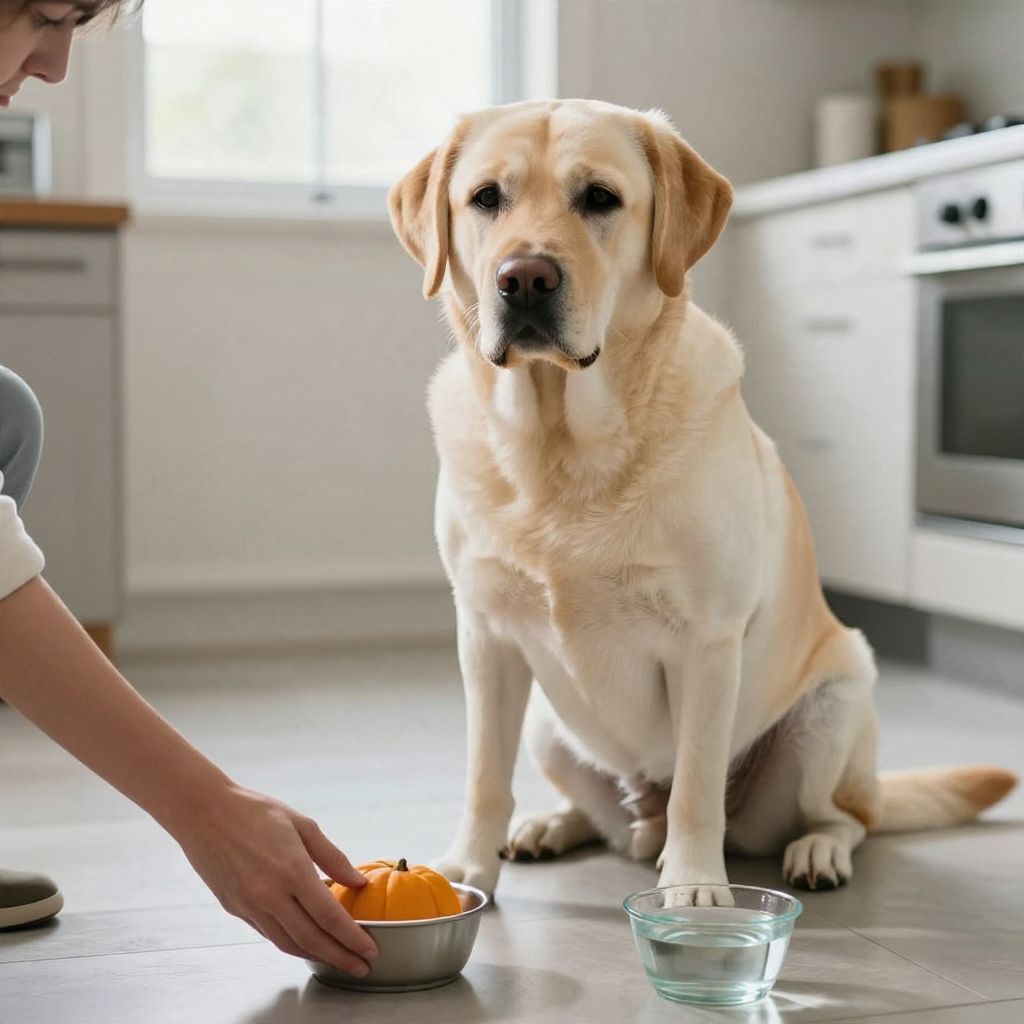
What can you give a dog for constipation? The safest answer depends on the cause, your dog’s age, and how long the problem has lasted. Mild constipation may improve with added water, a little extra fiber, and more movement, but some cases need a veterinarian right away.
Do not give human laxatives, enemas, or oils unless your vet specifically tells you to. Constipation can sometimes signal pain, dehydration, an obstruction, or another medical issue that needs prompt care.
What can you give a dog for constipation?
For mild constipation, you can often help with more water, wet food, pumpkin or another vet-approved fiber source, and gentle exercise. Stop home care and call your vet if your dog strains repeatedly, seems painful, vomits, has a swollen belly, or has not passed stool for more than a day or two.
First, make sure it is really constipation
Dogs that strain may have constipation, but they may also have diarrhea, a urinary problem, anal gland pain, or a blockage. If your dog is trying to poop but only produces small amounts, hard pellets, or nothing at all, constipation is possible.
Pay attention to these clues:
- Dry, hard, or pebble-like stool
- Straining or repeated attempts to defecate
- Less frequent bowel movements than usual
- Discomfort, whining, or a hunched posture
- Loss of appetite or reduced energy
Safe things you can try at home
If your dog is otherwise acting normal and the constipation seems mild, simple supportive care may help. Keep changes gentle and short-term, and watch closely for worsening signs.
1. Encourage more water intake
Hydration matters because dry stool is harder to pass. Offer fresh water in several places, refresh the bowl often, and consider adding water to meals if your dog accepts it.
Some dogs drink more when you use a clean fountain bowl or offer a little low-sodium broth only if it is onion- and garlic-free. If your dog is not drinking, contact your vet.
2. Feed moisture-rich food
Wet or canned food can increase fluid intake through meals. If your dog normally eats dry food, your vet may suggest temporarily mixing in a bit of wet food or warm water to soften the meal.
3. Add a small amount of fiber if your vet agrees
Plain canned pumpkin is a common fiber source for dogs, but it should be used in moderation and only if your vet says it is appropriate for your dog. Fiber can help some dogs, but too much can make constipation worse or upset the stomach.
Other fiber options may be recommended by a veterinarian based on your dog’s needs, especially if your dog has a sensitive digestive system, diabetes, or another health condition.
4. Keep your dog moving
Gentle exercise can stimulate bowel activity. A few calm leash walks may help, but avoid strenuous activity if your dog seems uncomfortable, weak, or bloated.
5. Keep routines calm and predictable
Stress can affect digestion in some dogs. A normal feeding schedule, regular toilet breaks, and a quiet place to rest can support recovery.
What not to give a dog for constipation
Many common human remedies are unsafe or can make the problem worse. Never assume a product that helps people is safe for dogs.
- Human laxatives unless prescribed by a veterinarian
- Enemas, especially those made for people
- Mineral oil or other oils without veterinary direction
- Stool softeners, pain relievers, or supplements not approved by your vet
- Bone-heavy treats or chews if they seem to be contributing to hard stools
Some dogs also become constipated after eating things that are difficult to digest, such as large amounts of bone, fabric, toys, or other foreign material. If you suspect your dog swallowed something, do not try home treatment first.
Common causes of constipation in dogs
Constipation is often linked to diet, hydration, or activity, but the cause can vary. Older dogs may be more prone to constipation because of reduced mobility, pain, or slower digestion, while puppies may have trouble if they are dehydrated or have eaten something inappropriate.
- Not enough water intake
- Low-fiber or overly dry diet
- Not enough exercise
- Stress or changes in routine
- Pain that makes it hard to posture normally
- Swallowed hair, bones, toys, or debris
- Medical problems affecting the colon, pelvis, or nerves
- Medication side effects
Because the cause can differ so much, the best answer to what you can give a dog for constipation is not always the same. What helps one dog may be wrong for another.
When constipation is an emergency
Some signs mean you should contact a veterinarian urgently rather than trying more home care. These red flags can point to obstruction, severe pain, dehydration, or another serious condition.
- Repeated straining with no stool
- Vomiting
- Swollen or painful abdomen
- Blood in the stool or around the anus
- Marked lethargy or weakness
- Refusing food or water
- Signs of dehydration, such as sticky gums or sunken eyes
- Suspected foreign body ingestion
- Constipation lasting more than 24 to 48 hours, especially in a puppy, senior dog, or dog with health problems
If your dog cannot pass stool and seems distressed, do not wait for the issue to “work itself out.”
What your veterinarian may recommend
If home support is not enough, your vet may examine your dog to find the reason for the constipation. They may recommend a physical exam, abdominal imaging, fluids, stool evaluation, or other tests depending on the situation.
Treatment can vary widely. Your vet might suggest a prescription diet, a stool softener, a laxative, fluid therapy, or treatment for an underlying problem such as pain, dehydration, or an obstruction.
Never start a medication on your own just because another dog improved on it. Dose, safety, and suitability depend on your dog’s size, age, and medical history.
How to help prevent constipation from coming back
Once your dog is comfortable again, prevention is usually about consistency. Small daily habits often matter more than one-time fixes.
- Keep fresh water available at all times.
- Feed a balanced diet that matches your dog’s age and health needs.
- Avoid too many bone-heavy treats or chews if they cause hard stools.
- Provide regular exercise appropriate for your dog’s fitness level.
- Maintain a routine for meals and bathroom breaks.
- Watch for recurring straining, especially in older dogs.
If your dog has chronic constipation, your vet may want to look for an ongoing issue rather than treating each episode separately. Recurrent constipation is not something to ignore.
Special considerations for puppies and senior dogs
Puppies can dehydrate quickly and may also have a blockage after swallowing toys, bedding, or other objects. If a puppy is straining, vomiting, or not eating, call a vet promptly.
Senior dogs may have arthritis, spinal problems, dehydration, or slower gut movement. If your older dog seems constipated more than once, it is worth a veterinary check rather than repeated home treatment.
Simple decision guide
If you are unsure what to give a dog for constipation, use this quick rule: mild, one-time constipation with no other symptoms may respond to water, wet food, gentle fiber, and exercise; anything more severe, painful, or persistent needs veterinary advice.
- Try home support only if your dog is bright, comfortable, and mildly affected.
- Call your vet soon if constipation keeps returning.
- Seek urgent care for vomiting, bloating, severe straining, or suspected obstruction.
In short, the safest things you can give a dog for constipation are usually water, moisture-rich food, and sometimes a vet-approved fiber source, but only for mild cases. If your dog is painful, vomiting, bloated, or not improving quickly, contact your veterinarian right away.
If you are also dealing with digestive upset, you may find these related guides useful: what to give a dog with an upset stomach and what to give dog for upset stomach.