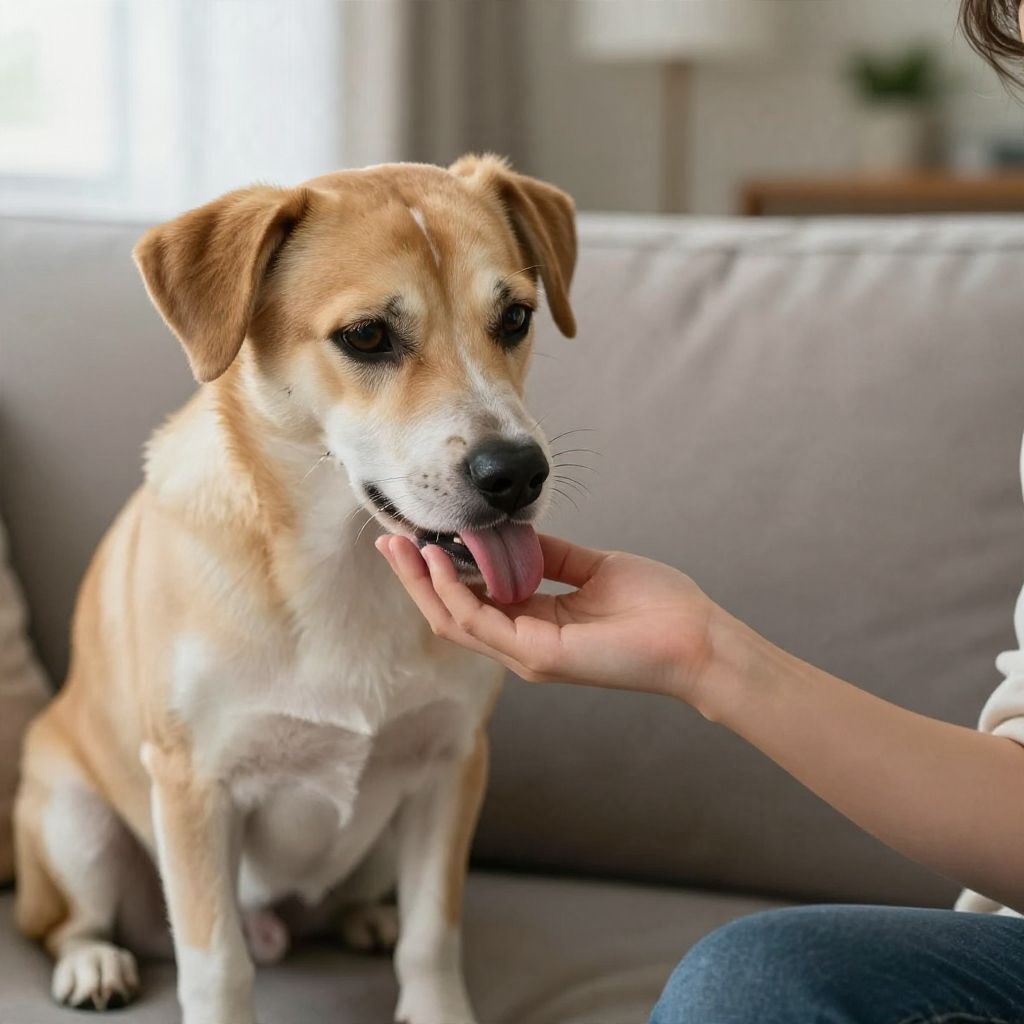
If you’re wondering, “Why does my dog lick my hands?” the short answer is that licking is usually a normal dog behavior. Dogs lick to show affection, seek attention, explore your scent, soothe themselves, or because your skin tastes salty.
Most of the time, hand licking is harmless. But if it becomes sudden, obsessive, or comes with other symptoms, it can point to stress, boredom, nausea, skin irritation, or another health issue that deserves a closer look.
Why does my dog lick my hands?
Most dogs lick hands because it feels rewarding, helps them gather information about you, or gets a reaction from you. It can also be a calming habit, an attention-seeking behavior, or a sign of discomfort if the licking is new, intense, or hard to interrupt.
Common reasons dogs lick your hands
Affection and social bonding
Licking is one way many dogs interact with people they trust. Your dog may be trying to greet you, bond with you, or reinforce a familiar social routine.
Some dogs are naturally more “licky” than others, but individual personality and early experiences matter more than breed alone.
Your hands smell or taste interesting
Hands often carry traces of food, lotion, sweat, soap, or outdoor scents. Dogs have a strong sense of smell, so even tiny residues can be interesting to them.
Salt on your skin can also make your hands appealing, especially after exercise, cooking, or warm weather.
Attention-seeking
If licking reliably makes you pet, talk to, or laugh at your dog, your dog may repeat it because it works. Even negative attention can reinforce the habit if it gets a strong response.
This is common in dogs that have learned that licking gets them noticed.
Calming or self-soothing behavior
Some dogs lick when they feel uncertain, overexcited, or mildly stressed. The behavior can help them settle, much like pacing or chewing can for other dogs.
If the licking happens during visitors, loud noises, car rides, or changes in routine, stress may be part of the picture.
Boredom or lack of enrichment
A dog with too little mental and physical activity may develop repetitive behaviors, including hand licking. This is more likely if your dog also seeks constant attention, chews objects, or has trouble settling.
Daily walks, training, sniffing games, and chew-safe enrichment can help redirect that energy.
Learned habit
Sometimes hand licking starts for one reason and becomes a habit. Once repeated many times, it can continue even after the original trigger is gone.
Habitual licking is often easiest to change when you intervene early and consistently.
When hand licking may signal a problem
Occasional licking is usually normal, but a sudden change in behavior deserves attention. Contact your veterinarian if the licking is new, intense, or paired with other symptoms.
- Digestive upset: nausea, drooling, lip licking, vomiting, or refusing food
- Stress or anxiety: restlessness, panting, whining, hiding, or clinginess
- Pain or discomfort: stiffness, sensitivity to touch, limping, or changes in posture
- Skin irritation or allergies: itching, redness, ear problems, or paw licking alongside the hand licking
- Cognitive changes in older dogs: confusion, disrupted sleep, or repetitive behaviors that are new
Seek urgent veterinary care if your dog is vomiting repeatedly, has trouble breathing, collapses, seems disoriented, has facial swelling, or you suspect toxin exposure or injury.
How to tell normal licking from a behavior problem
Normal licking is usually brief, easy to interrupt, and tied to a clear moment such as greeting you or seeking attention. Problem licking tends to be repetitive, difficult to stop, and more intense than usual.
Ask yourself these questions
- Did the licking start suddenly?
- Does it happen at specific times, such as when your dog is anxious or bored?
- Is your dog also licking paws, objects, or the air?
- Is your dog showing other changes in appetite, energy, or mood?
- Does the licking seem compulsive or hard to redirect?
If you answer yes to several of these, a veterinary exam is a good idea.
What to do if your dog keeps licking your hands
The goal is not to punish licking. Instead, teach your dog what to do instead and make the new behavior more rewarding.
- Stay calm and reduce reinforcement. If licking is attention-seeking, avoid laughing, pushing your dog away dramatically, or giving a big reaction.
- Redirect to an alternative behavior. Ask for a sit, down, or touch cue, then reward that behavior with praise or a treat.
- Offer a legal chew or enrichment toy. A food puzzle, lick mat, or safe chew can satisfy oral needs in a more appropriate way.
- Increase exercise and mental activity. More sniffing walks, training games, and enrichment can reduce repetitive licking caused by boredom.
- Wash off food or scented products. If lotions, food residue, or sweat seem to trigger licking, rinse your hands and see whether the behavior decreases.
- Reward calm behavior. Notice and reinforce quiet, settled moments so your dog learns that calmness pays off.
What not to do
Some common responses can make the behavior worse or damage trust.
- Do not punish, shout at, or physically correct your dog for licking.
- Do not use dominance-based methods or intimidation.
- Do not assume all licking is “just a habit” if it appears suddenly or becomes excessive.
- Do not ignore other symptoms like vomiting, itching, or anxiety.
Age, temperament, and individual differences
Puppies often lick more because they are exploring and learning social cues. Adult dogs may lick for attention, routine, or comfort. Senior dogs can develop new repetitive behaviors if they are uncomfortable, anxious, or experiencing cognitive changes.
Some dogs are naturally more mouthy or socially expressive, while others rarely lick at all. Training history, daily routine, and health status all influence how often the behavior appears.
When to call a veterinarian or trainer
Call your veterinarian if the licking is new, persistent, or accompanied by other physical symptoms. A vet can help rule out nausea, pain, skin problems, or other medical causes.
If the behavior seems rooted in anxiety, overexcitement, or habit, a qualified reward-based trainer or veterinary behaviorist can help you build a practical plan. This is especially useful if your dog also shows separation distress, reactivity, or compulsive behaviors.
How to prevent hand licking from becoming a habit
Prevention is easier than changing a long-standing habit. Consistency matters more than perfection.
- Keep your hands clean of food residue when possible.
- Teach and reinforce a polite greeting behavior, such as sitting for attention.
- Give your dog regular exercise and enrichment.
- Reward calm, settled behavior throughout the day.
- Address stressors early, especially during routine changes or household disruption.
Conclusion
If you’re asking, “Why does my dog lick my hands?” the answer is usually affection, scent, attention, or self-soothing. Watch for changes in frequency, intensity, or accompanying symptoms, and contact your veterinarian if the licking seems sudden, compulsive, or tied to illness.
If you want to understand related licking patterns, you may also find it helpful to read why your dog is licking you so much and why dogs lick their paws.