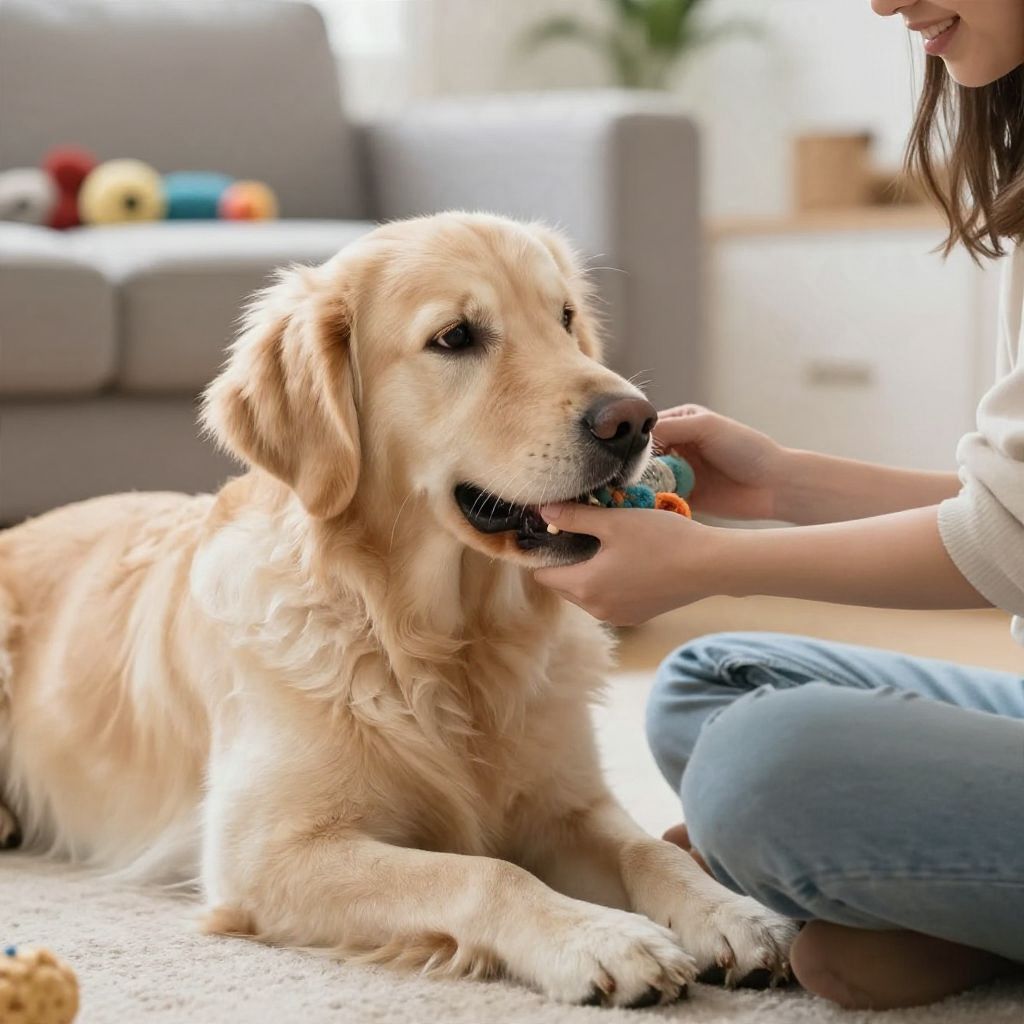
If you’re wondering, “Why does my dog nibble on me?” you’re not alone. Gentle nibbling can be normal, affectionate, or playful, but it can also signal overstimulation, herding instincts, teething, or a medical issue if it’s new or intense.
The key is to look at the context: when it happens, how hard your dog nibbles, and whether your dog seems relaxed, excited, or uncomfortable. That will help you decide whether to redirect the behavior, adjust routines, or call a veterinarian.
Why does my dog nibble on me?
Most dogs nibble on people as a form of communication, play, grooming, or attention-seeking. Puppies often use their mouths during teething and learning, while adult dogs may nibble when excited, herding, anxious, or trying to get you to interact. If the behavior is sudden, painful, or obsessive, check for a health or stress-related cause.
Common reasons dogs nibble
1. Affection or social grooming
Some dogs use soft nibbling the way they would groom another dog. If your dog is relaxed, leaning in, and using very gentle pressure, the nibble may be a social behavior rather than a problem.
This is more likely if your dog also seeks petting, follows you around calmly, or settles quickly afterward.
2. Play and excitement
Many dogs nibble during play because their mouths are part of how they explore and interact. This is especially common in puppies and younger dogs, but any dog can do it when aroused or overstimulated.
Play nibbling often shows up during roughhousing, tug, or when you return home and your dog is very excited.
3. Teething in puppies
Puppies often nibble because their gums are sore and chewing helps relieve discomfort. They also have not yet learned bite inhibition, so even “gentle” puppy mouths can feel sharp.
Teething-related nibbling usually improves with age, consistent redirection, and plenty of appropriate chew toys.
4. Herding or instinctive mouth use
Some dogs have a stronger tendency to use their mouths to guide movement, especially if they were bred for herding or similar work. That does not mean every dog of a certain breed will nibble, but some individuals are more likely to use soft nipping or mouthing when excited.
These dogs may nibble at ankles, hands, sleeves, or moving children when they want to “manage” motion.
5. Attention-seeking
If nibbling reliably gets a reaction from you, your dog may repeat it. Even scolding, pushing away, or laughing can reward the behavior if your dog enjoys the interaction.
In these cases, the nibble is often less about affection and more about learning what gets your attention fastest.
6. Stress, frustration, or overstimulation
Some dogs nibble when they are conflicted, anxious, or overwhelmed. This can happen during grooming, handling, petting, or noisy household activity.
Watch for other signs such as lip licking, yawning, stiff body posture, whale eye, avoidance, or sudden withdrawal. Those signals suggest your dog may need more space, not more contact.
7. Itching, pain, or medical discomfort
If your dog suddenly starts nibbling you or seems to mouth more than usual, discomfort may be part of the picture. Skin irritation, dental pain, joint discomfort, or other medical issues can change behavior.
Because you cannot tell the cause from behavior alone, a veterinary exam is important if the change is new, persistent, or paired with other symptoms.
How to tell playful nibbling from a problem
Context matters more than the nibble itself. A relaxed dog with a loose body and soft eyes is very different from a tense dog that cannot settle or seems irritated.
- Likely harmless: soft pressure, loose body language, brief interaction, easy to redirect.
- May need training: repeated nibbling for attention, nipping during excitement, grabbing at hands or clothes.
- Needs veterinary attention: sudden change, pain, skin redness, swelling, obsessive mouthing, or signs of illness.
What to do when your dog nibbles on you
1. Stay calm and avoid rewarding the nibble
Try not to yank away dramatically, yell, or wrestle with your dog. Big reactions can make the behavior more exciting or confusing.
Instead, go still, quietly remove attention, and wait for calm behavior before re-engaging.
2. Redirect to an appropriate chew or toy
Offer a chew toy, stuffed food puzzle, or tug toy if your dog likes mouth-based play. This gives your dog a legal outlet for oral behavior without using your skin or clothing.
For puppies, rotation of safe chew options can help reduce teething-related mouthing.
3. Reward gentle behavior
Use praise, treats, or play when your dog is calm, keeping all rewards tied to the behavior you want. If your dog approaches without nibbling, reinforce that choice.
Positive reinforcement helps your dog learn that keeping teeth off people works better than nibbling.
4. End interaction if the nibbling continues
If your dog keeps nibbling, calmly stand up, step away, or briefly leave the room. This teaches that the fun stops when teeth touch skin.
Keep the pause short and consistent so your dog can succeed next time.
5. Manage the situation before it starts
Prevention is often easier than correction. If your dog nibbles when excited, plan for calmer greetings, shorter play bursts, and more structured routines.
- Use a leash for greeting practice if needed.
- Give your dog a chew before high-energy moments.
- Provide daily exercise and mental enrichment.
- Teach an alternative behavior such as “sit” or “touch.”
Training tips that actually help
Training works best when it is consistent, brief, and reward-based. You are teaching your dog what to do instead of nibbling, not just trying to stop the behavior.
- Choose one replacement behavior, such as sitting for attention.
- Practice when your dog is calm, not only during problem moments.
- Reward the replacement behavior immediately.
- Reduce opportunities to rehearse nibbling.
- Ask everyone in the home to respond the same way.
If your dog nibbles during play, teach a clear pause cue. When teeth touch skin, stop the game for a few seconds, then restart only if your dog is calm and using the toy appropriately.
When nibbling may be age-related
Puppies
Puppy nibbling is common and often temporary, but it still needs guidance. Puppies learn bite control through repeated, calm feedback and lots of appropriate chewing opportunities.
Because puppies are also learning social rules, be patient and avoid rough play that encourages mouthy behavior.
Adult dogs
Adult dogs that nibble usually do so for a reason: habit, excitement, stress, or unmet needs. If an adult dog starts nibbling more often, look for changes in routine, exercise, sleep, handling, or health.
Adult dogs can absolutely learn new habits, but the fix may require more structure than puppy management alone.
Senior dogs
In older dogs, new nibbling can sometimes reflect discomfort, confusion, or reduced tolerance for handling. Arthritis, dental disease, or sensory changes may make a senior dog less patient than before.
If your older dog’s behavior changes, schedule a veterinary visit rather than assuming it is “just age.”
Health and safety red flags
Most nibbling is not an emergency, but some signs mean your dog should be seen by a veterinarian soon, and some need urgent care.
- See a veterinarian soon: sudden new nibbling, persistent mouthing, bad breath, drooling, facial pawing, skin irritation, limping, weight loss, or changes in appetite or energy.
- Seek urgent care: severe pain, swelling, trouble breathing, collapse, bleeding, a bite wound, or signs your dog may have ingested something toxic.
If your dog’s nibbling is tied to fear, aggression, or escalating arousal, a certified trainer or veterinary behaviorist can help create a safer plan. Do not try to force the issue if your dog is tense or reactive.
Common mistakes to avoid
- Using punishment, intimidation, or physical corrections.
- Encouraging mouthy play with hands or rough wrestling.
- Inconsistently allowing nibbling “sometimes.”
- Ignoring signs of pain, stress, or overstimulation.
- Expecting the behavior to stop without giving your dog an alternative.
Dogs learn best when the rules are clear and the desired behavior is easy to repeat. If nibbling has become a habit, consistency matters more than force.
How to reduce nibbling long term
Long-term improvement usually comes from meeting your dog’s needs and teaching better habits at the same time. A dog who is tired, mentally engaged, and well-trained is less likely to use their mouth on people.
- Provide daily physical exercise suited to your dog’s age and health.
- Use enrichment such as sniffing games, puzzle feeders, and training sessions.
- Protect sleep and quiet time, especially for puppies.
- Practice handling and calm greetings gradually.
- Address pain, itchiness, or dental issues with your veterinarian.
Bottom line
Why does my dog nibble on me? Usually because of play, affection, teething, attention-seeking, or stress, but a sudden change can point to discomfort or illness. Redirect the behavior, reward calm alternatives, and get veterinary help if the nibbling is new, painful, or paired with other warning signs.
If you want to understand related mouthy behaviors, you may also find it helpful to read about why dogs lick so much and when licking becomes excessive.