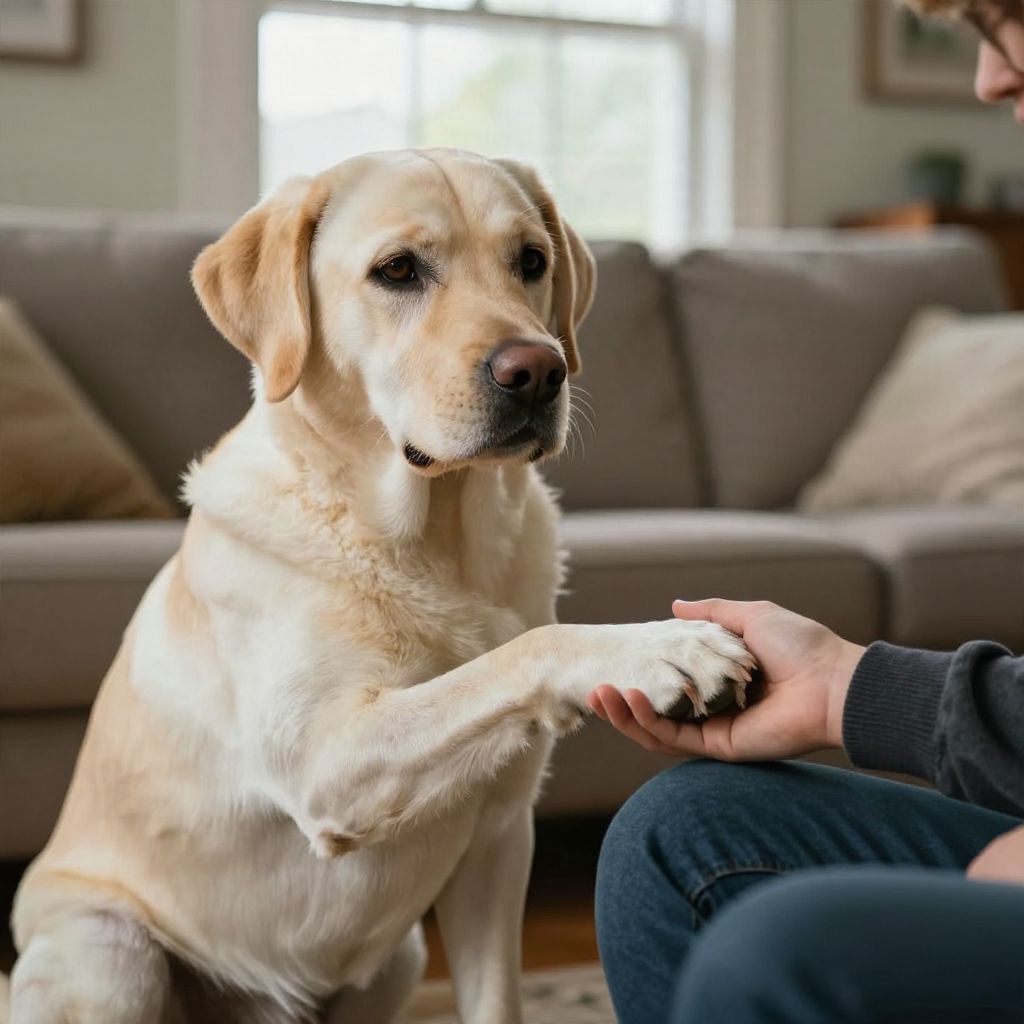
Why do dogs put their paw on you? Most of the time, it is a normal way for a dog to ask for attention, comfort, or interaction. It can also be a learned behavior that gets a response, such as petting, talking, or treats.
Sometimes pawing is harmless and social. Other times it can signal stress, boredom, pain, or a medical issue, especially if it starts suddenly or comes with other behavior changes.
Why Do Dogs Put Their Paw On You?
Dogs put their paw on you to communicate. They may be seeking attention, reassurance, play, food, or closeness, and some dogs use pawing as a learned habit because it works. If the behavior is new, intense, or paired with discomfort, pain, or anxiety, it deserves closer attention.
Common Reasons Dogs Put a Paw on You
1. They want attention
This is one of the most common reasons. Your dog may have learned that pawing gets a reaction, even if that reaction is just you looking at them or speaking to them.
- They want petting.
- They want you to keep interacting.
- They want you to stop doing something and focus on them.
2. They are asking for something
Some dogs use a paw to ask for food, a walk, access to the yard, or a toy. If the behavior happens around routine events, it may be a request rather than a problem.
3. They feel affectionate or bonded to you
A paw on your arm or leg can be a social gesture. Many dogs use body contact to stay connected, especially with people they trust.
4. They are anxious or seeking reassurance
Dogs that are unsure, overstimulated, or nervous may paw at you for comfort. You may also notice pacing, lip licking, yawning, trembling, clinginess, or avoidance.
5. They are bored or under-stimulated
A dog with too little exercise, enrichment, or mental activity may paw for engagement. This is common in energetic dogs, but any dog can develop attention-seeking habits if their needs are not being met.
6. They are trying to communicate discomfort
If your dog paws at you and seems restless, withdrawn, or hard to settle, they may be trying to tell you something is wrong. Pain, itchiness, nausea, or general discomfort can all change a dog’s behavior.
When Pawing Is Normal vs. When to Worry
Occasional pawing is usually normal, especially if your dog is otherwise relaxed and healthy. Worry more if the behavior appears suddenly, becomes frequent, or comes with signs of illness, fear, or pain.
- Usually normal: relaxed body language, wagging, playful energy, predictable timing, easy redirection.
- More concerning: sudden change, repeated pawing that seems urgent, whining, hiding, aggression, limping, licking a body part, vomiting, diarrhea, loss of appetite, or trouble settling.
If your dog is pawing at you and also showing signs of distress, do not assume it is “just being needy.” Behavior changes can be an early clue that your dog needs veterinary attention.
What Your Dog’s Body Language Can Tell You
The paw itself is only part of the message. Look at the rest of your dog’s body to understand what they are trying to say.
- Relaxed: soft eyes, loose muscles, normal breathing, loose tail movement.
- Excited: bouncy movement, play bow, bright expression, quick repeat pawing.
- Stressed: tense posture, pinned ears, whale eye, yawning, lip licking, tucked tail.
- In pain: guarding a limb or body area, reluctance to move, sensitivity to touch, restlessness.
How to Respond to Pawing Without Encouraging a Habit You Don’t Want
If the pawing is harmless but constant, you can teach your dog a better way to ask for attention. Reward calm, polite behavior and avoid accidentally reinforcing the paw with immediate attention every time it happens.
- Wait for a calm moment before giving attention.
- Reward quiet sitting, lying down, or gentle nudging instead of pawing.
- Teach a clear alternative cue such as “sit” or “touch.”
- Be consistent so your dog does not get mixed messages.
- Provide enough exercise, play, and enrichment each day.
If your dog paws for food or play, make sure everyone in the home responds the same way. Inconsistent responses can make the behavior stronger.
Training Tips for Attention-Seeking Pawing
Reward-based training works best for this behavior. The goal is not to punish your dog for communicating, but to teach a more polite and reliable way to get what they need.
Teach a replacement behavior
Ask for a sit, down, or mat settle before giving attention, treats, or toys. This gives your dog a clear job to do instead of pawing.
Use planned attention
Give your dog regular, predictable attention so they do not need to demand it. Short training sessions, sniff walks, and play can reduce repeated pawing.
Do not reward the paw by accident
If you pet, talk to, or feed your dog every time they paw, the behavior may continue. Try to respond only when they are calm or using the new cue.
When Pawing May Be Linked to Health Problems
Sometimes a dog puts a paw on you because they are not feeling well. This is especially important if the behavior is new for your dog or happens along with other symptoms.
- Itching or skin irritation
- Ear discomfort
- Joint pain or arthritis, especially in older dogs
- Stomach upset or nausea
- General pain after injury
- Cognitive changes in senior dogs
See a veterinarian promptly if pawing is paired with limping, swelling, vomiting, diarrhea, repeated scratching, crying, panting at rest, appetite loss, or a sudden personality change.
Emergency warning signs
Seek urgent veterinary care right away if your dog has trouble breathing, collapses, has a swollen face, cannot stand, has severe pain, repeated vomiting, a bloated abdomen, or may have been exposed to something toxic.
Breed, Age, and Personality Can Affect Pawing
Some dogs are naturally more physically expressive than others, but individual temperament matters more than breed labels. A social, energetic, or highly people-focused dog may paw more often, while a shy dog may do it only when they feel secure.
Puppies may paw because they are exploring, teething, or trying to initiate play. Senior dogs may paw because they need help, feel confused, or are uncomfortable. A change in pattern matters more than the pawing itself.
What Not to Do
It is easy to misread pawing as misbehavior, but harsh responses can make communication worse. Avoid methods that create fear or pain.
- Do not punish or yell at your dog for pawing.
- Do not use shock, intimidation, or dominance-based corrections.
- Do not ignore possible pain or illness if the behavior is new.
- Do not encourage constant pawing if you want it to stop.
How to Tell If Your Dog Is Asking for Affection or Help
Ask yourself a few simple questions. Is the pawing predictable, gentle, and paired with a relaxed dog? Or is it sudden, intense, and linked to other warning signs?
- Affection or attention: relaxed posture, soft face, normal appetite, normal energy.
- Possible help request: restlessness, repeated pawing, whining, hiding, licking, or changes in movement.
If you are unsure, start by checking for obvious needs such as water, a potty break, or a chance to rest. If the behavior persists or seems unusual, call your veterinarian.
Practical Ways to Reduce Unwanted Pawing
If you want less pawing, focus on meeting your dog’s needs before the behavior escalates. Prevention is usually easier than trying to stop a habit after it is well established.
- Use daily exercise suited to your dog’s age and health.
- Offer chew toys, scent games, puzzle feeders, or training games.
- Keep a consistent routine for meals, walks, and rest.
- Teach calm greetings and calm attention-seeking alternatives.
- Schedule a vet visit if the behavior is new or unusual.
When to Ask for Professional Help
Contact a veterinarian if you suspect pain, illness, or a sudden behavior change. If the pawing is tied to anxiety, reactivity, or persistent attention-seeking that you cannot manage, a certified trainer or veterinary behaviorist can help you build a humane plan.
Understanding why do dogs put their paw on you starts with noticing context, body language, and changes over time. In many cases it is a normal request for attention or connection, but new or intense pawing can also be a sign that your dog needs medical or behavioral support. If in doubt, check with your veterinarian and reward the calm behavior you want more of.
If you want to learn more about related behaviors, you may also find why dogs sit on you and why dogs lick your hands helpful.