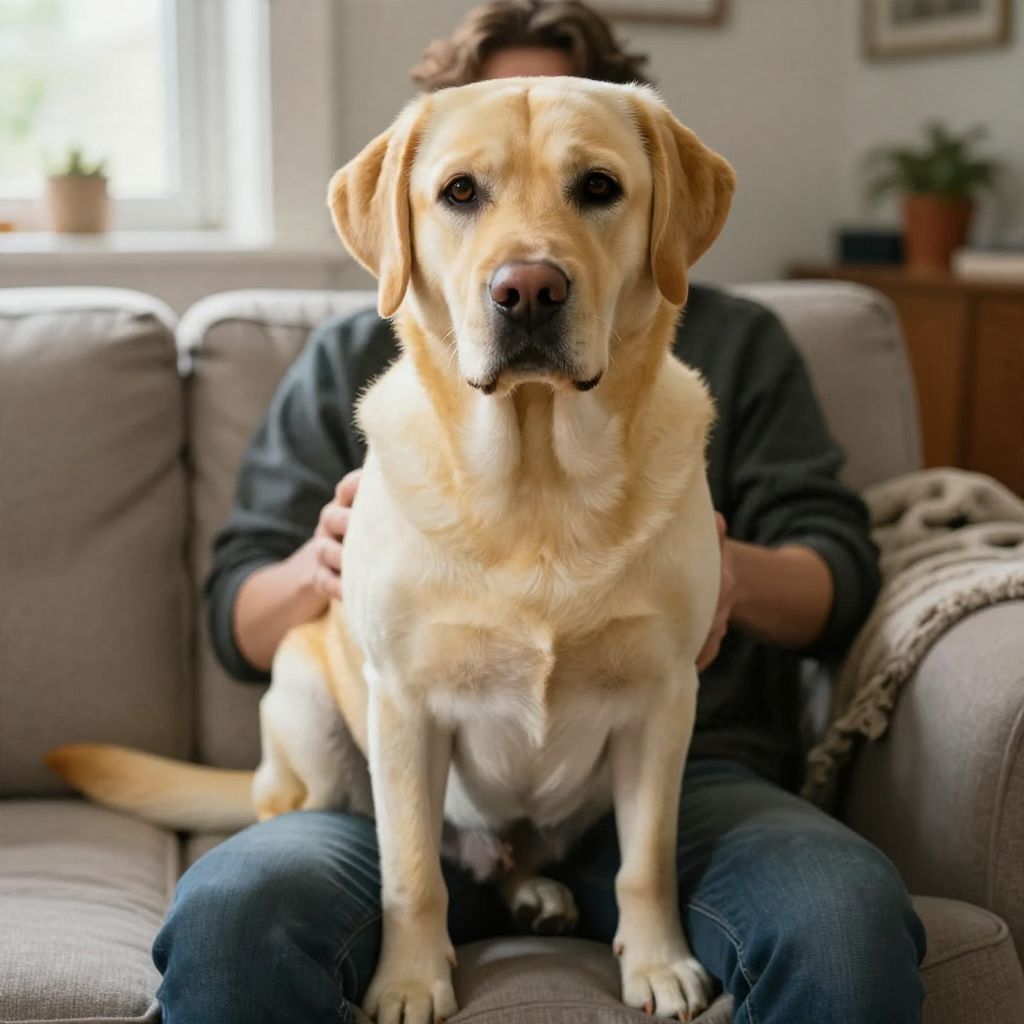
If your dog sits on you, it usually means they feel safe, want attention, or are trying to stay close to you. Sometimes it is simply affectionate behavior, but it can also be a sign of anxiety, excitement, learned habits, or a need for more exercise and enrichment.
Most of the time, this behavior is normal. The key is understanding why your dog is doing it and whether it is harmless, annoying, or a sign of stress or a medical issue.
Why does my dog sit on me?
Dogs often sit on their people for comfort, attention, warmth, security, or because the behavior has been rewarded before. It can also happen when a dog is anxious, overexcited, or unsure of what else to do. If the behavior is sudden or obsessive, check for pain, stress, or other health concerns.
Common reasons dogs sit on their owners
1. Affection and bonding
Many dogs sit on you because they like being near you. Physical closeness can be a sign of trust and attachment, especially in dogs that are naturally cuddly or have been socialized to enjoy contact with people.
Some dogs prefer lying beside you, while others choose your lap, feet, or legs. That preference varies by individual personality, size, age, and early experiences.
2. They want attention
If sitting on you reliably gets petting, talking, laughing, or eye contact, your dog may repeat it because it works. Dogs quickly learn which behaviors make you respond.
This can happen even with well-trained dogs. The behavior is not always “dominance”; more often, it is a simple attention-seeking habit.
3. Comfort and security
Some dogs sit on their owners when they feel uncertain, nervous, or overwhelmed. Your presence may help them feel safer during thunderstorms, visitors, fireworks, or changes in routine.
In these cases, the behavior may be a coping strategy. If your dog seems clingy only during stressful situations, anxiety may be part of the picture.
4. Warmth and physical comfort
Dogs may choose your lap or body because it is warm, soft, and stable. This is more common in smaller dogs, puppies, or older dogs that seek cozy resting spots.
However, any dog can do this, especially if they are tired or if the room is cool.
5. Habit and reinforcement
If you have allowed your dog to sit on you for years, the behavior may simply be part of their routine. Dogs thrive on predictable patterns, and repeated success makes habits stronger.
Even small rewards can reinforce it, such as smiling, cuddling back, or letting them stay there for a long time.
6. Excitement or overstimulation
Some dogs sit on you when they are highly excited and do not know how to settle. This may happen when you come home, when guests arrive, or during playtime.
In these moments, sitting on you can be a way to seek contact and help regulate their energy.
7. Resource guarding or possessiveness
Less commonly, a dog may sit on you to keep others away from you, a toy, or a space. This can look affectionate, but it may be part of guarding behavior if the dog stiffens, stares, growls, or blocks others from approaching.
If you notice those warning signs, it is a good idea to consult a qualified trainer or veterinary behaviorist.
When sitting on you is normal vs. when it may be a problem
Most dogs that sit on their owners are simply seeking closeness. The behavior becomes more concerning when it is sudden, intense, or paired with other changes in behavior or health.
- Usually normal: relaxed body language, easy to move away, happens during calm bonding or rest.
- Possibly a concern: clinginess that is new, excessive, or linked to stress, fear, or separation issues.
- Needs attention: stiffness, whining, guarding, snapping, or inability to settle without constant contact.
Could a health issue cause this behavior?
Sometimes, yes. A dog that suddenly wants to sit on you more than usual may be seeking comfort because they feel unwell, sore, or insecure. Pain, arthritis, digestive discomfort, or other illness can change how a dog seeks support.
Do not assume it is only behavioral if the change is new. A veterinary exam is wise if the behavior appears suddenly or comes with other symptoms.
Call your veterinarian sooner if you notice:
- Sudden clinginess or unusual neediness
- Whining, panting, pacing, or restlessness
- Limping, stiffness, trouble jumping, or reluctance to move
- Loss of appetite, vomiting, diarrhea, or weight loss
- Behavior changes after injury, illness, or medication changes
Seek urgent veterinary care if your dog has:
- Difficulty breathing
- Collapse, weakness, or disorientation
- Severe pain or crying when touched
- A swollen abdomen, repeated retching, or a sudden emergency change
- Seizures or unresponsiveness
What to do if your dog sits on you too much
If the behavior is affectionate but inconvenient, you can teach your dog to settle nearby instead of on top of you. The goal is not to reject your dog, but to give them a clear alternative that still meets their need for closeness.
- Reward an alternate spot. Encourage a bed, mat, or blanket next to you and reward your dog for choosing it.
- Be consistent. If you sometimes allow lap-sitting and sometimes do not, your dog may stay confused.
- Use calm redirection. Gently guide them off you and direct them to their bed without scolding.
- Increase enrichment. More walks, sniffing, play, and puzzle toys can reduce attention-seeking behavior.
- Practice settling skills. Reward quiet lying down, especially during low-key times at home.
Consistency matters more than force. Reward-based training helps your dog learn what to do instead of simply telling them what not to do.
How to tell what your dog is trying to communicate
Relaxed body language
If your dog is loose, soft-eyed, and easy to move, they are probably seeking comfort or affection. A relaxed dog may sigh, settle, or nap once they are on you.
Stress or anxiety signals
If your dog sits on you and also pants, trembles, follows you everywhere, or struggles to relax, they may be anxious. This is more likely during changes in routine or stressful events.
Guarding or control-related signals
If your dog becomes tense, blocks access, growls, or reacts when someone approaches, the behavior may be more than cuddling. In that case, professional guidance is important.
Does breed, age, or size matter?
Yes, but only in a general way. Some dogs are more physically affectionate, while others are more independent. Individual temperament, early socialization, training history, and household routines matter more than breed alone.
Small dogs may sit on you more often simply because they can fit comfortably on your lap. Puppies may do it for security, while senior dogs may seek closeness or warmth, especially if they are less mobile.
Large dogs may sit on you too, even if it is not very practical. In those cases, the behavior is often about closeness, excitement, or habit rather than size.
How to prevent unwanted sitting without hurting your bond
You do not need to stop all closeness to manage the behavior. The best approach is to keep affection while setting clear boundaries.
- Offer a dog bed or mat near you.
- Reward your dog for choosing the bed on their own.
- Teach a cue such as “place” or “bed.”
- Give attention when your dog is calm, not only when they climb on you.
- Make sure they get enough exercise and mental stimulation each day.
If your dog sits on you mainly when bored, increasing activity and enrichment can help a lot. Sniff walks, training games, and food puzzles are often more effective than punishment.
When to get professional help
Consider a veterinarian if the behavior is new, intense, or linked to other physical changes. Consider a certified trainer or veterinary behaviorist if your dog is anxious, overly dependent, or showing guarding behavior.
Professional help is especially useful if you want to reduce the habit without damaging trust or creating more stress.
Bottom line
Why does my dog sit on me? Most often, it means your dog feels close to you and wants comfort, attention, or security. If it is harmless, you can enjoy it. If it is excessive, stressful, or sudden, teach an alternative spot and check with your veterinarian when needed.
If you want to understand more attention-seeking behaviors, you may also find why dogs lick you so much helpful.