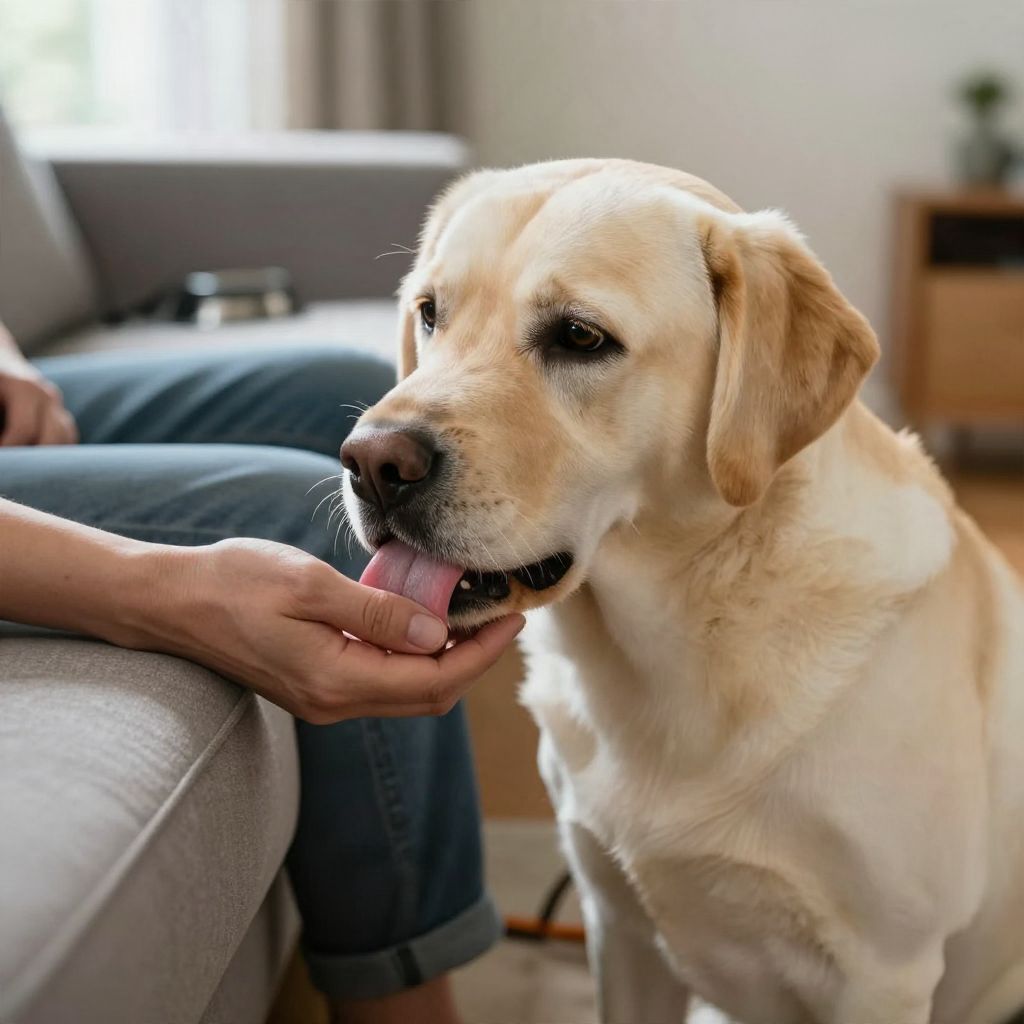
If you keep asking, “Why is my dog licking me so much?” the short answer is that licking is usually normal dog communication. Your dog may be showing affection, seeking attention, tasting salt on your skin, or trying to soothe themselves.
Most of the time it is harmless, but sudden changes, obsessive licking, or licking paired with other symptoms can point to stress, boredom, allergies, nausea, pain, or another health issue.
Why is my dog licking me so much?
Dogs lick people for several normal reasons: affection, attention, exploration, habit, or self-soothing. If the licking is new, intense, or hard to interrupt, it may reflect anxiety, boredom, skin irritation, pain, or illness. Look at the full picture, not just the licking itself.
Common reasons dogs lick people
1. Affection and social bonding
Many dogs lick as a friendly social behavior. They may be greeting you, asking for contact, or reinforcing the bond they feel with you.
This is especially common in dogs that have learned licking gets a warm response, petting, or attention.
2. They like the taste
Your skin can taste salty after exercise, sweating, or cooking. Lotions, soaps, and food residue can also make you more interesting to lick.
If your dog only licks your hands, face, or feet at certain times, the answer may be as simple as taste and scent.
3. Attention-seeking behavior
Some dogs learn that licking makes people talk, laugh, pet them, or push them away. Even negative attention can reward the habit if your dog wants interaction.
In these cases, the licking may increase when you are sitting still, checking your phone, or trying to relax.
4. Stress, anxiety, or overexcitement
Licking can be a calming behavior for some dogs. It may show up when they are uncertain, overstimulated, or worried about being left alone.
If your dog also paces, whines, follows you constantly, or struggles to settle, emotional stress may be part of the reason.
5. Boredom and under-stimulation
A dog with too little exercise, mental work, or enrichment may redirect energy into licking. This is more likely if the behavior happens during quiet times or when you are not actively engaging them.
Young dogs and high-energy dogs often need more structured activity than older or lower-energy dogs, but every dog is individual.
6. Habit or learned routine
Repeated licking can become a habit if it has been reinforced over time. Once a dog practices the behavior often, it may become their default way to interact.
Habitual licking can be harder to change than occasional licking, but it usually improves with consistent management and training.
When licking may signal a health problem
If your dog’s licking seems excessive, sudden, or out of character, pay attention to other signs. Licking alone does not diagnose anything, but it can be one clue among many.
Possible medical or physical causes
- Nausea or stomach upset
- Pain or discomfort, including mouth pain
- Itchy skin from allergies, parasites, or irritation
- Dental disease or something stuck in the mouth
- Neurologic or compulsive issues in some dogs
If your dog is licking you and also licking the air, swallowing repeatedly, drooling, vomiting, scratching, or acting restless, a veterinary check is a good idea.
Red flags that need prompt veterinary care
- Sudden, intense licking with vomiting or retching
- Drooling, pawing at the mouth, or trouble eating
- Swollen face, hives, or trouble breathing
- Lethargy, collapse, or obvious pain
- Repeated compulsive licking that is hard to interrupt
- Any concern that your dog may have ingested something toxic or dangerous
Seek urgent veterinary help right away if your dog has breathing trouble, facial swelling, repeated vomiting, severe pain, or sudden behavior changes along with the licking.
What to do if your dog licks you too much
The goal is not to punish licking. Instead, teach your dog what to do instead and make the licking less rewarding.
- Stay calm and consistent. Do not yell or shove your dog away, since that can increase excitement.
- Redirect to an appropriate behavior. Ask for a sit, down, or target touch, then reward that choice.
- Reward calm behavior. Give attention when your dog is settled, not when they are licking.
- Use management. Stand up, step away, or briefly end interaction if licking starts.
- Provide more enrichment. Add walks, sniffing time, training games, puzzle feeders, and safe chew options.
- Check for triggers. Notice whether licking happens when your dog is hungry, excited, tired, or anxious.
Simple training approach
Teach a replacement behavior your dog can do instead of licking. For example, reward them for going to a mat, sitting beside you, or holding a toy.
Keep sessions short and easy, especially for puppies or easily distracted dogs. Consistency matters more than intensity.
What not to do
Some common reactions can make the problem worse or damage trust.
- Do not punish or scare your dog for licking.
- Do not use harsh tools or intimidation.
- Do not assume all licking is “dominance” or stubbornness.
- Do not ignore sudden changes in behavior if your dog seems unwell.
If the licking is linked to anxiety or compulsive behavior, punishment can increase stress and make the behavior harder to manage.
Does age or breed matter?
Yes, but only in a general way. Puppies often lick more because they are exploring, teething, and learning social habits. Adult dogs may lick more when they are bored, anxious, or reinforcing a routine.
Breed tendencies can play a small role, but individual temperament, training, and daily routine matter more than breed alone. Some dogs are naturally more mouthy or social, while others rarely lick at all.
When to call your veterinarian
Contact your vet if the licking is new, persistent, or paired with other symptoms. A vet can help rule out pain, nausea, allergies, dental disease, or other medical issues.
You should also ask for help if the behavior is interfering with sleep, family life, or your dog’s ability to relax. In some cases, a certified trainer or veterinary behaviorist can help if anxiety or compulsive behavior is suspected.
How to tell normal licking from a problem
Normal licking is usually brief, situational, and easy to interrupt. Problem licking tends to be frequent, hard to redirect, and tied to distress or illness.
- More likely normal: your dog licks after exercise, during cuddles, or when greeting you.
- More concerning: the licking is sudden, obsessive, paired with drooling or vomiting, or happens with agitation or pain.
Bottom line
So, why is my dog licking me so much? Most often it is a normal social behavior, but excessive or sudden licking can also signal stress or a medical issue. Watch for other symptoms, redirect the habit kindly, and contact your veterinarian if anything seems off.
If you want to understand related behaviors, you may also find it helpful to read about why dogs lick their paws and why dogs sniff butts.