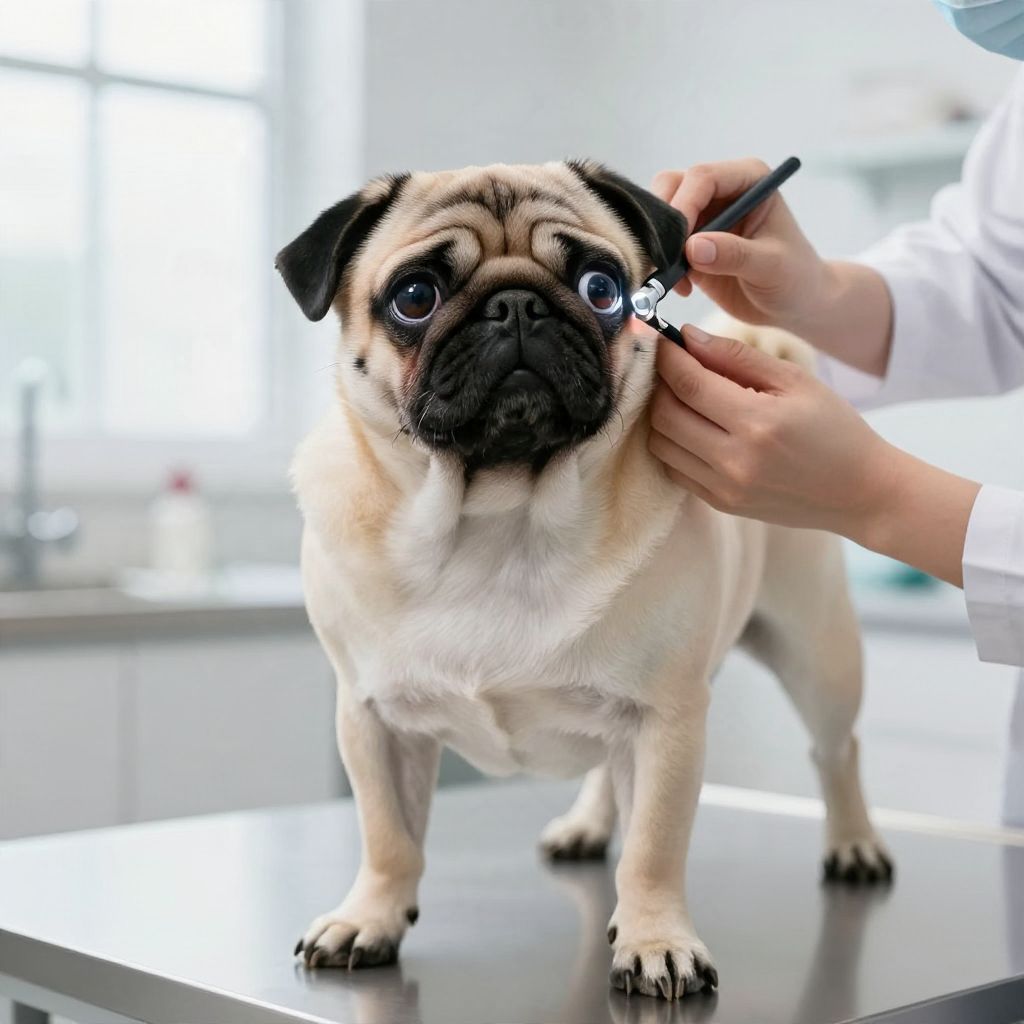
Do Pugs eyes fall out? It can look that way when a Pug has a serious eye injury or the eyeball bulges far forward, but the eye does not usually “fall out” on its own. Pugs are a brachycephalic breed, which means their eyes are prominent and more exposed to trauma and irritation.
If your Pug’s eye is suddenly bulging, bleeding, cloudy, or very painful, treat it as an emergency. Quick veterinary care can help protect vision and reduce the risk of permanent damage.
Do Pugs eyes fall out?
Not usually, but Pugs can develop proptosis, a serious emergency where the eyeball is displaced forward from the socket after trauma or severe pressure. Because their eyes are large and prominent, Pugs are at higher risk than many breeds. If this happens, seek urgent veterinary care immediately.
Why Pugs are more vulnerable to eye problems
Pugs have a flat face and shallow eye sockets, so their eyes are less protected than in many other dogs. That anatomy can make them more likely to experience irritation, scratches, ulcers, and traumatic eye displacement.
This does not mean every Pug will have eye trouble, but it does mean you should be alert to changes. Even a minor bump, rough play, or a thorny plant can cause a serious problem.
Common eye risks in Pugs
- Eye trauma from bumps, scratches, or falls
- Corneal ulcers from rubbing or injury
- Dry eye that leads to irritation and redness
- Infections or inflammation that cause discharge and discomfort
- Proptosis, where the eye is pushed out of the socket
What does proptosis look like?
Proptosis is one of the main reasons people ask whether Pugs’ eyes fall out. The eye may appear suddenly pushed out, swollen, or sitting in an abnormal position. The eyelids may not close over it, and the dog often seems distressed or painful.
Other signs can include squinting, pawing at the face, tearing, bleeding, a cloudy surface, or refusal to open the eye. If you see any of these signs after an injury, do not wait to see if it improves.
What to do if your Pug’s eye looks displaced
This is a veterinary emergency. The sooner your dog is seen, the better the chance of saving the eye and preserving vision.
- Keep your dog calm and still. Avoid chasing, restraining roughly, or letting them rub the eye.
- Do not try to push the eye back in. That can worsen the injury.
- Prevent rubbing. If you have an e-collar, use it only if it can be placed safely without pressure on the eye.
- Go to an emergency veterinarian immediately. Call ahead so the clinic can prepare.
Do not apply human eye drops, ointments, or home remedies unless a veterinarian specifically instructs you to do so. The wrong product can delay treatment or make the injury worse.
Warning signs that need urgent veterinary care
Not every eye problem means the eye has “fallen out,” but many eye symptoms in Pugs should be treated seriously. Eye issues can worsen quickly, and delays may affect vision.
- Sudden bulging or abnormal position of the eye
- Bleeding from the eye or eyelids
- Cloudiness, blue haze, or visible damage to the surface of the eye
- Severe squinting or inability to open the eye
- Repeated pawing at the face
- Marked swelling around the eye
- Eye discharge with pain or sudden behavior changes
- Any eye injury after a fight, fall, or impact
Can a Pug’s eye actually fall out on its own?
In most cases, no. A Pug’s eye does not simply fall out without a cause. When people use that phrase, they are often describing a sudden eye displacement, severe swelling, or a dramatic injury.
That said, Pugs can have eye tissues that are more exposed, so a relatively small accident may create a dramatic-looking emergency. Because the eye is delicate, any sudden change should be checked promptly.
How to reduce the risk of eye injuries in Pugs
You cannot eliminate every risk, but you can lower the chances of eye trauma with careful daily management. Prevention matters especially for Pugs that are playful, active, or live with other dogs.
Practical safety steps
- Use a harness instead of a neck collar for walks when appropriate.
- Keep play gentle around larger or rougher dogs.
- Trim nails on household pets that play with your Pug.
- Watch for branches, tall grass, and sharp objects outdoors.
- Supervise play in tight spaces where the face can bump furniture.
- Seek veterinary care quickly for any eye redness, squinting, or discharge.
Good supervision is especially important after surgery, during recovery, or if your Pug already has eye disease. A dog with a history of eye problems may need more careful monitoring than a healthy adult.
Other eye problems that can look alarming
Sometimes what looks like an eye “falling out” is another condition that still needs prompt care. A veterinarian can tell the difference and recommend the right treatment.
Examples include
- Corneal scratches or ulcers, which often cause squinting and tearing
- Cherry eye, where a gland in the third eyelid becomes visible and swollen
- Conjunctivitis, which can cause redness and discharge
- Dry eye, which may lead to thick discharge and discomfort
- Glaucoma, a painful increase in eye pressure that can threaten vision
These conditions are not the same as proptosis, but some can look dramatic to an owner. Because treatment differs, an exam is important rather than guessing at home.
How veterinarians may treat a displaced eye
The exact treatment depends on the injury, how long it has been present, and whether the eye is still viable. A veterinarian may need to stabilize the eye, control pain, and determine whether surgery is possible or necessary.
In some cases, the eye can be repositioned and the eyelids partially closed to help it heal. In severe cases, especially if the eye is badly damaged, the safest option may be removal to relieve pain and prevent complications.
Only a veterinarian can decide which approach is appropriate. Fast treatment gives the best chance for comfort and vision preservation.
How to care for a Pug after an eye injury
If your Pug has had an eye problem, follow your veterinarian’s instructions closely. Recovery care often matters as much as the initial treatment.
- Use medications exactly as prescribed.
- Prevent rubbing with an e-collar if your veterinarian recommends one.
- Limit rough play and jumping during recovery.
- Return for rechecks as advised.
- Watch for worsening redness, swelling, squinting, or discharge.
If your dog seems more painful, stops eating, or the eye looks worse, contact the clinic right away. Eye injuries can change quickly.
When to call your vet even if it does not look like an emergency
Some eye changes are not as dramatic as proptosis, but they still deserve prompt attention. Early treatment can prevent a minor problem from becoming a major one.
Call your veterinarian soon if your Pug has persistent tearing, mild redness that does not improve, one eye that seems more closed than the other, or repeated face rubbing. If you are unsure, it is safer to ask.
What owners often get wrong
One common mistake is waiting to see whether the eye “settles down.” With Pugs, delays can be risky because eye tissue is delicate and exposed. Another mistake is using leftover drops or trying to clean the eye aggressively.
It is also important not to assume every swollen eye is minor. Even if the dog is still eating or acting fairly normal, eye pain can be significant and vision-threatening.
Bottom line for Pug eye safety
Do Pugs eyes fall out? Not normally, but they can suffer serious eye displacement and other urgent eye injuries. Because Pugs’ eyes are prominent and vulnerable, any sudden bulging, pain, cloudiness, or bleeding should be treated as an emergency.
If you want more practical dog-care reading, you may also find it helpful to learn do dogs sleep with their eyes open? and do dogs get colds? for related health questions.