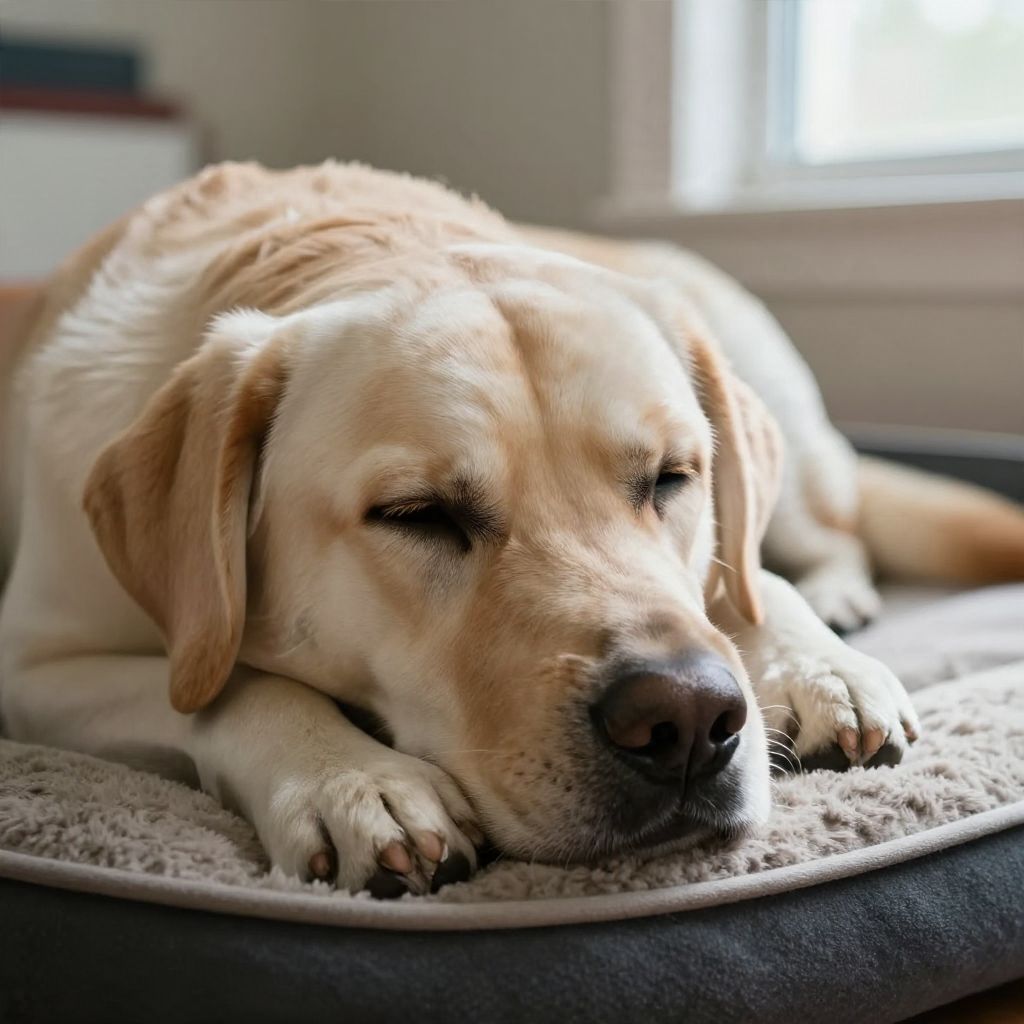
Do dogs sleep with their eyes open? Sometimes, yes. Some dogs doze with partially open eyelids, and you may also see eye movements, twitching, or brief “sleeping with the eyes open” during light sleep or REM sleep.
In many cases, this is normal. But if your dog’s eyes stay open while they seem unresponsive, or you notice redness, discharge, pain, or unusual behavior, it can signal an eye or neurologic problem that needs a vet visit.
Do dogs sleep with their eyes open?
Yes, some dogs sleep with their eyes partly open, especially during light sleep or REM sleep. This is usually harmless if your dog otherwise seems relaxed and healthy. However, eyes that remain open because of illness, injury, or abnormal neurologic signs are not normal and should be checked by a veterinarian.
Why a dog may look like they are sleeping with their eyes open
Dogs do not always close their eyelids fully when they rest. In many dogs, this is simply part of normal sleep behavior and can happen more often when they are very relaxed, dreaming, or sleeping lightly.
Common normal reasons
- Light sleep: Your dog may be resting but still aware of sounds and movement.
- REM sleep: Twitching, paw movements, or eye movement can happen while dreaming.
- Individual differences: Some dogs naturally sleep with a small amount of eye opening more often than others.
- Facial shape: Dogs with prominent eyes or certain facial structures may appear to have more visible eye opening when resting.
What normal sleep can look like
If your dog is breathing normally, appears comfortable, and wakes up easily, the eye position alone is usually not a concern. You may also notice relaxed muscles, soft body posture, and brief movements that come and go.
When sleeping with eyes open is not normal
Sometimes what looks like sleep is actually a medical issue. If your dog’s eyes stay open because they cannot close them properly, or if they seem “out of it,” painful, or hard to wake, contact your veterinarian.
Red flags that need veterinary attention
- Eyes remain open and do not blink normally
- Redness, swelling, or thick discharge
- Squinting, pawing at the face, or sensitivity to light
- Cloudiness, a visible scratch, or a change in eye color
- Uneven pupils or one eye that looks different from the other
- Head tilt, stumbling, seizures, or unusual behavior
- Your dog is difficult to wake or seems confused after “sleeping”
Emergency signs
Seek urgent veterinary care right away if your dog has sudden blindness, a seizure, severe eye pain, trauma to the eye, bleeding, or a swollen eye that seems to protrude. Eye problems can worsen quickly and may threaten vision.
Sleep, dreaming, and normal eye movement in dogs
Dogs cycle through different sleep stages, just like people. During deeper sleep and REM sleep, they may twitch, paddle, whine softly, or move their eyes under the lids. This can make it seem as if they are half-awake when they are actually sleeping normally.
How to tell sleep from a problem
- Probably normal: Your dog is loose, breathing steadily, and wakes up normally when gently called.
- More concerning: Your dog seems frozen, unresponsive, or unable to fully close the eyes.
- Concerning eye issue: The eye looks irritated, dry, cloudy, or painful when awake.
Could dry eye or eyelid problems cause this?
Yes. Some dogs have trouble closing their eyes fully because of eyelid shape, facial anatomy, nerve problems, or eye disease. If the eye does not close completely, the surface can dry out and become irritated or damaged.
Conditions a vet may consider
- Dry eye: The eye does not produce enough tears to stay comfortable.
- Eyelid abnormalities: The lids may roll in or out, or not seal properly.
- Facial nerve issues: Nerve problems can affect blinking and eyelid movement.
- Eye injury or pain: A scratch or foreign body can change how your dog holds the eye.
These problems are not something to guess about at home. A veterinarian can examine the eye, check tear production, and look for injury or infection.
What you should do if your dog sleeps with eyes open
If your dog otherwise seems well, you usually do not need to do anything. Watch for patterns and make sure the eyes look normal when your dog is awake.
Helpful steps
- Observe whether the eyes are only partly open during sleep or fully open with no blinking.
- Check for redness, discharge, cloudiness, or squinting when your dog wakes up.
- Notice whether your dog wakes easily and behaves normally afterward.
- Take a short video if the behavior is unusual, so you can show your vet.
- Schedule a veterinary exam if the problem is frequent, new, or paired with other symptoms.
What not to do
- Do not put human eye drops in your dog unless your vet tells you to.
- Do not try to force the eyelids closed.
- Do not wait if there is pain, discharge, swelling, or sudden behavior change.
Does age matter?
Age can affect how a dog sleeps, but it does not automatically mean something is wrong. Puppies often sleep deeply and may twitch or move their eyes more during naps. Senior dogs may also have more visible sleep movements or age-related eye changes.
Puppies
Puppies sleep a lot, and their sleep can look active. If you are wondering whether a young dog’s sleep is normal, it can help to compare it with other puppy sleep patterns and routine rest needs. You can also read more about how long puppies sleep.
Senior dogs
Older dogs may develop eye conditions, dryness, or neurologic changes that make eye closure less complete. If a senior dog suddenly starts sleeping with eyes open more often, a vet exam is a good idea.
Breed and body shape can play a role
Some dogs are more likely to appear to sleep with their eyes open because of their facial structure, but this is not a guarantee for any individual dog. Dogs with prominent eyes or flatter faces may be more prone to eye exposure, dryness, or incomplete eyelid closure.
That said, breed alone does not tell the whole story. Health, age, sleep stage, and individual anatomy all matter, so it is best to judge your dog’s normal pattern rather than assume based on breed.
How to support healthy sleep and eye comfort
Good sleep habits and basic eye care can help you notice problems early and keep your dog comfortable.
- Keep your dog’s sleeping area calm, clean, and free of dust or irritants.
- Groom facial hair carefully if it tends to poke the eyes.
- Use a harness rather than a collar if your dog has neck sensitivity or eye pressure concerns, as advised by your vet.
- Keep up with routine veterinary checkups, especially for senior dogs.
- Watch for rubbing, squinting, or discharge after outdoor play, grooming, or roughhousing.
When to call the vet
Call your veterinarian if you are unsure whether your dog is truly asleep, if the eyes stay open more than occasionally, or if you notice any change in comfort, vision, or behavior. Eye issues are easier to treat early, and some can become urgent quickly.
In short, dogs can sleep with their eyes open or partly open, and that is often normal. Trust the whole picture: if your dog is relaxed and healthy, it is usually harmless; if you see pain, redness, discharge, or odd behavior, get veterinary help promptly.
If you want to keep learning about your dog’s rest and behavior, you may also find do dogs watch TV? helpful for understanding what your dog notices while awake and resting.