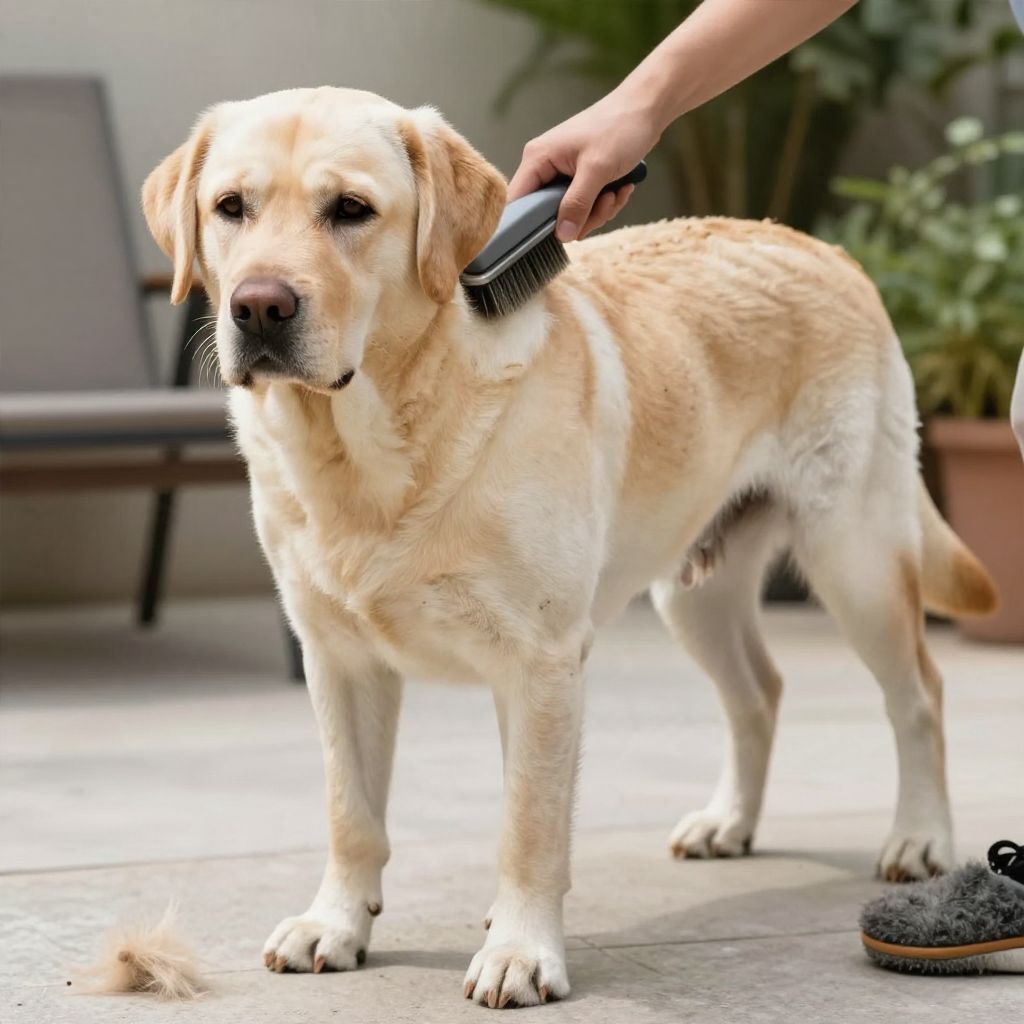
If you’re asking, “Why is my dog shedding so much,” the answer is often simple: many dogs shed normally, especially during seasonal coat changes. But sudden, heavy, patchy, or nonstop shedding can also point to skin irritation, parasites, allergies, stress, poor nutrition, or an underlying medical problem.
The key is to tell normal coat turnover from a change that needs veterinary attention. A few grooming and diet adjustments may help, but if the shedding is new, severe, or paired with itching or skin changes, your vet should take a look.
Why is my dog shedding so much?
Most dogs shed to replace old hair, and some shed heavily year-round or seasonally. If shedding suddenly increases, or you notice itching, bald spots, dandruff, odor, or skin redness, the cause may be fleas, allergies, infection, hormone disease, stress, or a diet issue that needs veterinary evaluation.
What counts as normal shedding?
Normal shedding depends on your dog’s coat type, breed tendencies, age, and the season. Some dogs lose a little hair all year, while double-coated dogs often “blow coat” in spring and fall.
Typical normal shedding often looks like this:
- Loose hair on furniture, floors, and clothing
- No bald patches
- No strong odor, redness, or scabs
- Skin that looks healthy and comfortable
- Your dog seems otherwise well
Breed matters, but it is not a guarantee. Some dogs that are known for light shedding may still shed more than expected, and some heavy shedders stay manageable with regular grooming.
Common causes of excessive shedding
Seasonal coat changes
Many dogs shed more when daylight and temperatures change. This is especially noticeable in dogs with dense undercoats, but the amount can vary from dog to dog.
If the extra shedding is seasonal and your dog otherwise seems comfortable, grooming usually helps manage it.
Fleas and other parasites
Fleas can trigger intense itching, scratching, hair loss, and skin irritation. Mites and other parasites can also cause shedding by damaging the skin or making your dog scratch and lick excessively.
Look for:
- Scratching, biting, or rubbing
- Small scabs or irritated skin
- Hair loss around the tail base, belly, ears, or legs
- Flea dirt or visible fleas
Allergies
Dogs can react to environmental triggers, fleas, or ingredients in food. Allergies often cause itching first, then hair loss from scratching, chewing, and licking.
Common clues include:
- Itchy paws or face
- Recurrent ear problems
- Red, inflamed skin
- Seasonal flare-ups or year-round symptoms
Skin infections
Bacterial or yeast infections can make the skin uncomfortable and cause increased shedding. You may also notice odor, greasy skin, redness, or crusting.
Infections often develop after allergies, moisture trapped in the coat, or repeated scratching, so the shedding may be a symptom rather than the main problem.
Hormone and medical conditions
Some medical issues affect the hair coat and skin health. These can include thyroid disease, adrenal disorders, and other systemic problems.
Possible warning signs include:
- Symmetrical hair thinning
- Skin that looks dry, darkened, or thin
- Weight changes
- Low energy
- Changes in appetite or thirst
These signs do not confirm a diagnosis, but they do mean your dog should be checked by a veterinarian.
Poor nutrition or sudden diet changes
A balanced diet supports healthy skin and coat, but food alone is not always the cause of shedding. If your dog’s diet is incomplete, poor quality, or recently changed, the coat may become dull, dry, or more prone to shedding.
Do not try to “fix” shedding with random supplements or human foods. A vet can help you decide whether your dog’s current diet is appropriate.
Stress, anxiety, or changes in routine
Stress can contribute to overgrooming, licking, and coat changes in some dogs. Moving homes, new pets, schedule changes, or boredom can all affect behavior and coat condition.
If shedding seems linked to licking or chewing, the behavior itself may be part of the problem.
Age-related coat changes
Puppies, adults, and senior dogs can all shed differently. Puppies lose their soft coat as they mature, and older dogs may have thinner coats or drier skin.
Age alone does not explain heavy shedding, but it can change how noticeable the hair loss is and how well the skin handles grooming.
When shedding is a red flag
Call your veterinarian promptly if the shedding is new, severe, or clearly different from your dog’s usual pattern. Some causes are minor, but others need treatment to prevent discomfort or complications.
Seek urgent veterinary care if your dog has any of the following:
- Sudden hair loss with swelling, pain, or open sores
- Severe itching that won’t stop
- Skin that is hot, very red, or oozing
- Facial swelling, hives, or trouble breathing
- Lethargy, fever, vomiting, or not eating along with skin changes
- Possible toxin exposure or a recent injury to the skin
These signs can point to a serious allergic reaction, infection, or other medical issue that should not wait.
What you can do at home to reduce normal shedding
If your dog seems otherwise healthy, practical grooming and care steps can make a big difference. The goal is to remove loose hair safely and support skin health.
- Brush regularly. Use a brush suited to your dog’s coat type so you remove loose undercoat before it ends up on your floors.
- Bathe only as needed. Gentle, dog-safe bathing can help remove loose hair, but overbathing may dry the skin.
- Check for fleas and skin irritation. Part the coat and look for redness, scabs, or tiny moving insects.
- Keep parasite prevention current. Use veterinarian-recommended prevention if your dog is at risk.
- Feed a complete, balanced diet. A healthy coat starts with good overall nutrition.
- Reduce stress and boredom. Daily exercise, play, and enrichment can help if licking or anxiety is making the shedding worse.
- Vacuum and lint-roll often. This does not treat the cause, but it makes normal shedding easier to manage.
Grooming tips by coat type
Short coats
Short-haired dogs can still shed a lot, even if the hair looks less dramatic. A rubber grooming tool or soft brush often works well for removing loose hair.
Double coats
Dogs with thick undercoats often need more frequent brushing during seasonal shedding. Regular grooming helps prevent mats and reduces the amount of loose hair trapped in the coat.
Long or curly coats
These coats may shed less visibly, but loose hair can tangle and mat. Brushing, combing, and routine coat care matter because mats can trap dirt and irritate the skin.
Senior dogs
Older dogs may have thinner skin and a more fragile coat. Use gentle grooming and watch for dry skin, lumps, or sore spots that could be hidden under the hair.
Common mistakes that can make shedding worse
- Bathing too often or using harsh products
- Ignoring itching because “she just sheds a lot”
- Using human shampoos or home remedies without veterinary guidance
- Skipping parasite prevention
- Assuming all heavy shedding is normal for the breed
- Waiting too long when hair loss is patchy or accompanied by skin changes
How a vet may help
If your dog’s shedding seems excessive, your veterinarian may examine the skin, check for parasites, and ask about diet, grooming, environment, and any behavior changes. Depending on the signs, they may recommend skin tests, parasite control, allergy management, or bloodwork.
The right treatment depends on the cause, so it is important not to guess. What looks like “just shedding” can sometimes be a treatable skin problem or internal health issue.
How to tell if it is time to book an appointment
Make a vet visit if the shedding lasts longer than expected, keeps getting worse, or comes with discomfort. A good rule is: if your dog is losing hair and also seems itchy, sore, smelly, or unwell, it is worth getting checked.
Bring notes about when the shedding started, where the hair loss is happening, what your dog eats, any recent changes at home, and whether you have seen fleas, licking, or scratching. That information can help your vet narrow down the cause faster.
Bottom line
So, why is my dog shedding so much? Often it is normal coat turnover, but heavy shedding can also signal fleas, allergies, infection, stress, nutrition problems, or another medical issue. Brush regularly, watch for skin changes, and see your vet if the shedding is sudden, severe, or paired with itching or bald spots.
If you want to compare coat types and shedding patterns, you may also find these helpful: do Chihuahuas shed? and do Border Collies shed?