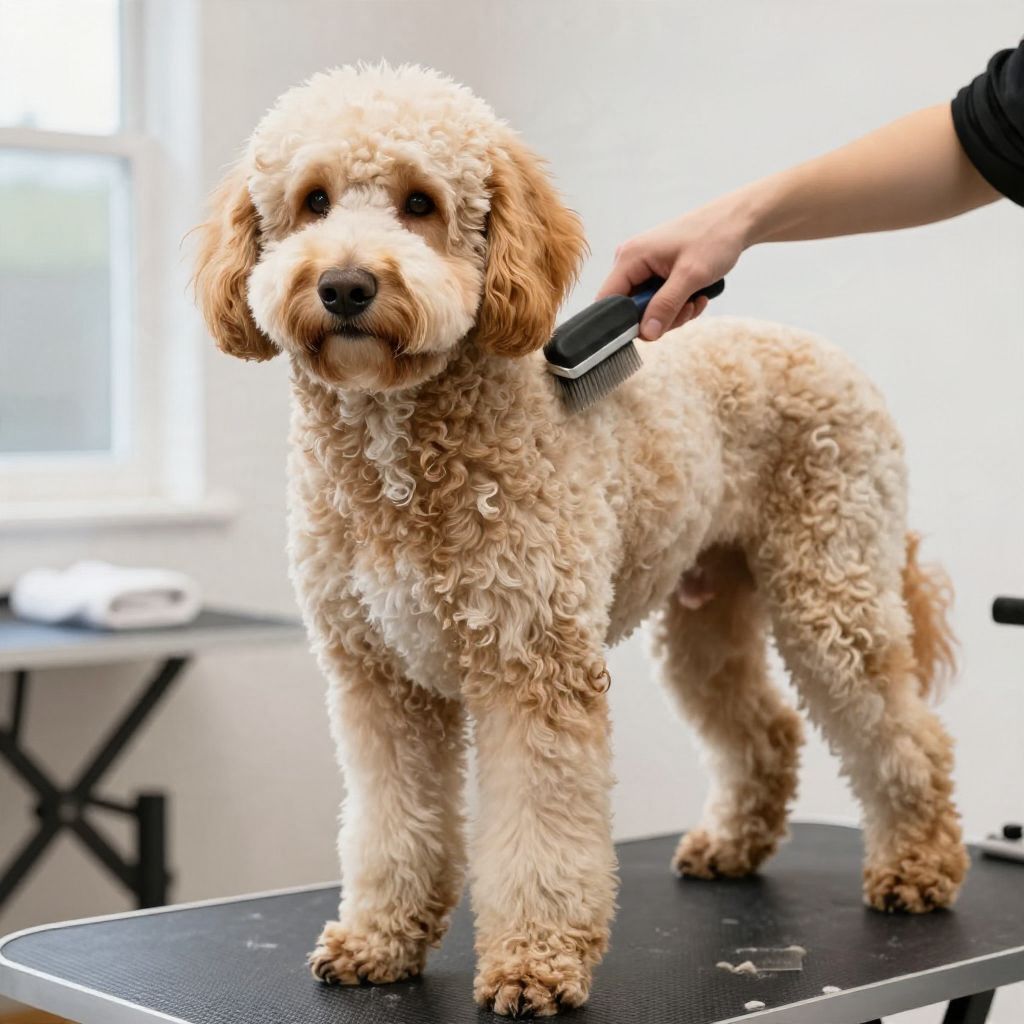
Do Labradoodles shed? Usually, yes—but the amount can vary a lot from dog to dog. Some Labradoodles shed very lightly, while others leave noticeable hair around the home, especially if they inherit more coat traits from the Labrador side.
Their coat type, grooming routine, health, and even age can all affect shedding. If you are hoping for a low-shedding dog, it helps to understand what Labradoodles typically do and what you can do to manage loose hair.
Do Labradoodles Shed?
Labradoodles can shed, but many shed less than heavy-shedding breeds. How much hair you see depends on the individual dog’s coat type, genetics, and grooming. A curlier coat often traps loose hair, while a straighter coat may shed more and release hair into your home more easily.
Why Labradoodle Shedding Varies So Much
Labradoodles are a mixed breed, so their coats are not uniform. Even littermates can have very different coat textures and shedding levels.
Coat type matters most
- Wavy or curly coats often hold onto loose hair and can appear to shed less.
- Straighter coats may shed more visibly and need more frequent cleanup.
- Thicker coats can trap dirt, debris, and loose undercoat if not brushed regularly.
Age and coat changes can affect shedding
Puppies often go through coat changes as they mature. A young Labradoodle may seem low-shedding at first, then shed differently as the adult coat comes in. Older dogs may also shed more if skin or coat health changes with age.
Health can influence shedding
Excessive shedding can sometimes be linked to skin irritation, allergies, parasites, poor nutrition, hormonal problems, or stress. If shedding suddenly increases, or if you also notice itching, redness, bald spots, odor, or dandruff, talk with your veterinarian.
What “Low-Shedding” Really Means
Many people choose Labradoodles expecting a nearly non-shedding dog, but that is not guaranteed. A dog that sheds less may still lose some hair, and loose coat can still collect on furniture, clothing, and floors. Low-shedding does not mean no grooming.
It also does not mean the dog is automatically hypoallergenic. Allergies are usually triggered by proteins in dander, saliva, and urine, not just hair. If someone in your home has allergies, spend time around the specific dog before committing.
How to Manage Labradoodle Shedding at Home
Good grooming is the most practical way to reduce loose hair and keep a Labradoodle’s coat healthy. The exact routine depends on coat texture, but consistency matters more than any single product.
Brush regularly
- Brush several times a week for many Labradoodles.
- Use a brush suited to the coat type, such as a slicker brush or comb recommended by a groomer.
- Work through tangles gently to avoid pulling the skin.
Schedule professional grooming
Many Labradoodles benefit from regular grooming appointments to prevent matting. Mats can trap moisture and debris, tug on the skin, and make shedding seem worse because loose hair gets caught in the coat.
Keep the coat clean, but do not overbathe
Bathing can help remove loose hair, dirt, and dander, but too much bathing may dry out the skin. Use a dog-safe shampoo and follow your groomer or veterinarian’s advice on frequency based on your dog’s coat and skin condition.
Support skin and coat health
- Feed a complete, balanced diet appropriate for your dog’s life stage.
- Make sure your dog has regular parasite prevention recommended by your veterinarian.
- Watch for skin changes such as flaking, redness, or persistent scratching.
Common Mistakes That Make Shedding Look Worse
Sometimes the issue is not true shedding, but poor coat maintenance. A few common mistakes can make hair loss and cleanup seem much worse than it needs to be.
- Not brushing often enough, which allows loose hair and mats to build up.
- Waiting too long between grooming visits, especially for curlier coats.
- Ignoring skin problems such as itching or hot spots.
- Using the wrong brush, which can miss undercoat or cause discomfort.
- Assuming all Labradoodles are the same and skipping a coat-specific routine.
When Shedding Is Normal and When It Is Not
Some shedding is normal for most dogs, including Labradoodles. What matters is whether the amount is steady and whether your dog seems comfortable and healthy.
Usually normal
- Light to moderate loose hair on bedding or floors
- Seasonal increase in shedding in some dogs
- Hair caught in the coat that comes out during brushing
Call your veterinarian if you notice
- Sudden or heavy hair loss
- Bald patches
- Red, inflamed, or scabby skin
- Persistent scratching, licking, or chewing
- Bad skin odor
- Thinning coat plus weight change, lethargy, or behavior changes
Seek urgent veterinary care if your dog has severe swelling, open wounds, trouble breathing, collapse, or a rapidly worsening skin reaction. Those signs can indicate a serious medical problem that should not wait.
What to Expect If You Want a Low-Shedding Family Dog
If low shedding is important to you, focus on the individual dog rather than the label “Labradoodle.” Ask the breeder or rescue about the dog’s coat type, grooming needs, and any known skin issues. Meet the dog in person if possible and see how much hair comes off during handling and brushing.
Remember that even a low-shedding Labradoodle still needs time, training, exercise, and coat care. Choosing a dog only for coat type can lead to disappointment if you are not ready for the grooming commitment.
Tips for Keeping Your Home Cleaner
Even with a low-shedding coat, some hair management is usually necessary. These simple habits can help reduce buildup around the house.
- Brush your dog before hair has a chance to collect in the coat.
- Vacuum high-traffic areas and furniture regularly.
- Wash bedding and blankets often.
- Use washable covers on couches or dog beds.
- Keep a lint roller or pet hair remover handy for clothing.
Should You Choose a Labradoodle If You Want Less Hair?
A Labradoodle may be a good fit if you want a dog that often sheds less than many other breeds, but it is not a guarantee. The best choice is a dog whose coat, grooming needs, temperament, and energy level fit your lifestyle.
If you are comparing breeds and coat care, you may also find it useful to read about whether French Bulldogs shed and whether Chihuahuas shed so you can compare grooming expectations more realistically.
In short, Labradoodles can shed, but many shed less than average when their coat is curly or wavy and well maintained. If you want the best results, choose the individual dog carefully, brush regularly, and speak with your veterinarian if shedding changes suddenly or comes with skin symptoms.