If your dog has an upset stomach, the safest first step is usually to pause food briefly, offer fresh water, and watch closely for warning signs. Mild vomiting or loose stool can pass on its own, but repeated symptoms, pain, or lethargy need veterinary advice.
What you give next depends on the cause, your dog’s age, and how sick they seem. Bland food may help some dogs, but certain symptoms mean you should not try home care and should call a vet right away.
What To Give Dog For Upset Stomach?
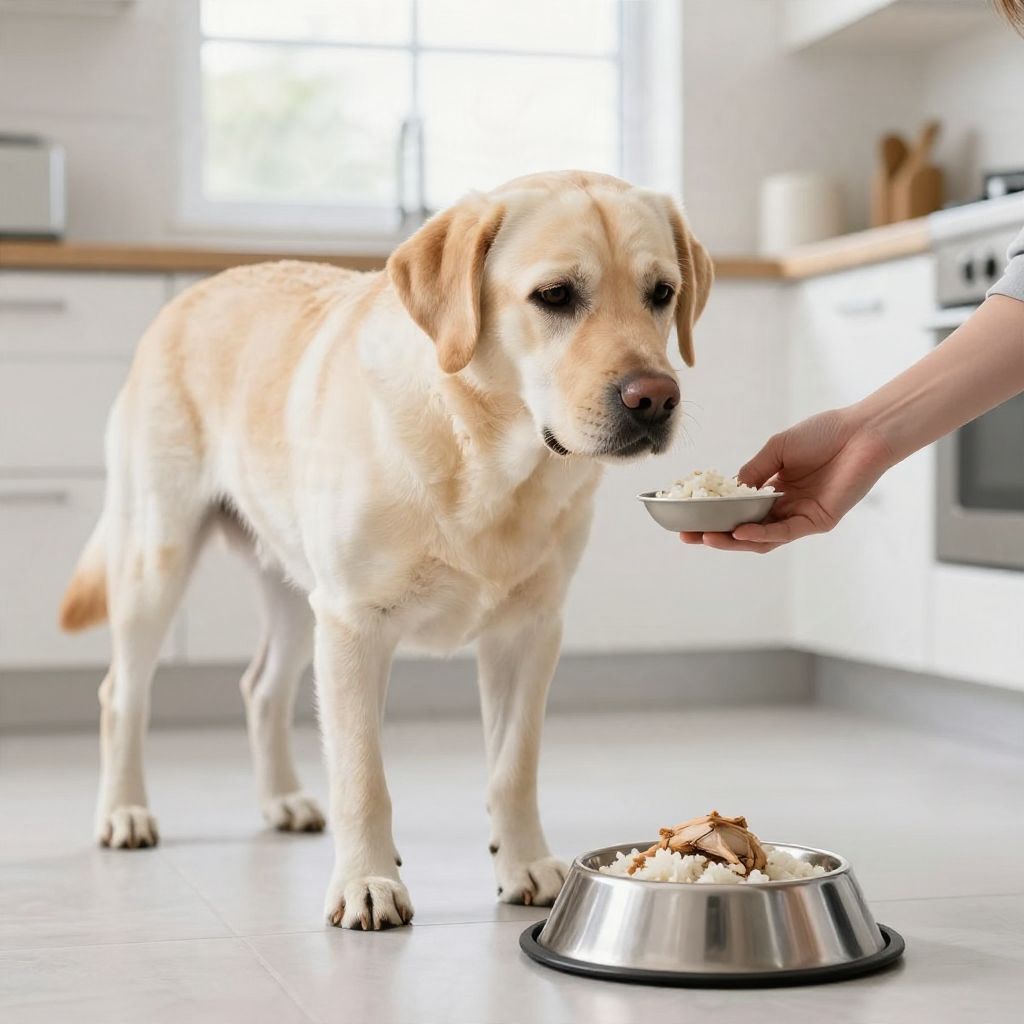
For a mild upset stomach, give your dog small amounts of fresh water and, if vomiting has stopped, a bland, easy-to-digest meal such as plain cooked chicken and white rice or a veterinarian-recommended gastrointestinal diet. Avoid rich foods, treats, and human medications unless your vet tells you otherwise.
What you can safely offer first
The goal is to reduce stomach irritation and prevent dehydration. Keep things simple and low-fat.
- Fresh water in small, frequent sips
- Plain cooked lean protein such as skinless chicken or turkey, if your vet says feeding is okay
- Plain white rice or another bland carbohydrate
- Veterinary gastrointestinal diet if your clinic recommends one
Some dogs do better with small, frequent meals instead of one larger meal. Others need a short rest from food before eating again, especially after vomiting.
How to feed a bland diet
- Wait until vomiting has stopped before offering food.
- Start with a very small portion.
- Watch for renewed vomiting, diarrhea, bloating, or discomfort.
- If your dog keeps the food down, offer another small meal later.
- Transition back to the regular diet gradually over a few days if your vet agrees.
What not to give a dog with an upset stomach
Some common foods and remedies can make the problem worse or be dangerous. Do not guess if you are unsure.
- Fatty foods such as table scraps, greasy meat, or fried food
- Milk, cheese, and creamy foods if your dog is sensitive to dairy
- Seasoned or spicy foods
- Human pain relievers or anti-nausea medicines unless prescribed by a veterinarian
- Bones, rawhide, and rich chews that may irritate the stomach or cause blockage
- Any food your dog may be allergic or intolerant to
If your dog may have eaten something toxic, do not try to “treat” it with food. Contact a veterinarian or poison helpline right away.
When an upset stomach is an emergency
Some signs mean your dog needs urgent veterinary care, not home treatment. These symptoms can point to poisoning, obstruction, pancreatitis, severe infection, or another serious problem.
- Repeated vomiting or inability to keep water down
- Bloody vomit or bloody diarrhea
- A swollen, painful, or hard abdomen
- Extreme lethargy, weakness, collapse, or trouble standing
- Labored breathing
- Signs of dehydration, such as dry gums or sunken eyes
- Known or suspected toxin exposure
- Possible foreign object ingestion, such as toys, socks, corn cobs, or string
- Puppies, toy breeds, seniors, or dogs with chronic illness who seem unwell
If your dog is straining, seems painful, or has a bloated belly, treat it as urgent. Do not wait to see if it passes.
Common causes of an upset stomach in dogs
“Upset stomach” is a symptom, not a diagnosis. The cause may be minor or serious.
- Eating something unusual or too rich
- Sudden diet change
- Stress or travel
- Parasites or infection
- Food intolerance or allergy
- Motion sickness
- Pancreatitis
- Foreign body ingestion
- Toxin exposure
Because the causes vary so much, the right thing to give a dog with an upset stomach depends on the full picture, not just the symptom itself.
How age, size, and health affect what to give
What works for one dog may not be appropriate for another. Puppies, seniors, and dogs with chronic disease need extra caution.
Puppies
Puppies can become dehydrated quickly and may have lower energy reserves. If a puppy is vomiting, has diarrhea, or refuses food, call a veterinarian sooner rather than later.
Small dogs and toy breeds
Smaller dogs may be more vulnerable to dehydration and low blood sugar if they stop eating. Even mild symptoms can become a bigger issue faster than in a larger dog.
Senior dogs
Older dogs may have kidney, liver, pancreatic, or other health problems that change what is safe to feed. A bland diet may still help, but persistent stomach upset deserves veterinary attention.
Dogs with medical conditions
If your dog has diabetes, pancreatitis, kidney disease, a sensitive digestive tract, or takes regular medication, ask your vet before changing food. A “simple” stomach upset can interact with an existing condition.
Hydration matters as much as food
Dogs with vomiting or diarrhea can lose fluids quickly. Water is usually the first thing to focus on.
- Offer fresh water in a clean bowl
- Encourage small, frequent drinks rather than gulping
- If your dog vomits after drinking, stop and call your vet
- Ask your vet whether an oral rehydration approach is appropriate for your dog
Do not force water into your dog’s mouth, especially if they are nauseated, weak, or at risk of choking.
How to tell if it is mild or something more serious
A short-lived stomach upset after a minor diet mistake may improve within a day. Ongoing or worsening signs need a closer look.
- Milder signs: one or two episodes of vomiting, soft stool, mild nausea, normal energy, still drinking
- More concerning signs: repeated vomiting, diarrhea lasting more than a day, pain, refusal to drink, lethargy, blood, or bloating
If your dog seems normal otherwise and the symptoms are brief, your vet may suggest a bland diet and monitoring. If the pattern is unusual for your dog, call for guidance.
Common mistakes to avoid
Well-meaning home care can sometimes delay the right treatment.
- Giving rich “comfort” foods too soon
- Using leftover human medicine without veterinary advice
- Waiting too long when vomiting keeps happening
- Ignoring possible toxin or foreign object exposure
- Switching foods back and forth too quickly
When in doubt, call your veterinarian and describe the symptoms, timing, and anything your dog may have eaten.
What your vet may recommend
Your veterinarian may suggest a physical exam, stool testing, anti-nausea treatment, fluids, or a prescription gastrointestinal diet, depending on the cause and severity. They may also ask about diet changes, scavenging, medications, and recent stress.
Do not be surprised if the treatment plan is different for different dogs. Breed, age, size, and medical history all matter, but the biggest factor is what is causing the stomach upset.
Practical prevention tips
You cannot prevent every stomach issue, but you can reduce the risk.
- Change foods gradually over several days
- Keep trash, compost, and toxic foods out of reach
- Use puzzle-proof feeding and secure chew toys
- Stick to a consistent diet if your dog has a sensitive stomach
- Keep parasite prevention current
- Supervise dogs that tend to scavenge
For dogs with recurring digestive trouble, it helps to keep a simple log of what they ate, when symptoms started, and how long they lasted.
Bottom line
For a mild upset stomach, start with water, rest, and a bland, vet-approved diet once vomiting has stopped. Avoid rich foods and human medications, and get urgent veterinary help if your dog has repeated vomiting, blood, pain, bloating, weakness, or possible toxin exposure.
If you want more practical guidance, you may also find what to give a dog with an upset stomach and what you can give a dog for diarrhea helpful for next steps.