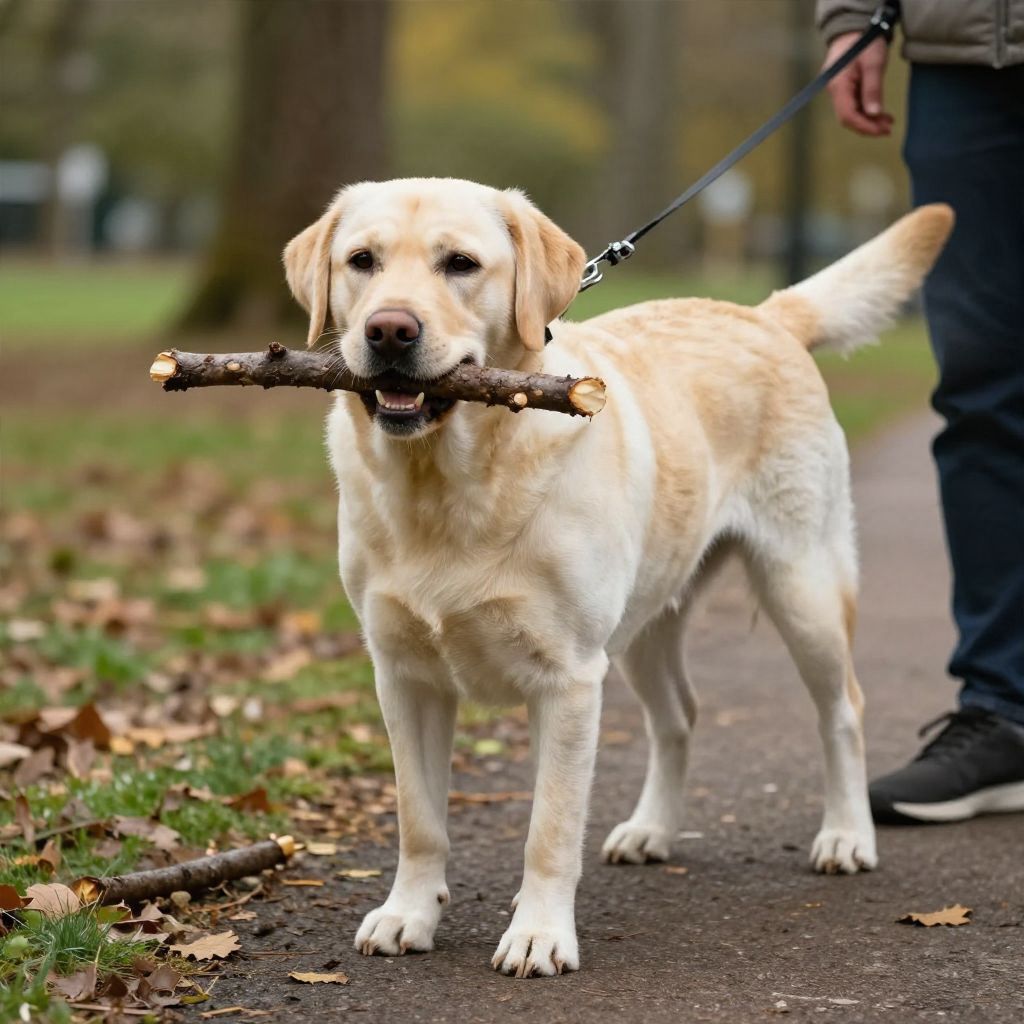
Dogs like sticks for a mix of instinct, texture, scent, and fun. A stick can feel like a chew toy, a fetch object, or something to carry, and many dogs simply enjoy the way it tastes and breaks apart.
That said, sticks are not a safe chew for every dog. Splinters, mouth injuries, choking, and swallowed wood can all happen, so it helps to know when stick play is harmless and when you should redirect your dog.
Why do dogs like sticks?
Dogs like sticks because they are easy to grab, smell interesting, and satisfy natural chewing and carrying instincts. Some dogs enjoy the texture, others like the chase of a thrown stick, and many simply find sticks rewarding to mouth. The exact reason varies by age, breed tendencies, training, and individual personality.
What makes sticks so appealing?
Several everyday factors can make a stick more exciting than a store-bought toy.
1. Chewing feels good
Chewing can be soothing and mentally satisfying. Puppies often chew during teething, while adult dogs may chew to relax, relieve boredom, or stay occupied.
2. Sticks are easy to find and carry
Sticks are everywhere outdoors, and many dogs enjoy picking up objects in their mouths. For some dogs, carrying a stick is part of play, while for others it is simply a fun habit.
3. They smell and taste like the outdoors
Dogs explore the world through scent. A stick may carry the smell of soil, plants, water, wildlife, or other dogs, which can make it more interesting than a clean toy.
4. They satisfy prey- or chase-related play
Some dogs love to grab, shake, or chase moving objects. A tossed stick can trigger that excitement, especially in energetic dogs that enjoy fetch-style games.
5. They can be self-rewarding
If your dog has learned that sticks are fun, the behavior can become a habit. The more rewarding the experience, the more likely your dog is to seek sticks again.
Is it normal for dogs to like sticks?
Yes, it is common. Many dogs show interest in sticks at some point, especially during walks, hikes, or yard play. Interest alone is usually not a problem. The concern is when your dog tries to chew, swallow, or guard sticks in a way that creates danger or stress.
Are sticks safe for dogs?
Sticks are not a safe chew toy. They can splinter and cause cuts inside the mouth, lodged pieces in the throat, broken teeth, or intestinal blockage if swallowed. A dog that runs with a stick in its mouth can also injure the mouth, eyes, or throat if it trips or collides with something.
Common risks to watch for
- Splinters that poke the gums, tongue, or palate
- Choking on broken pieces or large chunks
- Swallowed wood that may irritate or block the digestive tract
- Dental injuries from hard or dry wood
- Eye or face injuries from carrying a pointed stick
- Mouth infections if small wounds become contaminated
When is stick play especially risky?
Some situations make stick play more dangerous than others. If your dog is very enthusiastic, tends to gulp objects, has a history of foreign-body ingestion, or is still learning bite control, it is safer to avoid sticks altogether.
Puppies
Puppies explore with their mouths and may chew or swallow pieces more readily than adult dogs. They also may not yet understand how to carry objects safely.
High-energy or highly driven dogs
Dogs that become very intense about fetch or tug may run faster and carry sticks more recklessly. That increases the chance of mouth or body injury.
Dogs with dental problems
Older dogs, dogs with worn teeth, or dogs with painful mouths may be more likely to injure themselves chewing hard wood. If chewing seems sudden, one-sided, or painful, a veterinary exam is a good idea.
Dogs who swallow things quickly
Some dogs do not just chew; they try to eat the object. These dogs should not have access to sticks, even briefly.
What should you do if your dog likes sticks?
The safest approach is to redirect your dog to safer chew items and manage the environment so sticks are less available. You do not need to punish the behavior; you just need to make better choices easier and more rewarding.
- Trade the stick for a safer toy before chewing starts.
- Carry a dog-safe fetch toy on walks or to the park.
- Practice “drop it” and “leave it” with rewards so your dog learns to release objects calmly.
- Supervise outdoor play if your dog is likely to grab sticks.
- Remove loose sticks from the yard when possible.
- Use enrichment such as sniffing games, puzzle feeders, or approved chew toys to meet the same need more safely.
How do you redirect a dog from sticks without a struggle?
Keep the interaction calm and positive. If you chase your dog, many dogs turn it into a game and hold onto the stick even more tightly. Instead, offer a better option and reward the choice you want.
Helpful training cues
- Leave it to prevent picking up a stick
- Drop it to release a stick already in the mouth
- Come to move your dog away from tempting areas
Use treats, praise, or a favorite toy as the reward. If your dog guards objects, growls, or snaps when asked to release a stick, work with a certified trainer or veterinary behaviorist rather than trying to force the issue.
What are safer alternatives to sticks?
Many dogs want the act of carrying or chewing more than the stick itself. A safer substitute can meet that need while reducing injury risk.
- Durable dog fetch toys made for outdoor play
- Rubber or nylon chew toys designed for your dog’s size and chewing style
- Soft toys for gentle carriers, if your dog does not shred them
- Food puzzles or stuffed toys for mental enrichment
- Scatter feeding or scent games for dogs that love foraging
Choose toys that fit your dog’s mouth and chewing strength. A toy that is too small can be swallowed, while one that is too hard can still damage teeth.
Should you let your dog fetch sticks?
It is safer to avoid stick fetch. Even if your dog has done it before without problems, one bad throw, splinter, or fall can cause injury. A purpose-made fetch toy is a better choice because it is easier to see, safer to carry, and less likely to break into sharp pieces.
What if your dog already swallowed part of a stick?
If your dog swallowed wood, monitor closely and call your veterinarian for advice. Small pieces may pass, but swallowed sticks can also cause serious internal problems. Do not try to make your dog vomit unless a veterinarian specifically instructs you to do so.
Get urgent veterinary care right away if you notice:
- Choking, gagging, or trouble breathing
- Repeated vomiting or retching
- Drooling, pawing at the mouth, or obvious mouth pain
- Blood from the mouth or in vomit/stool
- Abdominal pain, bloating, or a tense belly
- Weakness, collapse, or severe lethargy
- Refusal to eat or drink after the incident
If the stick was pointed, large, or broken into sharp pieces, treat it as more urgent. If you are unsure how much was eaten, a veterinarian should assess the risk.
When should you be concerned about the behavior itself?
Stick interest is usually normal, but it can become a concern if it is obsessive or unsafe. You should pay closer attention if your dog cannot disengage from sticks, becomes frantic when they are nearby, or repeatedly injures the mouth while trying to get one.
Signs you may need professional help
- Repeated attempts to eat sticks rather than just carry them
- Guarding sticks from people or other dogs
- Inability to respond to “leave it” or “drop it” even with training
- Frequent mouth injuries or broken teeth
- Sudden change in chewing behavior, which can signal pain or illness
A veterinarian can rule out dental pain or other medical issues, and a qualified trainer can help you build safer habits using reward-based methods.
Why do some dogs seem more interested in sticks than others?
Individual dogs vary a lot. Age, energy level, early experiences, chewing style, and training all matter. Some dogs are naturally more mouthy or more likely to carry objects, while others ignore sticks entirely. Breed tendencies can influence play style, but they do not determine behavior on their own.
How to prevent stick problems on walks and in the yard
Prevention works best when you plan ahead. If your dog is likely to grab sticks, make safer choices before the behavior starts.
- Bring a safe toy for fetch or carrying.
- Practice a reliable recall in low-distraction settings first.
- Reward your dog for checking in with you on walks.
- Choose routes with fewer loose branches when possible.
- Supervise yard time if your dog likes to collect sticks.
If your dog is a puppy, start these habits early. If your dog is older, you can still teach new patterns with patience and consistency.
Bottom line
Dogs like sticks because they are interesting, chewable, and rewarding, but that does not make them safe. The best approach is to redirect your dog to safer toys, teach “leave it” and “drop it,” and watch for signs of mouth injury or swallowed wood. If your dog has trouble letting go of sticks or shows any red-flag symptoms, contact your veterinarian promptly.
If you want more ideas for managing outdoor habits, you may also find it helpful to read about why dogs dig holes and why dogs dig.