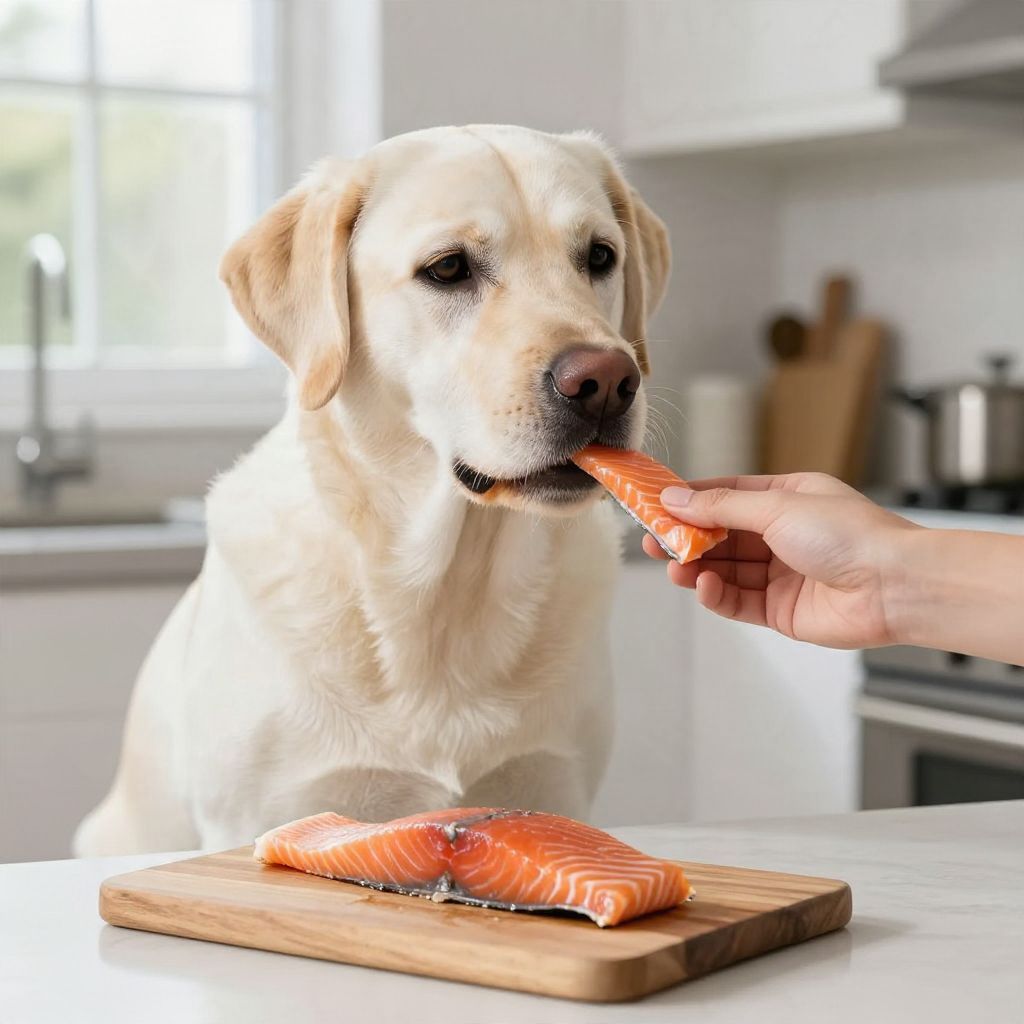
Can dogs eat smoked salmon? In small amounts, some dogs may tolerate a tiny taste, but smoked salmon is not an ideal treat. It is often high in salt and may contain seasonings or smoke-cure ingredients that can upset your dog’s stomach or create health risks.
If you want to share salmon with your dog, plain, fully cooked salmon is usually a safer choice than smoked. The right option depends on your dog’s size, health, and diet, and some dogs should avoid it altogether.
Can Dogs Eat Smoked Salmon?
Dogs can sometimes eat a very small amount of plain smoked salmon, but it is not a recommended regular treat. The main concerns are high sodium, added flavorings, and possible contamination with harmful bacteria or parasites. For most dogs, plain cooked salmon is safer than smoked salmon.
Why Smoked Salmon Can Be Risky for Dogs
Smoked salmon is made for human taste, not canine nutrition. Even when it looks simple, it can carry several risks that matter more for dogs than people.
1. High sodium content
Salt is one of the biggest concerns. Too much sodium can cause vomiting, diarrhea, excessive thirst, and in severe cases more serious illness.
2. Seasonings and additives
Garlic, onion, pepper blends, sugar, and other flavorings may be used in smoked fish. Some seasonings are unsafe for dogs, and even harmless ones can irritate a sensitive stomach.
3. Food safety concerns
Smoked salmon is not the same as thoroughly cooked salmon. Depending on how it was prepared and stored, it may carry bacteria or parasites that can make dogs sick.
4. Bones and texture
Some smoked fish products may contain small bones or tough pieces that can cause choking or mouth irritation. Fish bones can also injure the throat or digestive tract.
When Smoked Salmon Is Most Likely to Cause Problems
Some dogs are more likely than others to react badly to smoked salmon. This does not mean every dog will get sick, but certain health conditions make caution especially important.
- Small dogs may be affected by a smaller amount of salt or seasoning.
- Puppies have more delicate digestive systems and smaller body reserves.
- Senior dogs may have more sensitive digestion or hidden health issues.
- Dogs with kidney, heart, or pancreatitis concerns may need stricter salt and fat limits.
- Dogs with food sensitivities may react to rich or seasoned foods more easily.
What to Do If Your Dog Ate Smoked Salmon
If your dog ate a small piece of smoked salmon, stay calm and watch closely. Many dogs will be fine after a tiny accidental bite, but you should pay attention to how much was eaten and whether the salmon had seasoning, bones, or a very high salt content.
- Remove any remaining fish so your dog cannot eat more.
- Check the label or packaging for ingredients, especially garlic, onion, or heavy seasoning.
- Offer fresh water so your dog can drink normally.
- Monitor for vomiting, diarrhea, lethargy, restlessness, or unusual thirst.
- Call your veterinarian if your dog ate a large amount, has a health condition, or shows symptoms.
Get urgent veterinary help right away if you notice:
- Repeated vomiting
- Severe diarrhea
- Weakness, wobbliness, or collapse
- Seizures
- Trouble breathing
- A swollen belly or signs of choking
- Blood in vomit or stool
Is Smoked Salmon Safe for Puppies?
Puppies should generally avoid smoked salmon. Their digestive systems are still developing, and they are less able to handle salty or richly seasoned foods. A tiny accidental taste is not always an emergency, but it is best not to offer it on purpose.
If you want a fish-based treat for a puppy, ask your veterinarian about age-appropriate options and keep the portion very small. Puppies need a balanced diet designed for growth, not human leftovers.
Can Dogs Eat Smoked Salmon Skin, Spread, or Pâté?
These forms are often even less suitable than plain smoked salmon. Salmon spreads and pâtés may contain extra salt, cream, onion, garlic, lemon, or preservatives. The skin can also be heavily seasoned and may be greasy enough to trigger stomach upset in some dogs.
If a product has multiple ingredients, read the label carefully before sharing any of it with your dog.
Safer Ways to Feed Salmon to Dogs
If you want to give your dog salmon, the safest approach is plain, fully cooked salmon with no bones, no skin seasoning, and no added salt or spices. Keep the portion small and treat it as an occasional food, not a meal replacement.
Better options than smoked salmon
- Plain baked, boiled, or steamed salmon
- Commercial dog foods that already include salmon
- Vet-approved fish-based treats made for dogs
How to serve it more safely
- Remove all bones before serving.
- Skip butter, oil, salt, and seasoning.
- Offer only a small amount at first.
- Watch for stomach upset after the first feeding.
How Much Smoked Salmon Can a Dog Have?
There is no universal safe amount for every dog, because tolerance depends on size, health, and the specific product. In general, the safest answer is to avoid making smoked salmon a routine treat. If you do share a tiny piece, keep it very small and infrequent.
For dogs with medical problems, even a small amount may be a poor choice. When in doubt, ask your veterinarian whether your dog should avoid salty or smoked foods entirely.
Common Mistakes Dog Owners Make
Many problems happen because smoked salmon seems harmless in a small bite. The issue is not usually the fish itself, but the way it is prepared.
- Assuming “fish is healthy” means all fish products are safe.
- Feeding seasoned leftovers without checking ingredients.
- Giving smoked salmon often as a treat.
- Ignoring bones or skin that may be hard to chew or swallow safely.
- Overlooking salt sensitivity in smaller or medically fragile dogs.
Signs Your Dog May Not Tolerate Smoked Salmon Well
Some dogs develop mild digestive upset after eating rich or salty foods. Symptoms may appear within a few hours, but sometimes they show up later.
- Vomiting
- Loose stool or diarrhea
- Reduced appetite
- Excessive thirst
- Restlessness or discomfort
- Abdominal pain or hunching
If symptoms are mild and short-lived, your veterinarian may simply recommend monitoring. If they are severe, persistent, or your dog seems unwell, contact a veterinary professional promptly.
When You Should Call the Vet
Call your veterinarian if your dog ate a large amount of smoked salmon, if the product contained questionable ingredients, or if your dog has a heart, kidney, or digestive condition. You should also call if your dog is a puppy, very small, elderly, or on a special diet and you are unsure what to do.
Seek immediate care for emergency signs such as collapse, seizures, breathing trouble, repeated vomiting, or choking. Do not wait for symptoms to “pass” if your dog looks seriously ill.
The Bottom Line
Can dogs eat smoked salmon? Occasionally, a tiny plain bite may not cause harm in a healthy dog, but it is not a smart regular treat. Because of the salt, seasonings, and food-safety concerns, plain cooked salmon is the safer choice. If your dog ate smoked salmon and seems unwell, contact your veterinarian.
If you want to learn more about fish and dog-safe seafood choices, you may also find these guides helpful: can dogs eat raw fish and can dogs eat sushi.