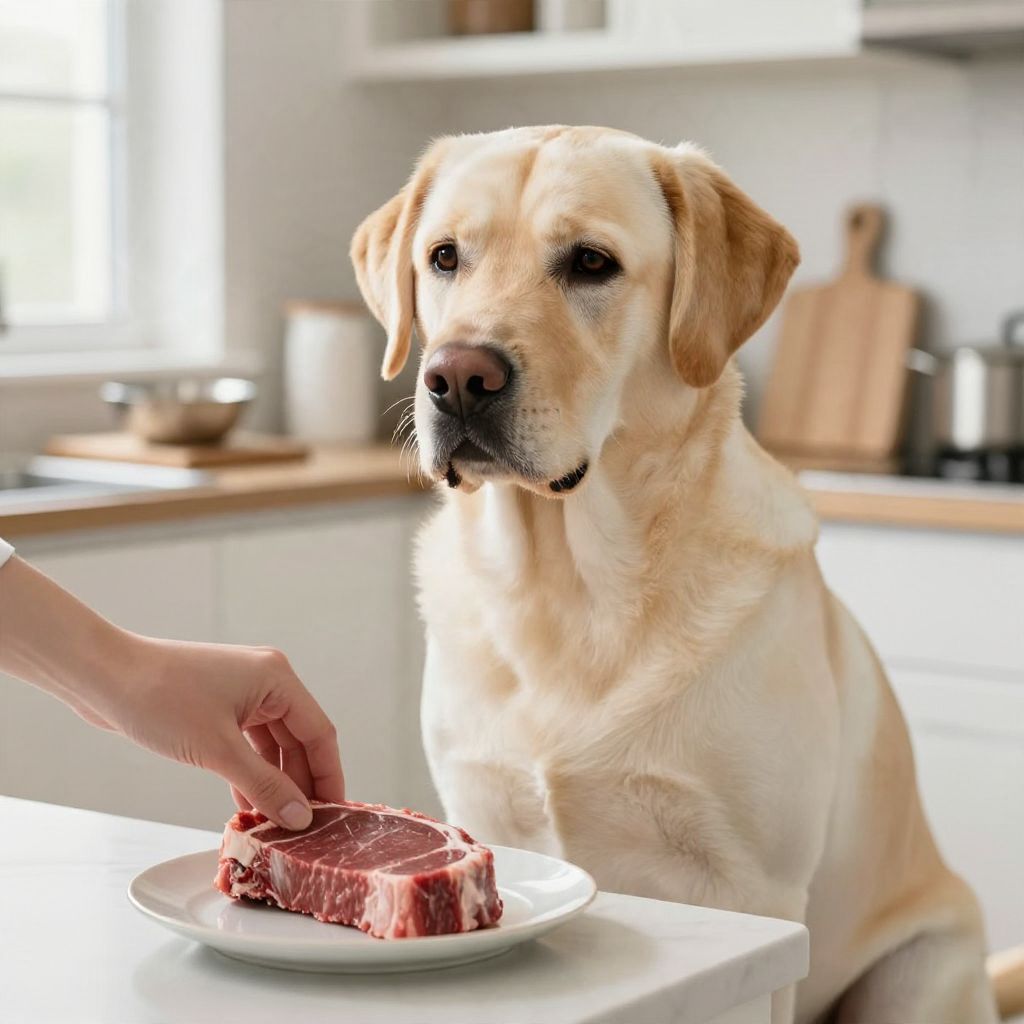
Can dogs eat raw steak? In some cases, a small amount of plain raw steak may not cause immediate harm, but it is not a risk-free food for dogs. Raw meat can carry bacteria and parasites, and some dogs are more vulnerable than others.
If you are considering raw steak as a treat or meal topper, it is safer to understand the risks first. The right choice depends on your dog’s age, health, immune status, and overall diet.
Can Dogs Eat Raw Steak?
Dogs can sometimes eat plain raw steak without obvious problems, but it is not considered a safe or ideal food for regular feeding. Raw steak may contain harmful bacteria or parasites, and dogs with puppies, seniors, or health issues face higher risk. Cooked, unseasoned steak is generally safer.
Why Raw Steak Can Be Risky for Dogs
Raw beef is not sterile. Even if it looks fresh, it can still carry germs that may upset your dog’s stomach or, in some cases, cause more serious illness.
Bacterial contamination
Raw steak may contain bacteria such as Salmonella, E. coli, or Listeria. Some dogs show no signs, while others develop vomiting, diarrhea, fever, or lethargy.
Parasites and foodborne illness
Depending on handling and source, raw meat can also expose dogs to parasites or other pathogens. Freezing does not reliably make raw meat safe for every risk.
Cross-contamination in your home
Handling raw steak can spread bacteria to counters, bowls, hands, and other foods. That puts people and pets at risk, especially children, older adults, and anyone with a weaker immune system.
When Raw Steak Is More Concerning
Whether raw steak causes a problem often depends on the individual dog. Some dogs are more likely to get sick or have complications.
- Puppies have immature immune systems and can become dehydrated quickly if they develop diarrhea or vomiting.
- Senior dogs may have less reserve if illness affects appetite or hydration.
- Dogs with cancer, diabetes, kidney disease, or immune-related illness may be more vulnerable to infection.
- Dogs taking medications that affect immunity or digestion may also be at higher risk.
- Dogs with a history of pancreatitis or sensitive stomachs may react poorly to rich foods, including steak.
Raw Steak vs. Cooked Steak for Dogs
If you want to share steak, plain cooked steak is usually the safer choice. Cooking reduces the risk of bacteria and parasites, as long as you avoid seasonings and unsafe add-ons.
Safer preparation
- Cook the steak thoroughly.
- Do not add garlic, onion, heavy salt, butter, or sauces.
- Remove bones before serving.
- Cut it into small, manageable pieces.
- Offer only a small amount as an occasional treat.
What to avoid
- Raw steak with seasoning or marinade
- Steak with bones attached
- Fatty trimmings in large amounts
- Leftovers that sat out too long
Can Puppies Eat Raw Steak?
Puppies should generally not be given raw steak. Their immune systems are still developing, and even a mild foodborne illness can become serious more quickly than in an adult dog.
If you want to use meat as a training reward for a puppy, choose a safe, puppy-appropriate option approved by your veterinarian. Keep portions tiny so treats do not crowd out balanced puppy food.
Can Dogs Eat Raw Steak Bones Too?
Raw steak bones add another layer of danger. Bones can crack teeth, cause choking, or lead to mouth, throat, or intestinal injuries. Even raw bones are not risk-free, especially for dogs that chew aggressively.
If your dog already swallowed a bone, watch closely and call your veterinarian for advice. Seek urgent care if your dog is gagging, drooling excessively, pawing at the mouth, vomiting, straining to defecate, or appears painful.
Signs Your Dog May Have Eaten Contaminated Raw Steak
Not every dog will get sick right away. Symptoms can appear within hours or later, depending on the cause and the dog’s health.
- Vomiting
- Diarrhea, especially if severe or bloody
- Loss of appetite
- Lethargy or weakness
- Fever
- Abdominal pain or bloating
- Dehydration
Get urgent veterinary help if your dog has repeated vomiting, bloody stool, trouble breathing, collapse, a swollen abdomen, signs of severe pain, or cannot keep water down. These can be emergency signs.
What To Do If Your Dog Ate Raw Steak
If your dog ate a small amount of plain raw steak and seems normal, monitor closely. Do not try to make your dog vomit unless a veterinarian specifically tells you to do so.
- Remove any remaining raw meat.
- Wash bowls, surfaces, and your hands thoroughly.
- Watch for vomiting, diarrhea, lethargy, or appetite changes.
- Call your veterinarian if your dog is a puppy, senior, immunocompromised, or has a medical condition.
- Seek immediate care if any red-flag symptoms appear.
How Much Steak Is Safe as a Treat?
Steak should not replace a complete and balanced dog food. Even when cooked safely, it is best used as an occasional treat, not a regular meal.
The right amount depends on your dog’s size, activity level, and health. A tiny piece may be fine for many dogs, but rich or large portions can upset digestion or add unnecessary calories.
Practical treat rules
- Keep treats to a small part of your dog’s daily calories.
- Use plain, lean pieces only.
- Avoid giving steak to dogs on special veterinary diets unless your vet approves.
- If your dog has a sensitive stomach, introduce any new food cautiously.
Common Mistakes People Make With Raw Steak
Many problems happen because people assume “fresh” means “safe.” Fresh-looking meat can still carry germs.
- Feeding raw steak as a frequent meal
- Giving seasoned steak from the table
- Leaving raw meat out too long before serving
- Assuming a healthy adult dog cannot get food poisoning
- Forgetting that bones and fat trimmings can also be harmful
When to Ask Your Veterinarian
Contact your veterinarian if you are unsure whether raw steak is appropriate for your dog, especially if your dog has a medical condition or a history of digestive trouble. Your vet can help you decide whether a safer cooked treat, a commercial diet, or a veterinary nutrition plan is better.
You should also ask for veterinary advice if your dog ate raw steak and now seems unwell, or if you are considering a raw food diet. A veterinarian can help you weigh the risks for your individual dog rather than relying on general advice.
The Bottom Line
Can dogs eat raw steak? Sometimes, but it is not the safest choice. Plain cooked steak is usually the better option, and raw meat is especially risky for puppies, seniors, and dogs with health problems. If your dog ate raw steak and shows any concerning signs, call your veterinarian right away.
If you want to compare steak options further, you may also find can dogs eat steak and can dogs eat raw fish helpful for safer feeding decisions.