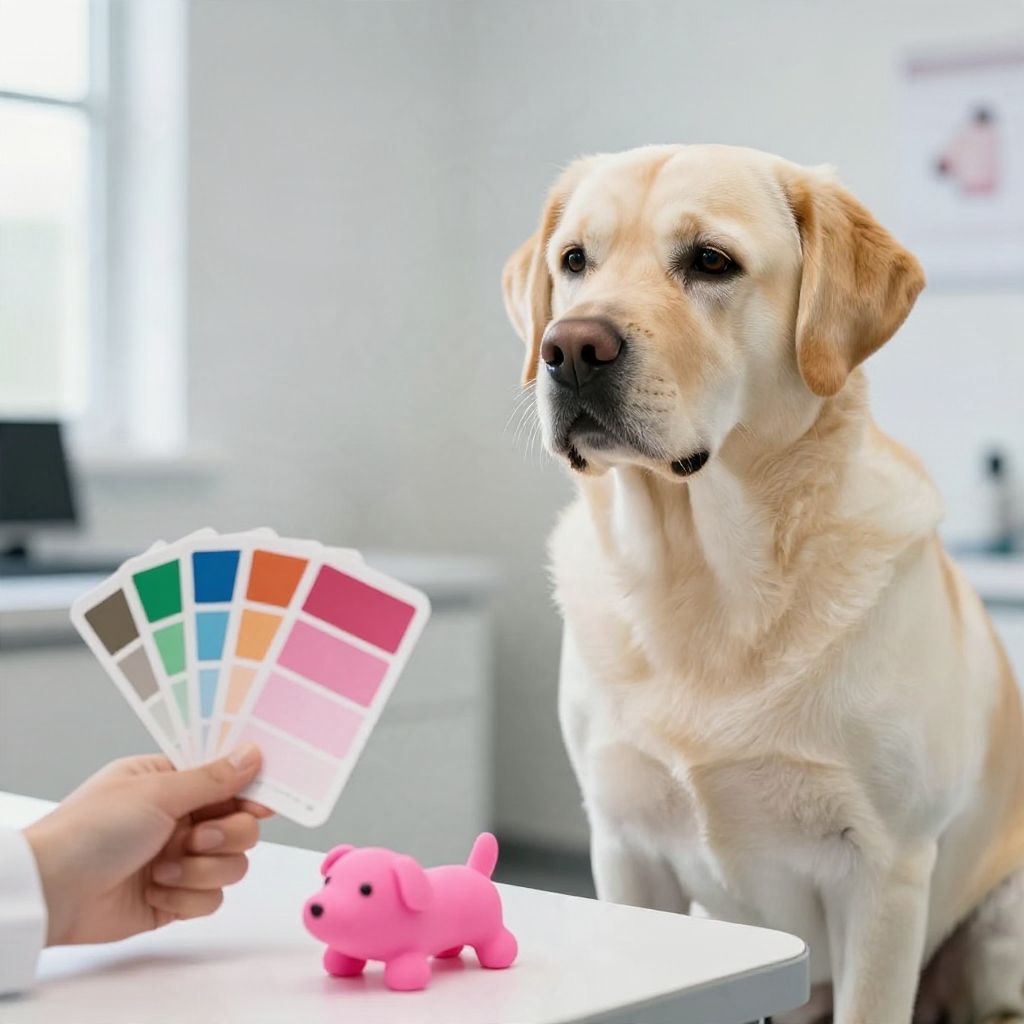
Can dogs see pink? Many dog owners wonder whether a bright toy, bed, or collar looks the same to their dog as it does to them. The short answer is that dogs do not see pink the way humans do, but they can still notice contrast, brightness, and shape very well.
If you want to choose colors your dog is more likely to distinguish, it helps to understand how canine vision works. That can make toys, training tools, and enrichment items easier for your dog to find and use.
Can dogs see pink?
Dogs do not see pink as a separate “pink” color the way people do. Their color vision is limited compared with humans, so pink usually appears more like a muted tan, gray, or off-white shade. Dogs rely more on brightness, movement, scent, and contrast than on color alone.
How dog vision differs from human vision
Dogs have fewer color-detecting cells than people, so their world is less colorful. They are generally better at seeing blues and yellows than reds and greens, and they may have trouble telling some similar shades apart.
What that means in everyday life
- A pink ball may not stand out much on grass or carpet.
- A bright pink leash may still be easy for you to see, but not especially meaningful to your dog.
- Your dog may notice the toy faster if it moves, squeaks, or smells familiar.
This does not mean dogs are poor at seeing overall. In low light and at detecting motion, dogs can be very effective, which is one reason they often spot movement before you do.
Why pink may not look “pink” to your dog
Color perception depends on how the eye and brain process light. Because dogs do not have the same range of color receptors as humans, pink does not register as a distinct warm color in the same way it does for you.
Instead, pink items may blend into the background unless they create strong contrast. A pale pink toy on a beige floor may be harder for your dog to locate than a blue toy on the same surface.
Common examples
- Pink toys: May be less visually obvious than blue or yellow toys.
- Pink bowls or mats: Fine for use, but not necessarily easier for your dog to spot.
- Pink clothing or accessories: Mostly a style choice for you, not a visual aid for your dog.
What colors are easier for dogs to see?
In general, dogs tend to distinguish blue and yellow more easily than red, orange, or pink tones. That said, the exact visual experience can vary by individual dog and by lighting, background, and distance.
Practical color choices for toys and training gear
- Blue: Often stands out well for dogs.
- Yellow: Also commonly easier to notice.
- High-contrast combinations: Blue on green grass or yellow on dark flooring can be useful.
If you are choosing fetch toys, puzzle pieces, or training markers, contrast matters more than a single “best” color. A toy that is easy for you to see can also help you keep track of it during play.
Does pink matter for dog toys, training, or enrichment?
Pink is not harmful just because dogs do not perceive it as humans do. The main issue is visibility. If your dog loses interest in toys quickly, a low-contrast pink item may be harder to find and less engaging during play.
How to make pink items more useful
- Choose a pink toy with a strong shape difference from the background.
- Use it on a contrasting surface, such as grass or dark flooring.
- Add scent or sound, such as a squeaker or familiar odor, if appropriate.
- Rotate toys so novelty, not just color, keeps your dog interested.
For scent-driven dogs, color may matter less than texture and smell. For visually oriented dogs, especially in games like fetch or agility, contrast can improve performance and reduce frustration.
Are there safety concerns with pink products?
Pink itself is not a safety issue. The real concerns are the material, size, durability, and whether the item is appropriate for your dog’s chewing style and body size.
Check these safety points before use
- Size: Avoid items small enough to be swallowed.
- Durability: Replace toys that are cracked, torn, or shedding pieces.
- Paint or dye: Make sure products are made for pets and do not flake easily.
- Choking risk: Supervise dogs that chew aggressively or destroy toys quickly.
If your dog tends to shred toys, the color does not matter as much as choosing a safer design. Always supervise new toys until you know how your dog uses them.
Can dogs see pink in different lighting?
Lighting can change how visible any object is. In bright daylight, a pink item may be easier for you to spot, but your dog still may not interpret it as “pink.” In dim light, dogs often rely more on motion and contrast than color.
If your dog seems to “miss” a toy at dusk or indoors, that does not necessarily mean there is a vision problem. It may simply be a low-contrast object in poor lighting.
Ways to help your dog locate items
- Use toys with strong contrast against the floor or grass.
- Keep play areas well lit when possible.
- Use movement, voice cues, or scent to guide your dog.
- Choose larger toys for dogs that struggle to visually track small objects.
When color confusion could point to an eye problem
Not understanding pink is normal for dogs. But if your dog suddenly seems unable to find familiar objects, bumps into furniture, or hesitates in new environments, that may suggest a vision issue rather than a color-perception difference.
Call your veterinarian if you notice
- Sudden bumping into objects or walls
- Squinting, eye rubbing, or excessive tearing
- Cloudiness, redness, or discharge from the eyes
- Reluctance to go into dim areas or down stairs
- Sudden fearfulness in places your dog knows well
Seek urgent veterinary care if your dog has sudden blindness, severe eye pain, a visibly injured eye, or a rapidly worsening change in vision. Eye problems can become emergencies quickly.
Breed, age, and individual differences
All dogs share the same basic visual system, but individual differences can affect how well a dog notices objects. Age, eye health, and temperament can influence how a dog responds to toys and training tools more than breed alone.
What can vary from dog to dog
- Age: Puppies are still learning to track objects, while senior dogs may have age-related vision changes.
- Eye health: Cataracts, retinal disease, and other conditions can reduce visual clarity.
- Temperament: Some dogs are more toy-motivated; others care more about scent or food rewards.
- Training history: Dogs that have practiced fetch or target games may respond better regardless of color.
So while color vision is broadly similar across dogs, how your own dog uses vision in daily life can differ quite a bit.
How to choose the best toy color for your dog
If you are shopping for toys, think beyond pink versus not pink. The best choice is usually the item your dog can see, carry, and enjoy safely.
- Pick a color with strong contrast against your usual play area.
- Choose a size that matches your dog’s mouth and play style.
- Look for sturdy construction if your dog chews hard.
- Test the toy in your home, yard, or training space before relying on it.
- Watch whether your dog tracks it easily, then adjust if needed.
If your dog ignores a pink toy but loves a blue one, that may simply be because the blue item is easier to notice. It does not mean your dog dislikes the toy’s shape or texture.
Common mistakes owners make
One common mistake is assuming a bright human color will automatically be obvious to a dog. Another is blaming “stubbornness” when the real issue may be poor visibility or an uncomfortable toy.
Try not to
- Assume your dog sees pink the way you do.
- Use low-contrast toys in cluttered spaces and expect easy retrieval.
- Ignore signs of eye strain or vision loss.
- Choose toy color over safety, durability, and size.
Reward-based training works best when your dog can clearly understand the task. Good visibility can make learning easier, but it should always be paired with clear cues and positive reinforcement.
Bottom line: can dogs see pink?
Dogs do not see pink as a distinct color the way humans do. Pink items may look muted or grayish to them, so contrast, movement, and scent usually matter more than color. If you notice sudden vision changes, contact your veterinarian promptly.
If you want to learn more about canine color perception, you may also find these guides helpful: colors dogs can see and what colors dogs cannot see.