
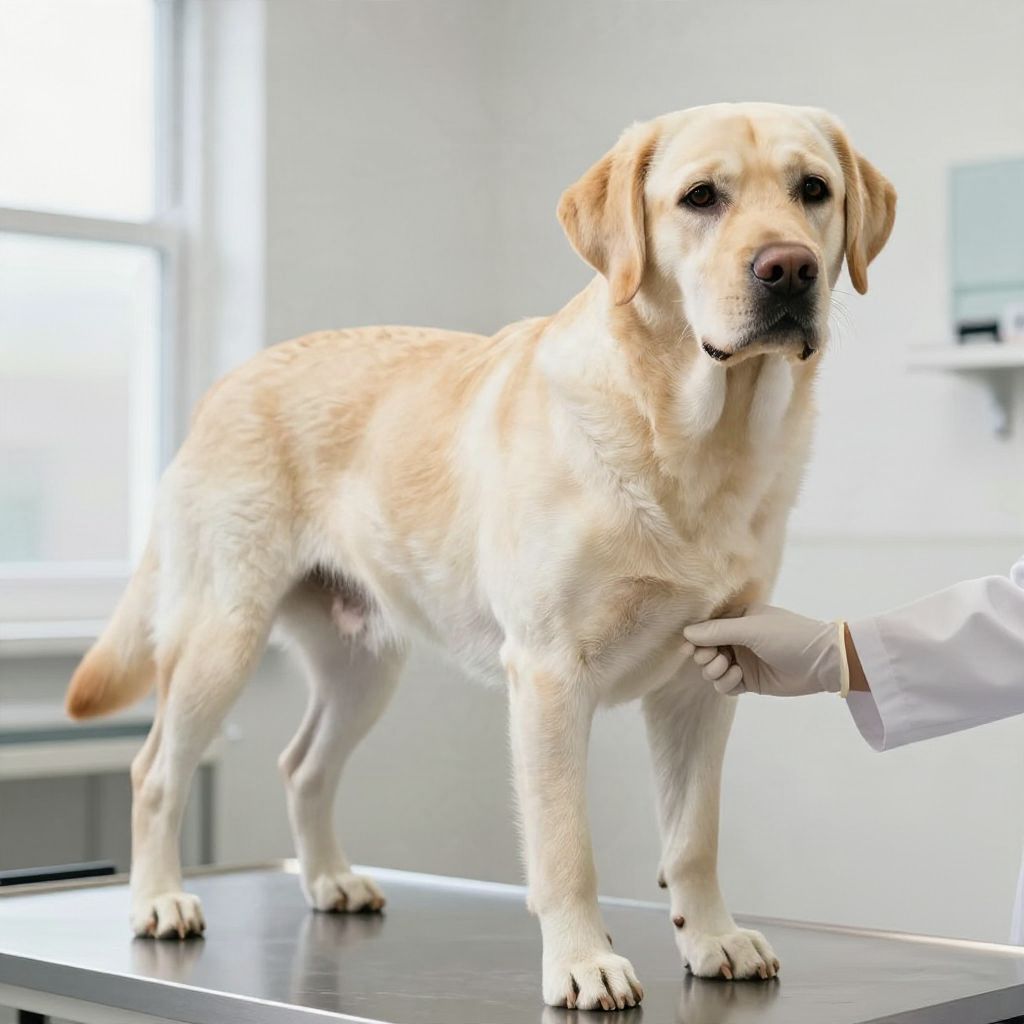
Do dogs have knees? Yes—dogs do have knees, and the joint is important for walking, running, jumping, and sitting. In everyday conversation, people often mean the hind-leg joint that bends like a human knee.
That joint can be injured, especially in active dogs, puppies, seniors, and some smaller breeds. Knowing what is normal, what is not, and when to call your veterinarian can help you protect your dog’s mobility.
Do dogs have knees?
Yes. Dogs have knees on their back legs, and the knee joint is called the stifle. It connects the thigh bone to the lower leg and works with the hip and hock to support movement, balance, and shock absorption. The front legs do not have knees; they have elbows instead.
What the dog knee does
The knee helps your dog bend, extend, turn, and absorb impact during movement. Because dogs rely on their hind legs for power and stability, the knee is under a lot of stress during running, jumping, playing, and climbing stairs.
Why the knee matters for everyday movement
- It helps your dog push off when running or jumping.
- It supports weight during standing and walking.
- It helps with quick turns and sudden stops.
- It works with surrounding muscles and ligaments to keep the leg stable.
Where the knee is on a dog
If you look at your dog’s back leg, the knee is the joint between the upper thigh and the lower leg. It sits above the hock, which is the joint that often looks like a dog’s “ankle.” Many owners mistake the hock for the knee, especially when looking at the rear leg from the side.
A simple way to picture it: hip, knee, hock, paw. That order can help you identify which joint may be sore or swollen if your dog is limping.
Common knee problems in dogs
Dogs can develop several knee issues, and the risk varies by age, size, activity level, body condition, and individual anatomy. Not every limping dog has a knee problem, but the knee is a common source of lameness.
Cruciate ligament injury
The cranial cruciate ligament helps stabilize the knee. When it is damaged or torn, dogs may suddenly limp, avoid putting weight on the leg, or seem stiff after rest. Some dogs have a gradual onset, while others show a sudden change after a jump or slip.
Patellar luxation
This happens when the kneecap slips out of place. It is often noticed as skipping, intermittent limping, or a brief “hop” on one leg. Some dogs have mild signs, while others need veterinary treatment to prevent ongoing pain and joint damage.
Arthritis and joint degeneration
Older dogs, dogs with previous injuries, and dogs with chronic instability may develop arthritis in the knee. Signs can include stiffness, slower movement, difficulty rising, reluctance to jump, or reduced interest in long walks.
Other possible causes of knee pain
- Meniscus injury
- Soft tissue strain
- Infection or inflammation
- Bone or joint disease
- Trauma from falls, rough play, or collisions
Signs your dog’s knee may be hurting
If your dog has a knee problem, the signs may be obvious or subtle. Some dogs continue to walk but show discomfort only after exercise or when standing up.
- Limping or favoring one back leg
- Skipping or holding the leg up briefly
- Swelling around the knee
- Stiffness after rest
- Reluctance to run, jump, or use stairs
- Yelping, licking, or guarding the leg
- Muscle loss in the affected leg over time
Urgent veterinary care is needed if your dog cannot bear weight, the leg looks deformed, the knee is very swollen, your dog seems in severe pain, or the limping started after a major fall, collision, or other trauma.
How veterinarians check a dog’s knee
Your veterinarian will usually start with a physical exam and a gait assessment. They may gently manipulate the joint to look for instability, pain, or kneecap movement. Imaging such as X-rays may be recommended, and in some cases additional tests are needed.
Because limping can come from the hip, paw, spine, or another part of the leg, a proper exam matters. A dog that appears to have a knee issue may actually have pain elsewhere.
What you can do at home if your dog may have a knee issue
Home care should focus on safety and limiting further injury until your veterinarian advises next steps. Rest alone is not a cure for every knee problem, but it can help prevent worsening.
- Restrict activity. Keep walks short and calm. Avoid running, jumping, rough play, and stairs if possible.
- Use leash control. Prevent sudden bursts of movement, especially outdoors.
- Provide traction. Slippery floors can make knee pain worse, so use rugs or non-slip mats.
- Keep your dog comfortable. Offer a supportive bed and easy access to water and resting areas.
- Arrange a vet visit. Even mild limping can signal a problem that benefits from early care.
Do not give human pain medicines unless your veterinarian specifically instructs you to do so. Many common medications can be dangerous for dogs.
How to help protect your dog’s knees
You cannot prevent every injury, but you can lower risk with good habits. Protection is especially important for energetic dogs, overweight dogs, seniors, and dogs with a history of joint problems.
Practical prevention tips
- Keep your dog at a healthy body condition.
- Build exercise gradually instead of relying on sudden intense activity.
- Use safe surfaces when possible, especially for high-speed play.
- Discourage repeated jumping on and off furniture.
- Use ramps or steps for cars and elevated beds if needed.
- Maintain regular veterinary checkups to catch subtle changes early.
Body weight matters because extra pounds increase stress on the knee joints. Even a modest reduction in excess weight can make movement easier for many dogs, but your veterinarian can guide you on a safe plan.
Do breed, size, age, and lifestyle affect knee health?
Yes. Risk varies widely from dog to dog. Some breeds are more commonly seen with certain knee issues, but that does not mean every dog of that breed will develop a problem.
Factors that can influence risk
- Age: Puppies can be injured during active play, while seniors are more prone to arthritis and degeneration.
- Size: Small dogs are often discussed in relation to kneecap issues, while larger dogs may be more prone to ligament problems, though any dog can be affected.
- Activity: Dogs that jump, sprint, or twist frequently may face more strain.
- Body condition: Extra weight can increase stress on joints.
- Previous injury: A past knee injury can raise the chance of future problems.
When limping is not just “a minor strain”
Some dogs improve quickly with rest, but persistent or recurring limping should not be ignored. Ongoing knee pain can lead to muscle loss, compensation in other joints, and reduced quality of life.
Contact your veterinarian promptly if the limping lasts more than a day or two, keeps returning, or is paired with swelling, stiffness, or behavior changes. The sooner a cause is identified, the better the chance of protecting the joint.
Common mistakes to avoid
- Assuming a dog will “walk it off” without an exam
- Forcing exercise when the dog is limping
- Using stairs, jumping, or rough play during recovery
- Giving over-the-counter pain medicine without veterinary guidance
- Waiting too long when the limp is severe or sudden
What recovery may involve
Treatment depends on the cause, your dog’s age and size, and how severe the problem is. Your veterinarian may recommend rest, weight management, rehabilitation exercises, pain control, or surgery in some cases. Follow-up care is important because knee problems often improve best with a structured plan.
If your dog has a chronic condition, ask your veterinarian how to adjust exercise, home setup, and activity expectations. A tailored plan is usually safer than guessing.
Conclusion
Yes, dogs have knees, and those joints are essential for healthy movement. If your dog is limping, stiff, or reluctant to use a back leg, monitor closely and contact your veterinarian for guidance. Early care can help protect comfort, mobility, and long-term joint health.
If you want to learn more about related mobility concerns, you may also find my dog is limping helpful for understanding when limping needs veterinary attention.