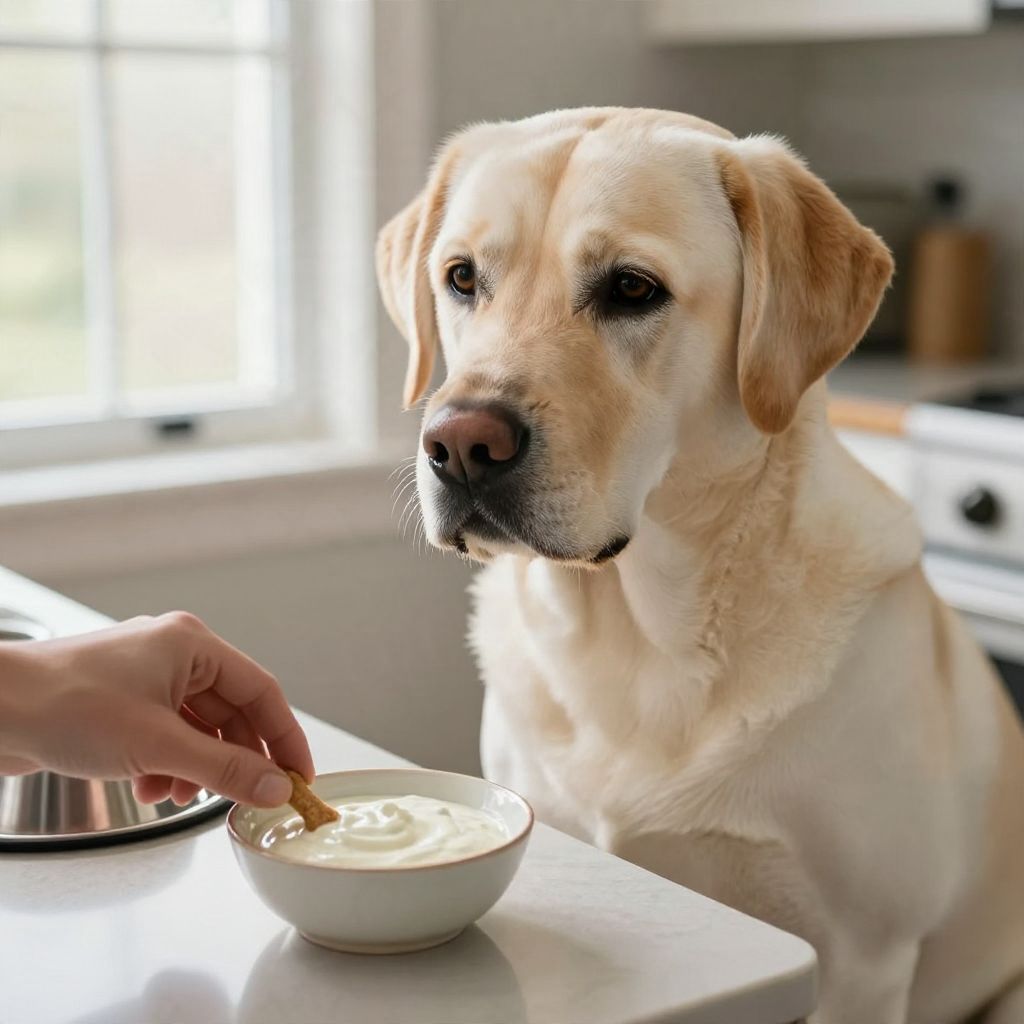
Can dogs have ranch? In most cases, a small lick is unlikely to cause serious harm, but ranch dressing is not a good snack for dogs. It is usually high in fat, salt, and seasoning, and some versions contain ingredients that can upset your dog’s stomach.
If your dog ate ranch, the right response depends on how much was eaten, your dog’s size, and whether the dressing contains risky ingredients such as onion or garlic. Watch closely for digestive upset, and contact your veterinarian if symptoms develop or the amount was more than a taste.
Can dogs have ranch?
Dogs should not regularly eat ranch dressing. A tiny amount is usually not dangerous for a healthy dog, but ranch is rich, salty, and often seasoned with ingredients that can irritate the stomach. Larger amounts raise the risk of vomiting, diarrhea, and, in sensitive dogs, more serious problems.
Why ranch dressing is not a good dog food
Ranch is made for human taste, not canine digestion. Even when it does not contain toxic ingredients, it can still be too heavy for a dog’s stomach and too calorie-dense for frequent feeding.
Common concerns in ranch dressing
- High fat: Can trigger stomach upset and may be a concern for dogs prone to pancreatitis.
- High sodium: Too much salt is not healthy for dogs, especially those with heart, kidney, or blood pressure issues.
- Seasonings: Some ranch recipes include onion, garlic, chives, or related flavorings that are unsafe for dogs.
- Dairy: Many dogs are sensitive to rich dairy-based foods and may get gas, loose stool, or vomiting.
- Extra calories: Even small amounts can add up, especially for small dogs or dogs that need weight control.
What happens if a dog eats ranch?
Most of the time, the main issue is digestive upset. Your dog may seem fine after a small lick, or they may develop mild vomiting, soft stool, gas, or reduced appetite later the same day.
Signs to watch for
- Vomiting
- Diarrhea
- Drooling or lip licking
- Stomach discomfort
- Reduced appetite
- Lethargy
These signs are not specific to ranch, but they are common after rich or unfamiliar foods. If they are mild and short-lived, your vet may recommend home monitoring. If they are severe, persistent, or your dog seems unwell, call your veterinarian promptly.
When ranch can be more risky
Some dogs are more likely to have trouble after eating ranch, even in modest amounts. Risk depends on your dog’s age, size, health history, and how sensitive their stomach usually is.
Dogs that may be more sensitive
- Puppies: Their digestive systems are still developing, so rich foods can upset them more easily.
- Small dogs: A tablespoon of ranch is a much bigger load for a small dog than for a large one.
- Dogs with pancreatitis history: Fatty foods may be especially problematic.
- Dogs with food sensitivities: Dairy or seasoning may trigger symptoms.
- Dogs with kidney, heart, or liver disease: Extra sodium and rich foods may be a poor choice.
- Overweight dogs: Ranch adds unnecessary calories and can make weight control harder.
Ingredients in ranch that can be dangerous
Plain ranch is usually a stomach upset issue, but some versions contain ingredients that are more concerning. Always check the label if your dog got into bottled dressing, dip, or a homemade batch.
Watch for these ingredients
- Onion or garlic: These can be harmful to dogs, especially in concentrated forms.
- Chives or shallots: Also part of the allium family and not safe for dogs.
- Spicy seasonings: Can irritate the digestive tract.
- Xylitol: Rare in ranch, but if present in any food, it is an emergency for dogs.
- Alcohol or strong flavor extracts: Not appropriate for dogs.
If the ranch contained onion, garlic, xylitol, or another potentially toxic ingredient, contact your veterinarian or an emergency clinic right away. Do not wait for symptoms to appear if you know a dangerous ingredient was eaten.
How much ranch is too much?
There is no universal safe amount because it depends on the dog and the recipe. A quick lick from a plate is usually less concerning than a spoonful, and a large dog may tolerate a small accidental taste better than a tiny dog. Even so, ranch should not become a regular treat.
Use common sense: the larger the amount, the richer the recipe, and the smaller or more sensitive the dog, the more likely problems become. If you are unsure, call your vet and describe the product, amount, and your dog’s size.
What to do if your dog ate ranch
Stay calm and assess the situation. In many cases, you can monitor at home if it was only a small amount and your dog is acting normal.
- Check the label or recipe for onion, garlic, chives, xylitol, or other concerning ingredients.
- Estimate how much was eaten and whether it was a lick, a spoonful, or more.
- Watch your dog for vomiting, diarrhea, abdominal pain, or unusual tiredness.
- Offer fresh water and keep meals simple unless your veterinarian advises otherwise.
- Call your veterinarian if your dog is a puppy, very small, has a medical condition, or ate a larger amount.
Do not try to make your dog vomit unless a veterinarian specifically tells you to do so. That can be unsafe in many situations.
Emergency warning signs
Seek urgent veterinary care if your dog shows any of the following after eating ranch or a ranch-containing food:
- Repeated vomiting
- Severe diarrhea or bloody stool
- A swollen or painful abdomen
- Weakness, collapse, or extreme lethargy
- Tremors or seizures
- Difficulty breathing
- Signs of dehydration, such as dry gums or refusing water
- Known ingestion of onion, garlic, xylitol, or another toxic ingredient
These signs can signal a more serious reaction than simple stomach upset. If your dog seems unwell, do not delay.
Are some dogs more likely to have problems than others?
Yes. Breed alone does not determine whether a dog can eat ranch, but individual health and body size matter a lot. Some dogs have more sensitive stomachs, some are prone to pancreatitis, and some are simply less tolerant of rich foods.
Age also matters. Puppies may react more strongly to rich or salty foods, while senior dogs may have underlying health issues that make fatty or salty snacks a poor choice. Your veterinarian can help you judge risk based on your dog’s history.
Safer alternatives to ranch
If you want to give your dog something tasty, choose dog-safe foods that are simple and unseasoned. These are better options than sharing salad dressing or dip.
- Small pieces of plain cooked chicken or turkey
- Plain cooked pumpkin, if your vet says it is appropriate
- Small amounts of plain cucumber or carrot
- Commercial dog treats made for your dog’s size and health needs
Even safe treats should stay within your dog’s daily calorie needs. Treats are best used as extras, not meal replacements.
How to prevent future accidents
Prevention is simple and worth the effort. Dogs often get into ranch when it is left within reach on counters, tables, or picnic plates.
- Keep dressings and dips out of reach.
- Do not leave plates unattended around your dog.
- Teach a reliable “leave it” cue using reward-based training.
- Ask guests not to feed your dog from the table.
- Store leftovers securely after meals.
Training helps, but management matters too. Even well-trained dogs can be tempted by rich food smells.
Bottom line
Can dogs have ranch? Only in very small accidental amounts, and even then it is not a healthy choice. Most dogs are better off avoiding it because ranch is rich, salty, and sometimes seasoned with ingredients that can be harmful. If your dog ate ranch and now seems sick, call your veterinarian for guidance.
If you want to compare similar food-safety questions, you may also find can dogs eat ranch dressing and can dogs eat salad dressing helpful for more detail on dressings and canine safety.