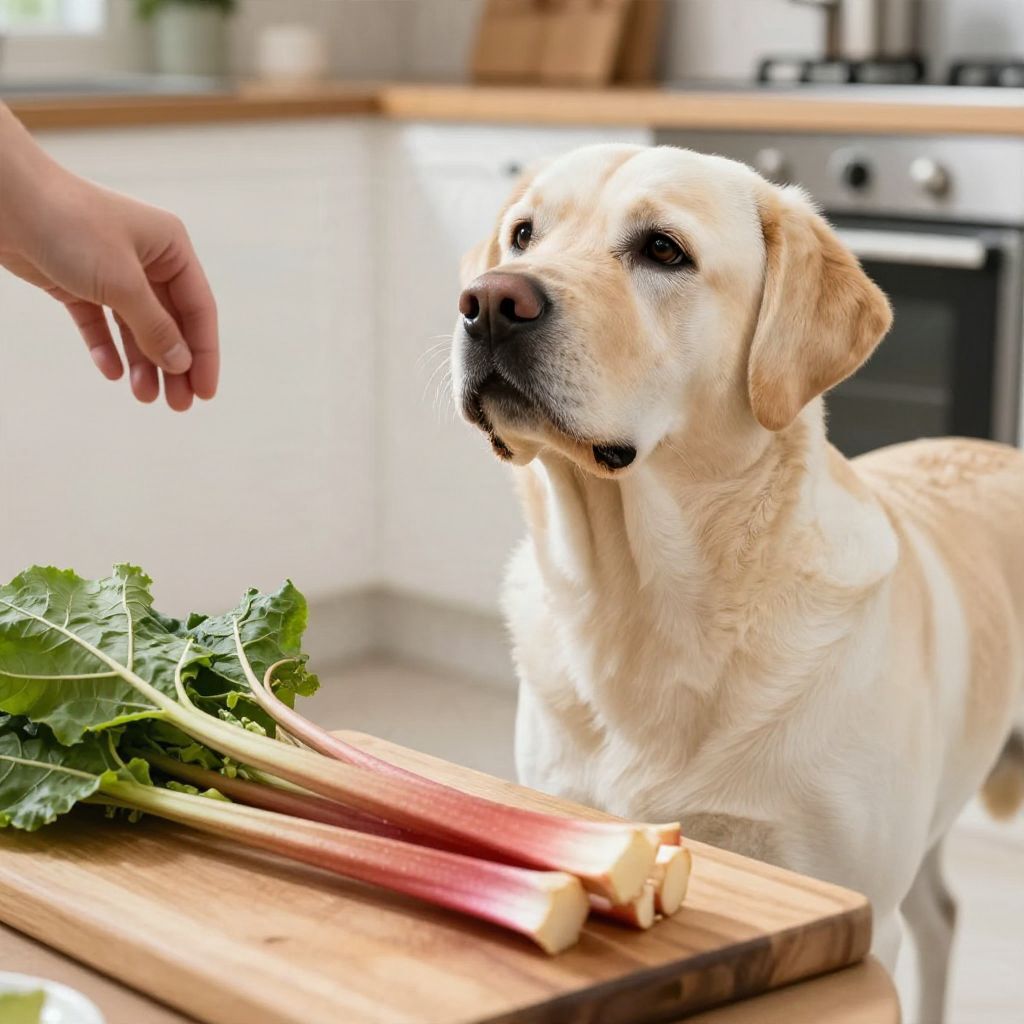
If you’re wondering, “Can dogs eat rhubarb?” the short answer is no: rhubarb is not a safe treat for dogs. The leaves are especially dangerous, and even the stalks can upset a dog’s stomach.
If your dog has already eaten rhubarb, monitor closely and contact your veterinarian right away if any symptoms appear. The safest approach is to keep rhubarb out of reach and offer dog-safe snacks instead.
Can dogs eat rhubarb?
No, dogs should not eat rhubarb. Rhubarb leaves are toxic, and the stalks can still cause digestive upset, especially if your dog eats a lot or is sensitive. If your dog has eaten any part of the plant, call your veterinarian for guidance, particularly if they seem unwell.
Why rhubarb is risky for dogs
Rhubarb is a problem because different parts of the plant carry different levels of risk. The leaves are the biggest concern, while the stalks are less dangerous but still not a good snack for dogs.
Rhubarb leaves
The leaves contain substances that can poison dogs. Eating them can lead to signs that range from mild stomach upset to more serious illness.
Rhubarb stalks
Stalks are not the main toxic part, but they can still irritate the digestive tract. They may also be hard for some dogs to chew and digest, which increases the chance of vomiting or diarrhea.
What symptoms can happen if a dog eats rhubarb?
Symptoms can vary depending on how much was eaten, which part of the plant was eaten, and your dog’s size and health. Some dogs may only get mild stomach upset, while others can become much sicker.
- Drooling
- Vomiting
- Diarrhea
- Loss of appetite
- Abdominal pain or discomfort
- Lethargy
- Weakness
- Tremors or unusual behavior in more serious cases
Seek urgent veterinary care if your dog has repeated vomiting, seems weak, collapses, has trouble breathing, develops tremors, or appears severely painful. Do not wait for symptoms to “pass” if your dog looks unwell.
What to do if your dog ate rhubarb
Act quickly, but stay calm. The right next step depends on what part of the plant was eaten, how much, and whether your dog has symptoms.
- Remove any remaining rhubarb so your dog cannot eat more.
- Check whether the leaves, stalks, or both were eaten.
- Call your veterinarian or an emergency clinic for advice.
- Watch for vomiting, diarrhea, drooling, weakness, or behavior changes.
- Bring a sample or photo of the plant if you can do so safely.
Do not try home remedies or give human medications unless a veterinarian specifically tells you to do so. If your dog is already showing symptoms, they may need prompt medical assessment.
Are rhubarb stalks ever safe for dogs?
Even though the stalks are less risky than the leaves, they are still not recommended as a dog treat. A small bite may not cause major harm in every case, but there is no good reason to offer rhubarb when safer options are available.
For dogs with sensitive stomachs, a history of pancreatitis, or other digestive issues, even “small” amounts of unfamiliar plant material can be more likely to cause problems. Puppies and smaller dogs may also be affected more easily because they have less body mass.
Why some dogs may react more strongly than others
Individual risk varies. A large, healthy adult dog may tolerate a tiny accidental nibble differently than a puppy, senior dog, or dog with an underlying health condition.
- Body size: Smaller dogs may be affected by less plant material.
- Age: Puppies and older dogs can be more vulnerable to dehydration and weakness.
- Health history: Dogs with kidney disease, digestive disease, or other medical issues may need faster care.
- Amount eaten: More plant material usually means greater risk.
- Time since ingestion: Early advice from a veterinarian can improve decision-making.
How to keep your dog away from rhubarb
If you grow rhubarb at home or bring it in from the store, prevention matters. Dogs are curious, and many will investigate plants on counters, in gardens, or in compost bins.
- Keep rhubarb plants fenced off or otherwise inaccessible.
- Store cut stalks where your dog cannot reach them.
- Dispose of leaves securely, not in an open compost pile your dog can access.
- Teach a reliable “leave it” cue using reward-based training.
- Supervise dogs around garden beds, picnic foods, and kitchen prep areas.
If your dog likes to raid food or garden items, management is just as important as training. Use barriers, closed containers, and supervision to reduce the chance of accidental ingestion.
What dog-safe treats can you offer instead?
If you wanted to share a fresh snack, choose foods that are known to be dog-safe and served in appropriate portions. Treats should stay small and make up only a limited part of your dog’s overall diet.
- Plain cooked carrots
- Small pieces of apple without seeds or core
- Blueberries
- Cucumber slices
- Plain green beans
- Commercial dog treats made for your dog’s size and health needs
Always introduce any new food gradually. If your dog has allergies, a sensitive stomach, diabetes, or another medical condition, ask your veterinarian before changing treats.
When to call the vet after rhubarb exposure
Call your veterinarian if your dog ate rhubarb and you are unsure how much, whether the leaves were included, or whether your dog is at higher risk because of age or health history. It is especially important to get advice if symptoms develop.
Call right away if you notice
- Repeated vomiting
- Severe diarrhea
- Marked lethargy or weakness
- Tremors
- Difficulty breathing
- Collapse
- Signs of pain or distress
If you are ever unsure, it is better to contact a veterinary professional sooner rather than later. Quick action is the safest choice when a dog may have eaten a toxic plant.
Common mistakes to avoid
When people ask, “Can dogs eat rhubarb,” the biggest risk is assuming the stalks are harmless enough to share. It is also common to underestimate how quickly a dog can get into garden plants or kitchen scraps.
- Do not assume the leaves are the only issue.
- Do not offer rhubarb as a “natural” treat.
- Do not wait for symptoms if your dog ate a large amount.
- Do not give human medicines without veterinary advice.
- Do not rely on internet guesses to identify plant toxicity.
Bottom line: can dogs eat rhubarb?
No, dogs should not eat rhubarb. The leaves are toxic, and the stalks can still upset the stomach, so it is safest to keep the whole plant away from your dog. If your dog eats rhubarb, contact your veterinarian promptly, especially if any symptoms appear.
If you want to read more about dog food safety, you may also find this guide on can dogs eat rhubarb helpful, along with other practical feeding advice for everyday pet care.