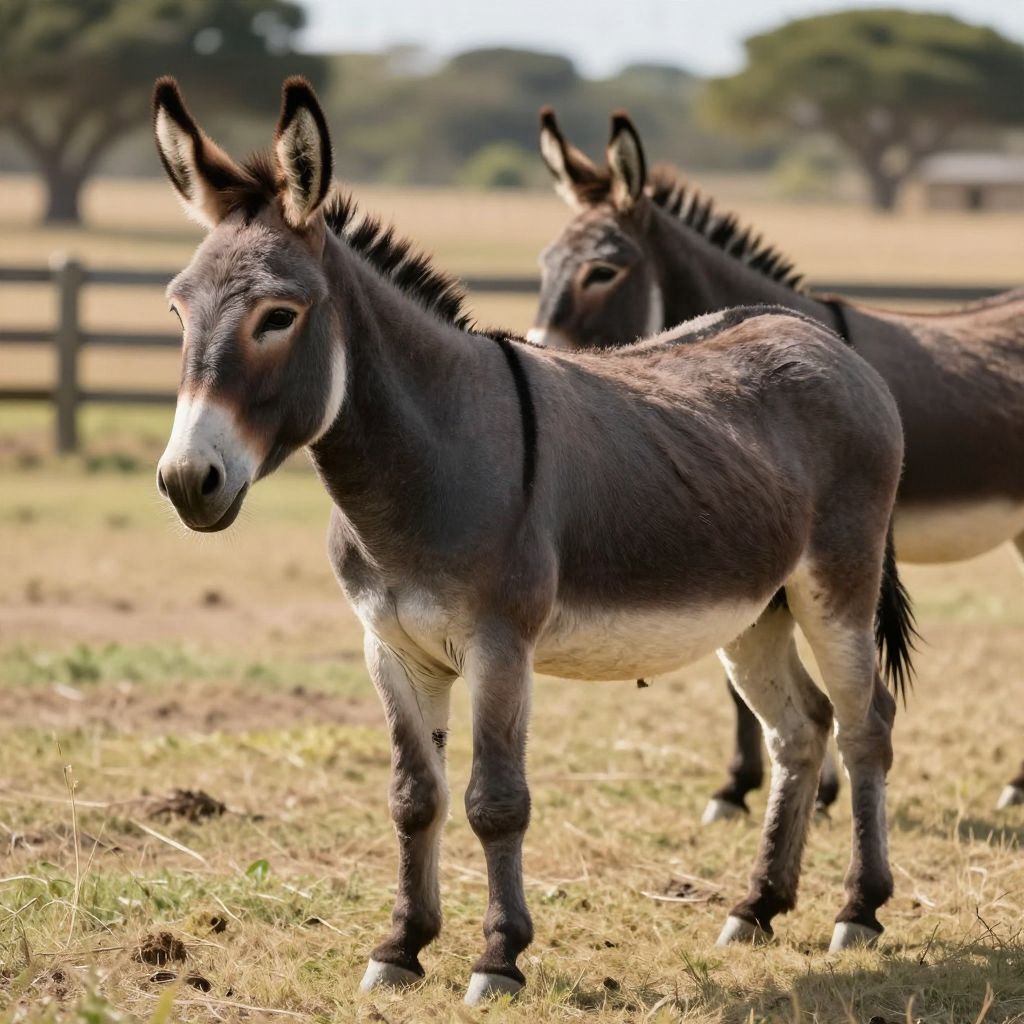
Do all donkeys have a cross on their back? No. Many donkeys have the familiar dark cross marking, but not every donkey does. The pattern is common in some donkeys, especially gray-coated ones, yet coat color, genetics, age, and hair fading can all affect whether you can see it clearly.
If you’re asking because you’ve noticed a donkey with or without the marking, that is usually normal. The cross is a coat pattern, not a health problem, and it does not tell you everything about the donkey’s breed, temperament, or care needs.
Do All Donkeys Have A Cross On Their Back?
No, not all donkeys have a cross on their back. The “cross” is a natural coat marking seen in many donkeys, but some have a faint version, some lose the contrast as they age, and some never show it clearly at all. It is a normal variation, not a sign of illness.
What The Cross Marking Usually Looks Like
The classic donkey cross is a darker line running down the spine with another line across the shoulders. In some animals, it appears bold and easy to spot. In others, it may be washed out, broken, or only visible in certain lighting.
Why it may be hard to see
- Coat color: The marking is often easiest to see on gray or dun coats.
- Seasonal coat changes: Winter and summer coats can change how markings appear.
- Age: Foals, adults, and older donkeys may show different contrast.
- Grooming and dirt: Dust, mud, and shedding can hide the pattern.
- Individual genetics: Some donkeys simply express the marking more strongly than others.
Why Some Donkeys Have The Marking And Others Don’t
The cross is linked to inherited coat traits, so it depends on genetics rather than care, diet, or behavior. That means two healthy donkeys can look quite different. A donkey without a visible cross can still be perfectly normal and healthy.
People sometimes assume the marking proves a donkey is a certain breed or type, but that is not reliable. Appearance alone cannot confirm ancestry, and the presence or absence of a cross does not predict personality.
Does The Cross Mean Anything About Health Or Temperament?
Usually, no. The cross is mainly a coat feature. It does not diagnose health, and it does not tell you whether a donkey will be calm, stubborn, friendly, or shy. Temperament depends much more on handling, socialization, training, pain status, and individual personality.
What matters more than markings
- Regular hoof care
- Body condition and weight management
- Dental health
- Safe fencing and turnout
- Gentle, consistent handling
- Appropriate companionship and enrichment
When A Change In Coat Markings Could Be A Concern
A missing or faded cross is usually harmless. However, if a donkey’s coat changes suddenly, or the skin beneath the coat looks abnormal, it is worth checking with a veterinarian. Coat changes can sometimes happen with poor nutrition, parasites, skin disease, or general illness.
Watch for these warning signs
- Patchy hair loss
- Itching, rubbing, or skin thickening
- Scabs, crusting, or open sores
- Weight loss or poor body condition
- Lethargy or reduced appetite
- Swelling, heat, or pain
Seek veterinary advice promptly if coat changes come with pain, fever, trouble eating, severe itching, or rapid weight loss. Those signs suggest a broader health issue, not just a cosmetic coat difference.
How This Relates To Caring For Donkeys
Even though the cross itself is not a care issue, it can be a good reminder to look at the whole animal. A healthy donkey usually has a clean coat, bright eyes, a good appetite, normal movement, and a comfortable body condition. The marking is just one small part of the picture.
Helpful routine care
- Brush regularly to remove dirt and check the skin.
- Monitor weight and body condition with your vet’s guidance.
- Provide constant access to clean water.
- Feed a balanced diet suited to the donkey’s age and workload.
- Schedule routine hoof trimming and dental care.
- Watch for signs of parasites or skin irritation.
Common Misunderstandings About Donkey Crosses
One common myth is that every donkey must have a cross. That is not true. Another is that a strong cross means a donkey is healthier or more “pure.” Coat markings do not work that way, and they should not be used to judge welfare or worth.
It is also easy to confuse donkey markings with those on mules or other equines. If you are trying to identify an animal, use several features together, such as body shape, ears, mane, tail, and behavior, rather than relying on one coat pattern.
If You Are Caring For A Donkey, What Should You Focus On?
Instead of worrying about whether the cross is visible, focus on practical welfare basics. A donkey that eats well, moves comfortably, and has regular preventive care is usually doing much better than one with a perfect-looking coat but poor management.
Daily checks that matter
- Is the donkey eating normally?
- Is it standing and walking comfortably?
- Are the eyes, nose, and coat clean?
- Is there any swelling, heat, or lameness?
- Is the donkey interacting normally with companions?
When To Call A Veterinarian
Call a veterinarian if you notice sudden coat changes along with illness signs, or if you are unsure whether a skin issue is minor. Donkeys can hide discomfort well, so subtle changes in posture, appetite, or movement deserve attention.
Get urgent veterinary help for severe lethargy, colic signs, inability to stand, difficulty breathing, heavy bleeding, or a rapidly worsening skin or wound problem. Do not wait for these symptoms to improve on their own.
Bottom Line
No, all donkeys do not have a cross on their back. It is a common and normal marking, but not every donkey shows it clearly. If you are caring for a donkey, the marking is far less important than good nutrition, hoof care, dental care, safe housing, and prompt attention to health changes.