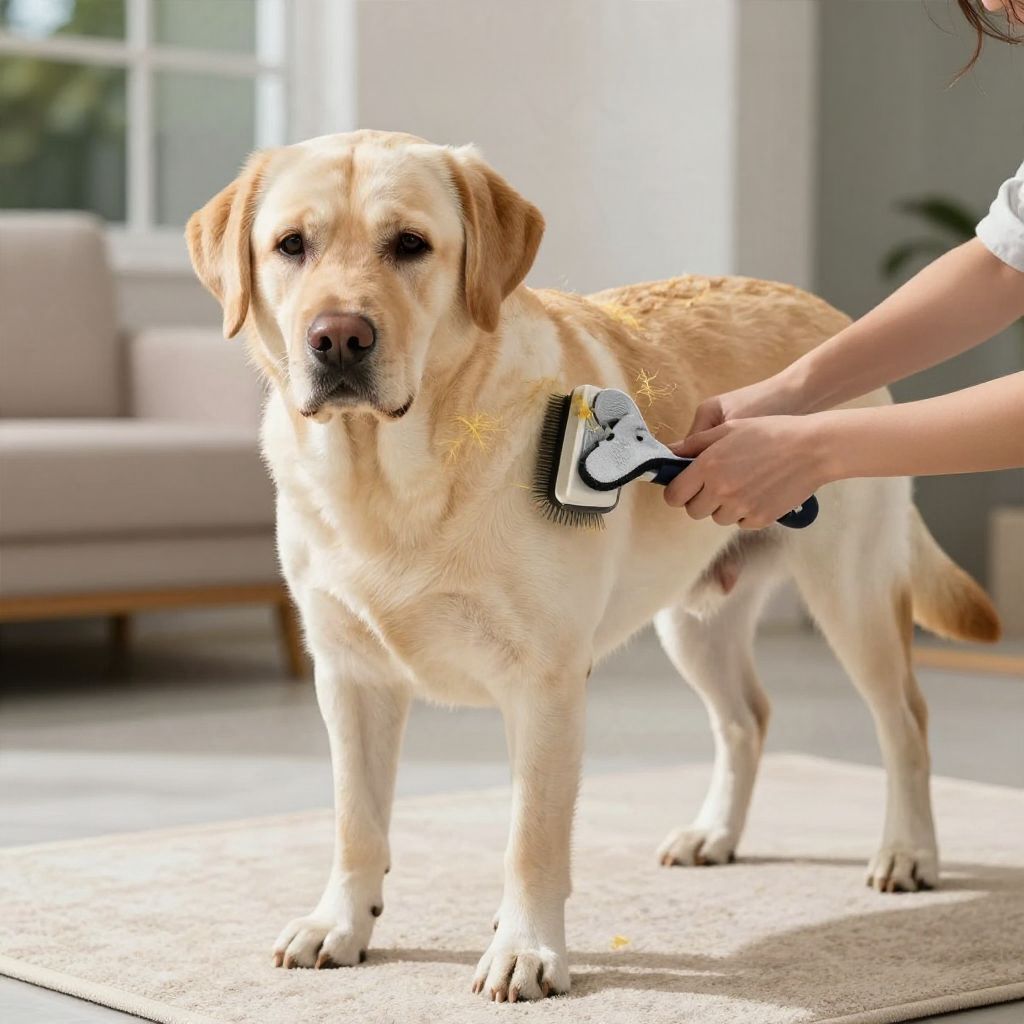
Do Labs shed? Yes—Labrador Retrievers are known for shedding year-round, and many owners notice heavier shedding during seasonal coat changes. Their short coat can still leave a surprising amount of hair on furniture, clothes, and floors.
The good news is that Labrador shedding is manageable with regular brushing, a healthy diet, and routine grooming. If shedding suddenly increases or comes with skin problems, it may be a sign of an underlying health issue that needs veterinary attention.
Do Labs Shed?
Yes, Labs shed a lot compared with many short-haired dogs. They have a dense double coat that helps protect them from water and weather, and that coat naturally releases hair throughout the year. Shedding usually increases during spring and fall, but every Labrador is a little different.
Why Labradors Shed So Much
Labradors have a coat that is designed for function, not low maintenance. The undercoat helps with insulation, while the outer coat helps repel moisture and dirt. As old hairs fall out and new ones grow in, you will see loose fur on your dog and around your home.
Typical shedding patterns
- Year-round shedding: Most Labs lose hair continuously.
- Seasonal coat blow: Many shed more heavily when temperatures change.
- Individual variation: Age, health, diet, and grooming habits can affect how much hair you see.
Some Labs seem to shed more than others, but that does not necessarily mean anything is wrong. It often reflects coat density, climate, and how often loose hair is brushed out before it lands on your floors.
How Much Shedding Is Normal?
Normal Labrador shedding usually looks like steady hair loss without bald patches, sores, or obvious discomfort. You may notice fur on bedding, in the car, and on clothing, especially if you pet your dog often or skip brushing for a while.
What matters most is whether the shedding is consistent with your dog’s usual pattern. A sudden change is more important than the amount alone.
Signs the shedding may be more than normal
- Bald spots or thinning areas
- Red, flaky, or greasy skin
- Excessive scratching, licking, or chewing
- Strong odor from the coat or skin
- Hair loss around the ears, tail, belly, or paws
How to Manage a Lab’s Shedding
You cannot stop a Labrador from shedding, but you can reduce loose hair and keep the coat healthy. The most effective approach is regular grooming combined with good overall care.
1. Brush consistently
Brushing removes loose hair before it ends up on your furniture. For many Labs, brushing a few times per week works well, and daily brushing can help during heavy shedding seasons.
- Use a slicker brush, grooming mitt, or undercoat tool made for double-coated dogs.
- Brush in the direction of hair growth.
- Be gentle on sensitive areas like the belly, legs, and behind the ears.
2. Bathe when needed
Bathing can help loosen dead hair, but too-frequent baths may dry the skin. Use a dog-safe shampoo and rinse thoroughly so residue does not irritate the coat.
If your Lab has skin allergies or a recurring odor, ask your veterinarian what bathing schedule is appropriate.
3. Feed a complete, balanced diet
A healthy coat starts with good nutrition. A complete dog food that matches your Lab’s age and lifestyle supports skin and coat health better than supplements or human foods alone.
If you are considering omega-3 supplements or other coat products, check with your veterinarian first. Not every dog needs them, and the right choice depends on your dog’s health history.
4. Keep up with parasite prevention
Fleas, mites, and other skin parasites can cause itching and increased shedding. If your dog is scratching more than usual, a parasite check is worth discussing with your vet.
5. Support overall health
Regular exercise, appropriate weight management, and routine veterinary care all help keep skin and coat in better condition. A dog that feels well is less likely to develop stress-related grooming issues or skin flare-ups.
When Shedding Might Signal a Health Problem
Shedding alone is usually not an emergency, but sudden or severe hair loss can point to an underlying issue. Skin allergies, infections, hormonal problems, parasites, and other medical conditions can all affect the coat.
Call your veterinarian if you notice:
- Rapid hair loss or patchy bald spots
- Persistent itching, licking, or chewing
- Scabs, pimples, crusting, or open sores
- Skin that looks red, swollen, or painful
- Changes in appetite, energy, or weight along with coat changes
Seek urgent veterinary care if your Lab has severe swelling, trouble breathing, repeated vomiting after a suspected toxin exposure, or a painful skin wound that is worsening quickly. Those signs need prompt attention, not home treatment.
Do Lab Puppies Shed Too?
Yes, Lab puppies shed, though their coat changes can look different from adult shedding. As puppies grow, they lose their softer baby coat and gradually develop the adult coat. Some owners notice more fur loss during this transition.
Gentle brushing helps puppies get used to grooming early. Keep sessions short, calm, and rewarding so your dog learns that brushing is normal and safe.
Puppy grooming tips
- Use soft, positive handling.
- Brush briefly and often instead of waiting for big tangles or heavy shedding.
- Check ears, paws, and skin while grooming so you can spot problems early.
Common Mistakes When Trying to Reduce Shedding
Some well-meaning owners accidentally make shedding worse by overbathing, using harsh products, or skipping grooming until the coat is packed with loose hair. Others assume heavy shedding is always normal and miss early signs of skin disease.
- Do not use human shampoo on your dog unless your veterinarian specifically approves it.
- Do not shave a Labrador coat to reduce shedding; that can interfere with coat function and skin protection.
- Do not ignore itching, redness, or odor just because Labs are known to shed.
How to Keep Your Home Cleaner
Since Labs shed, a few practical habits can make life easier. The goal is not to eliminate hair completely, but to keep it under control.
- Brush your dog before the hair spreads around the house.
- Vacuum upholstery, rugs, and baseboards regularly.
- Use washable blankets or covers on favorite resting spots.
- Keep a lint roller or pet hair remover near the door or car.
- Groom outdoors when weather allows, especially during seasonal shedding.
When to Ask for Professional Help
If shedding is excessive, your veterinarian can help determine whether the cause is normal coat turnover or a medical issue. A certified groomer can also help you choose the right brushing tools and grooming routine for your Lab’s coat type.
If your dog has chronic skin problems, your vet may recommend allergy management, parasite control, or other treatment based on the cause. For behavior concerns around grooming, a qualified trainer can help your dog become more comfortable with handling.
Bottom Line
Do Labs shed? Yes, and usually quite a bit. Regular brushing, good nutrition, and routine health care can make the shedding more manageable, but sudden changes in the coat should always be checked by a veterinarian.
If you want to learn more, you may also find it helpful to read about why a dog may be shedding so much and how to tell whether coat changes are normal or worth a vet visit.