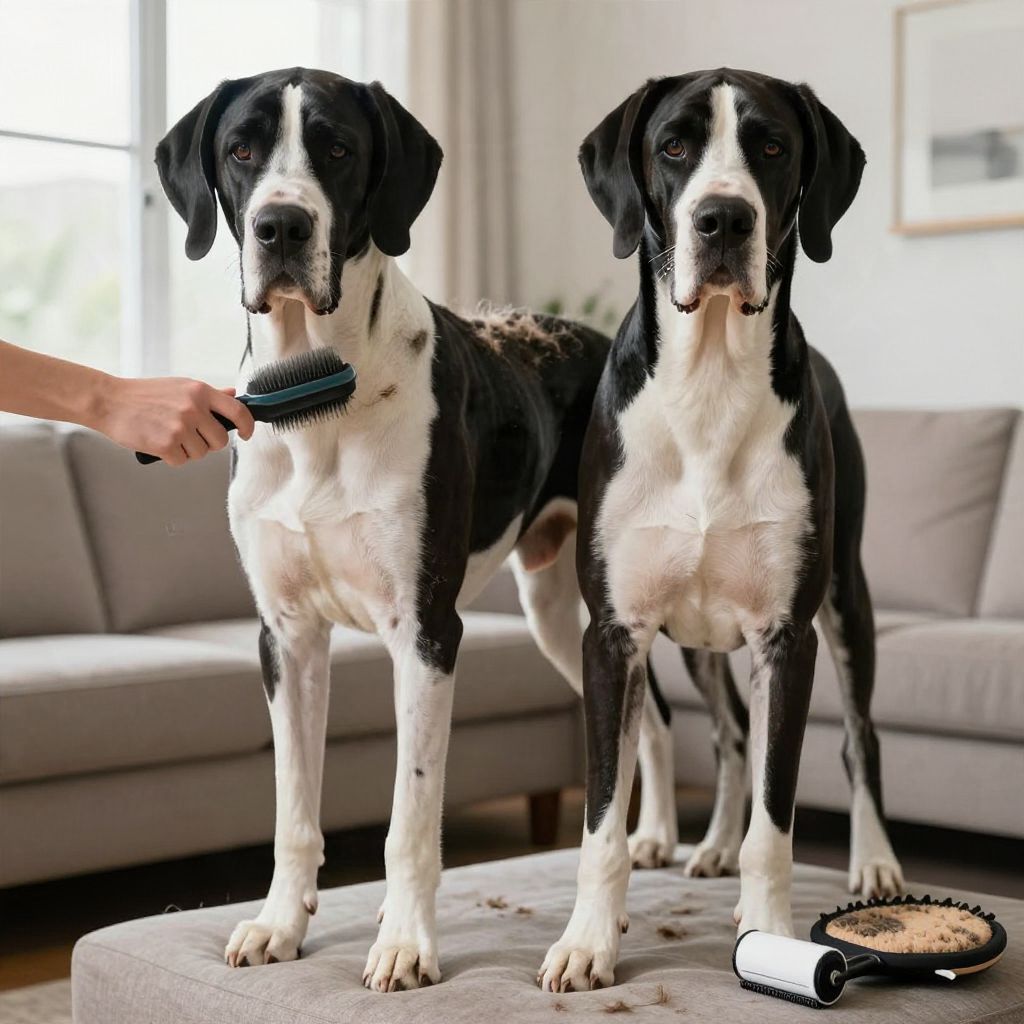
Do Great Danes shed? Yes, they do, and many owners notice loose hair year-round. Their short coat is often easier to manage than a long, fluffy one, but shedding still happens and can increase with season, stress, diet changes, or skin problems.
The good news is that Great Dane shedding is usually manageable with regular brushing, good nutrition, and basic skin care. If shedding suddenly becomes heavy, patchy, itchy, or comes with other symptoms, it is worth checking with your veterinarian.
Do Great Danes Shed?
Yes. Great Danes shed a moderate amount, and most owners will find short hairs on furniture, clothes, and floors. Their coat is not usually high-maintenance, but it is not low-shedding either. Shedding can be more noticeable during seasonal coat changes or when a dog has skin irritation, poor diet, or health issues.
What Great Dane Shedding Usually Looks Like
Great Danes have a short coat, so loose hair can be easy to see even when the total amount is not extreme. You may notice:
- Fine hairs on blankets, couches, and clothing
- More shedding during spring and fall
- Extra hair loss after bathing or brushing
- More visible shedding in dry indoor air
Some Great Danes shed more than others. Age, hormones, health, coat condition, and stress can all affect how much hair you see.
Why Great Danes Shed
Shedding is normal. Dogs naturally replace old hair with new hair, and Great Danes are no exception. The amount you notice depends on several factors.
Seasonal coat changes
Many dogs shed more when daylight and temperature change. This can make a Great Dane seem to “blow” more coat at certain times of year, even though the breed has a short coat.
Skin and coat health
Dry skin, allergies, parasites, and infections can all increase shedding. If the coat looks dull or the skin seems irritated, the shedding may be more than routine coat turnover.
Nutrition and overall health
A balanced diet supports skin and coat health. Poor nutrition, digestive problems, or underlying illness can sometimes show up as increased shedding or a coat that looks thin or brittle.
Stress and environment
Changes in routine, boarding, moving, or other stressors can affect coat condition in some dogs. Indoor heating, low humidity, and frequent bathing can also dry the skin.
How to Manage Great Dane Shedding
Regular grooming is the easiest way to keep shedding under control. The goal is not to stop shedding completely, but to remove loose hair before it ends up around your home.
Brush consistently
A grooming routine helps a lot, even with a short coat. Use a soft-bristle brush, grooming mitt, or rubber curry tool a few times a week, and more often during heavy shedding periods.
- Brush in the direction of hair growth
- Keep sessions short and calm
- Pay attention to the chest, sides, and hindquarters
- Check for bumps, redness, fleas, or dry patches while grooming
Bathe only as needed
Bathing can help remove loose hair, but too much bathing may dry the skin. Use a dog-safe shampoo and rinse thoroughly. If your Great Dane has sensitive skin, ask your veterinarian which bathing routine is best.
Support skin health with diet
Feed a complete, balanced dog food appropriate for your dog’s life stage. If you are considering supplements for skin or coat support, talk with your veterinarian first so you do not overdo nutrients or choose an unhelpful product.
Keep parasites under control
Fleas, mites, and other parasites can lead to scratching and hair loss. Use veterinarian-recommended parasite prevention and check your dog regularly, especially if shedding seems paired with itching.
Reduce indoor hair buildup
- Vacuum furniture and floors regularly
- Use washable blankets on favorite resting spots
- Keep a lint roller handy
- Wash dog bedding often
When Shedding Is Normal vs. When It May Be a Problem
Normal shedding is usually even across the body and not accompanied by major discomfort. Problem shedding often comes with other signs that suggest a skin or health issue.
More likely normal
- Loose hair without bald spots
- Seasonal increase in shedding
- Healthy skin with no redness or odor
- Normal energy, appetite, and behavior
Possible concern
- Patchy hair loss or bald spots
- Constant scratching, licking, or chewing
- Red, flaky, greasy, or smelly skin
- Scabs, sores, or visible parasites
- Sudden change in coat quality
If you notice these signs, schedule a veterinary visit. Skin problems often need a proper diagnosis before they improve.
Common Mistakes Owners Make
Trying to stop shedding completely is usually unrealistic. A better approach is to manage it safely and look for changes that could signal a problem.
- Overbathing, which can dry the skin and worsen flaking
- Using human shampoo, which may irritate a dog’s skin
- Ignoring itching or bald spots
- Switching foods too quickly without a reason
- Assuming all shedding is “just the breed” when symptoms suggest otherwise
Do Great Dane Puppies Shed?
Yes, puppies shed too. As a Great Dane puppy grows, it may lose some puppy coat and develop an adult coat. This is normal, but if the puppy has intense itching, scabs, or hair loss, it should be checked by a veterinarian.
Puppies also benefit from gentle grooming early on. Short, positive sessions help them learn that brushing, handling, and bathing are normal parts of care.
Do Senior Great Danes Shed More?
Some senior dogs shed more because skin can become drier and coat quality can change with age. Older Great Danes may also have medical issues that affect the skin, such as hormonal disease, allergies, or reduced mobility that makes grooming harder.
If your senior dog is shedding more than usual, especially with weight loss, low energy, or skin changes, ask your veterinarian for an exam.
When to Call the Veterinarian
Contact your veterinarian if shedding is sudden, severe, or paired with other symptoms. Skin and coat changes can be early clues to a larger health issue.
Seek prompt veterinary care if your Great Dane has:
- Rapid hair loss or large bald areas
- Open sores, bleeding, or severe redness
- Persistent itching or pain
- Swelling, hives, or facial puffiness
- Lethargy, vomiting, fever, or appetite loss along with skin changes
If your dog has trouble breathing, collapses, or has sudden swelling of the face or throat, treat it as an emergency and get urgent veterinary help right away.
Simple Grooming Routine for a Great Dane
A consistent routine makes shedding easier to live with and helps you spot problems early.
- Brush your dog a few times per week, or more during heavy shedding.
- Check the skin while brushing for redness, bumps, or parasites.
- Bathe only when needed using a dog-safe shampoo.
- Feed a balanced diet and keep fresh water available.
- Use parasite prevention recommended by your veterinarian.
- Watch for changes in shedding, coat texture, or itching.
Bottom Line
Great Danes do shed, but their short coat is usually manageable with regular brushing, sensible bathing, and good overall care. If shedding changes suddenly or comes with itching, bald spots, or skin irritation, your veterinarian can help find the cause and guide treatment.
If you want to compare shedding in another popular breed, you may also find these helpful: why is my dog shedding so much and do golden retrievers shed a lot.