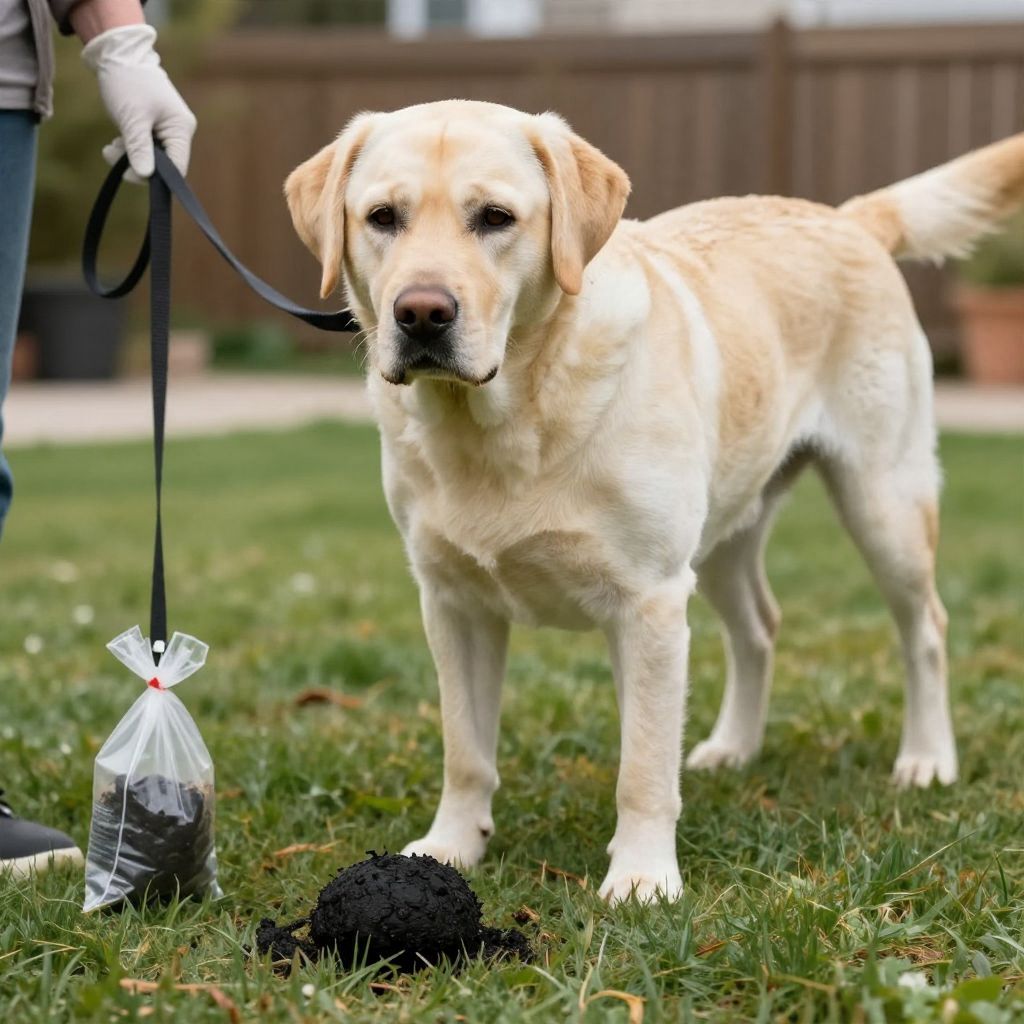
Why is my dogs poop black? Black stool can be caused by something simple, like certain foods or supplements, but it can also signal digested blood from bleeding in the stomach or upper intestines. The color alone does not tell you the cause, so the rest of your dog’s symptoms matter a lot.
If the stool looks tarry, sticky, or has a strong unusual odor, treat it as a potential warning sign. A prompt veterinary check is the safest next step, especially if your dog seems weak, vomits, stops eating, or has pale gums.
Why is my dogs poop black?
Black dog poop may happen after eating dark foods, iron supplements, or medications that darken stool, but it can also mean digested blood, which is called melena. If the poop is tar-like or your dog seems unwell, contact a veterinarian promptly because internal bleeding can be serious.
Common causes of black stool in dogs
Not every dark stool is an emergency, but black poop should always make you pay attention to the full picture. The cause can vary with your dog’s diet, age, health history, and any medications or supplements they are taking.
1. Digested blood from the upper digestive tract
One of the most important causes is bleeding in the stomach or small intestine. When blood is digested, stool can turn black and look sticky, shiny, or tar-like.
Possible reasons include:
- Stomach ulcers
- Inflammation of the digestive tract
- Foreign body irritation or injury
- Tumors or growths
- Bleeding disorders
2. Foods and treats that darken stool
Some foods can make stool look darker without indicating bleeding. This is more likely if your dog otherwise seems normal and the color change happens soon after a diet change.
Examples may include:
- Very dark or heavily colored treats
- Foods with blood meal or organ meats
- Large amounts of dark-colored ingredients
Even then, you should still monitor closely, because diet-related color changes can look similar to melena at first glance.
3. Supplements or medications
Some products can darken stool, especially iron-containing supplements or medications that irritate the stomach and intestinal lining. If your dog recently started a new medication, tell your veterinarian exactly what it is.
Do not stop prescribed medication without veterinary guidance, but do report black stool quickly so your vet can decide whether the medicine is involved.
4. Swallowed blood from the mouth or nose
Blood swallowed from a bleeding gum injury, nosebleed, or oral problem can sometimes darken stool. This is less common than digestive bleeding, but it can happen.
Check for:
- Bleeding gums
- Broken teeth
- Recent nosebleed
- Facial trauma
What black dog poop can look like
Color alone is not enough. The texture and smell can help you describe the problem to your veterinarian.
- Tarry, sticky stool: more concerning for digested blood
- Dry dark stool: may be diet-related or related to constipation, but still needs context
- Black diarrhea: concerning, especially if frequent or mixed with vomiting
- One dark stool after a food change: may be less urgent if your dog is otherwise normal, but monitor carefully
When black stool is an emergency
Some signs mean you should seek urgent veterinary care right away. Do not wait to “see if it passes” if your dog has black stool plus any of the following.
- Weakness or collapse
- Pale, white, or gray gums
- Repeated vomiting
- Blood in vomit
- Abdominal pain or a bloated belly
- Rapid breathing or a fast heartbeat
- Refusal to eat or drink
- Black stool after possible toxin exposure or injury
If your dog seems lethargic, painful, or unstable, treat it as an emergency.
What to do if you notice black poop
Start by staying calm and gathering useful details. A clear history helps your veterinarian narrow down the cause faster.
- Look at the stool closely. Note whether it is tarry, formed, loose, or mixed with red blood.
- Think about recent changes. New treats, supplements, medications, scavenging, or access to trash can all matter.
- Check your dog’s behavior. Watch for vomiting, appetite loss, pain, or unusual tiredness.
- Call your veterinarian. Describe the stool color and any other symptoms as soon as you can.
- Bring a sample if requested. A fresh stool sample or a photo can help your vet assess the problem.
What your veterinarian may check
Your vet will not diagnose the cause from color alone. They may recommend an exam and tests based on your dog’s age, history, and symptoms.
- Physical examination
- Fecal testing
- Bloodwork to check for anemia, infection, or organ problems
- X-rays or ultrasound if a foreign body or internal issue is suspected
- Additional testing if bleeding, ulcers, or toxin exposure are concerns
In some dogs, especially puppies, seniors, or dogs with chronic illness, even a short period of black stool deserves prompt evaluation.
Common mistakes to avoid
It is easy to misread stool color, especially if your dog is otherwise acting normal. These mistakes can delay care when it is needed.
- Assuming black stool is always from food
- Waiting several days to “watch and see” when stool is tarry
- Giving human medications without veterinary advice
- Ignoring vomiting, weakness, or pale gums
- Changing the diet repeatedly without a plan
How age, size, and health history affect the risk
Black stool can affect any dog, but the level of concern may change depending on the individual dog.
- Puppies: can become dehydrated or unstable quickly, so black stool should be taken seriously.
- Senior dogs: may have a higher risk of underlying illness, medication side effects, or slower recovery.
- Dogs with known stomach issues: may be more prone to recurrence and need earlier evaluation.
- Dogs on medications: may have stool changes related to treatment or side effects.
Breed alone does not determine the cause, but an individual dog’s medical history can make certain problems more likely.
Can black poop go away on its own?
Sometimes a dark stool after a diet change may resolve quickly, but you should not assume that is the case. If the stool is truly black, tarry, or repeated, it is safer to contact a vet rather than wait for it to clear.
If your dog has only one dark stool and otherwise seems normal, you can monitor closely for any change in appetite, energy, vomiting, or stool consistency. If the color persists or returns, schedule an exam.
How to help prevent black stool caused by avoidable issues
You cannot prevent every medical cause, but you can reduce some risks with sensible care.
- Keep trash, bones, and unknown objects out of reach
- Introduce new foods and treats gradually
- Use medications only as directed by your veterinarian
- Store supplements safely
- Watch for chewing injuries or nosebleeds
- Keep up with routine veterinary visits, especially for older dogs
When to call the vet even if your dog seems okay
Call your veterinarian if black stool lasts more than one bowel movement, happens repeatedly, or appears after a new medication or possible toxin exposure. You should also call if your dog has a history of ulcers, bleeding problems, or digestive disease.
When in doubt, a phone call is better than guessing. Describing the stool, your dog’s behavior, and any recent changes can help your vet decide whether the situation needs same-day care.
Bottom line
Black dog poop can be caused by diet or supplements, but it can also be a sign of digested blood and internal bleeding. If the stool is tarry, your dog seems sick, or the color keeps happening, contact a veterinarian promptly.
If you want more help with related digestive concerns, you may also find it useful to read about what to give a dog for an upset stomach or how to stop dog diarrhea.