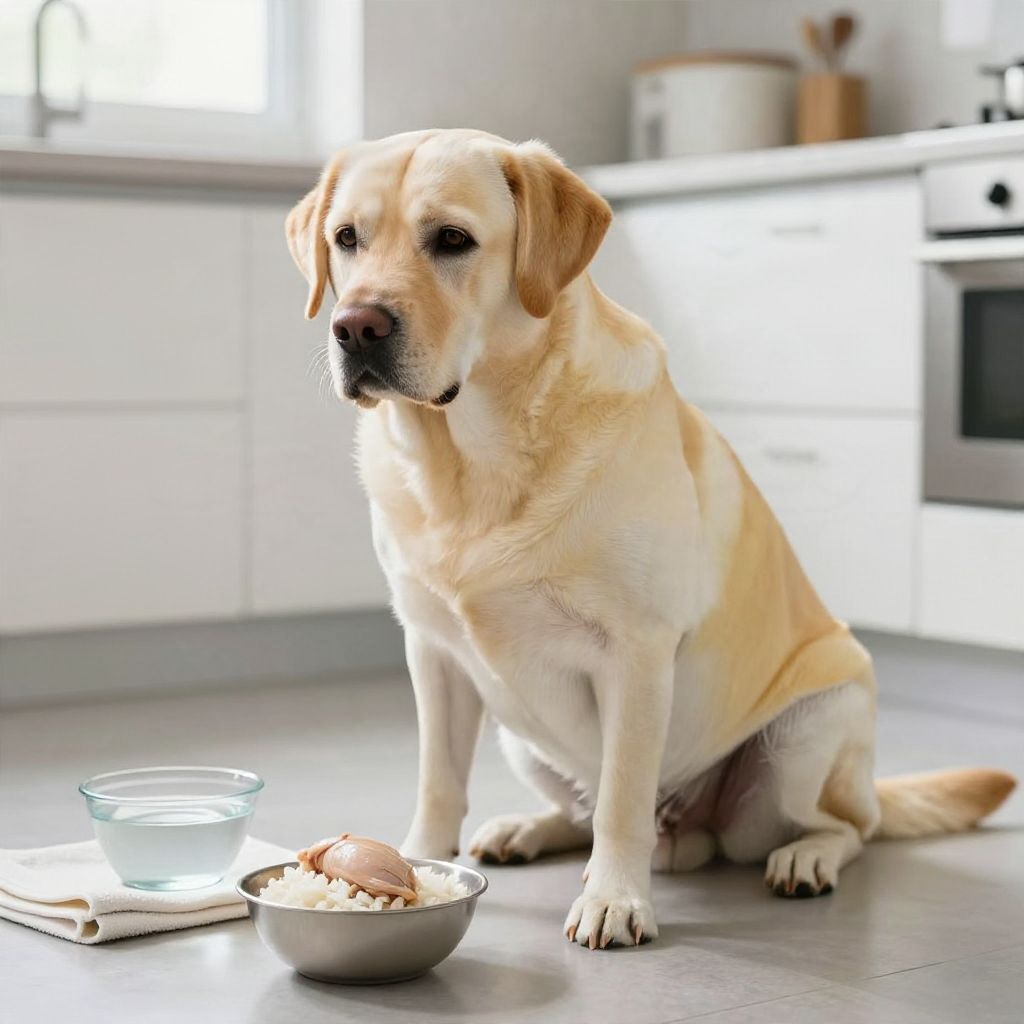
If your dog has an upset stomach, the safest first step is usually to pause rich treats, watch for warning signs, and offer bland, easy-to-digest food only if your dog is otherwise acting normal. Mild stomach upset often improves with time, but vomiting, diarrhea, or pain can also signal something more serious.
What you give depends on the cause, your dog’s age, size, medical history, and symptoms. Some dogs need a short rest from food, while others need veterinary care right away, especially if they are very young, older, or already have health problems.
What To Give A Dog For Upset Stomach?
For a mild upset stomach, offer fresh water and small amounts of a bland diet such as plain boiled chicken and white rice, or another veterinarian-approved easily digestible food. Avoid fatty, spicy, or dairy foods. If vomiting, diarrhea, lethargy, or abdominal pain is present, contact your veterinarian before feeding more.
Start with the safest basics
When a dog seems mildly nauseous or has a soft stool once or twice, the goal is to reduce irritation, not to “fix” the problem with random home remedies. Keep things simple and low-fat.
- Fresh water: Offer clean water at all times.
- Small bland meals: Feed tiny portions instead of one large meal.
- Quiet rest: Limit excitement, hard exercise, and scavenging outdoors.
- Normal routine monitoring: Watch appetite, energy, stool, and vomiting frequency.
If your dog refuses water, cannot keep water down, or seems weak, that is not a “wait and see” situation.
What foods are usually easiest on a dog’s stomach?
Many dogs tolerate bland, low-fat foods better during short-term digestive upset. The exact best choice can vary with your dog’s usual diet, allergies, and any medical conditions.
Common bland options
- Plain boiled chicken or turkey with no skin, seasoning, onion, or garlic
- Plain white rice
- Plain boiled potatoes
- Plain canned pumpkin, if your veterinarian says it is appropriate for your dog
- Veterinary gastrointestinal diets, which are often the most reliable option for sensitive dogs
Introduce any new food slowly and in small amounts. Even a bland food can upset some dogs if they are sensitive to it or if the stomach issue is caused by something more serious.
How to feed a bland diet safely
- Wait until vomiting has stopped and your dog can keep water down, unless your veterinarian tells you otherwise.
- Offer a small meal first, not a full bowl.
- If that stays down, give another small meal a few hours later.
- Return to the regular diet gradually over 1 to 2 days, or as your vet advises.
Very small dogs, puppies, and dogs with diabetes or other illnesses may need a different plan, so call your vet before changing meals.
What should you not give a dog with an upset stomach?
Some common people foods can make digestive upset worse or create new problems. When in doubt, keep it plain and vet-approved.
- Fatty foods: Greasy table scraps, bacon, fried food, and rich treats can worsen vomiting and diarrhea.
- Seasoned foods: Onion, garlic, heavy spices, and sauces can be harmful or irritating.
- Dairy: Many dogs do not digest milk, cheese, or cream well.
- New treats or chews: These can be hard to digest or may contain ingredients that trigger upset.
- Human medications: Do not give pain relievers, antacids, anti-diarrheals, or other drugs unless your veterinarian specifically instructs you to do so.
Never use home remedies you found online without checking first. A “natural” product can still be unsafe for dogs, especially if your pet is small, pregnant, elderly, or already taking medication.
When is an upset stomach an emergency?
Some symptoms mean your dog needs urgent veterinary care, not home treatment. These signs can point to poisoning, obstruction, pancreatitis, bloat, severe infection, or another serious condition.
- Repeated vomiting or vomiting that will not stop
- Blood in vomit or stool, or black/tarry stool
- Swollen, painful, or hard abdomen
- Retching without producing vomit
- Severe lethargy, collapse, weakness, or unresponsiveness
- Signs of dehydration such as dry gums, sunken eyes, or very little urination
- Refusing water for more than a short time
- Known or possible toxin exposure, including chocolate, xylitol, grapes, raisins, rodent bait, human medications, or trash
- Foreign object ingestion, such as socks, toys, bones, or string
Puppies, senior dogs, toy breeds, and dogs with chronic disease can become dehydrated or unstable quickly, so contact a veterinarian sooner rather than later.
How long can you wait before calling the vet?
For a mild upset stomach with one episode of vomiting or a brief soft stool and otherwise normal behavior, you may be able to monitor your dog closely for a short time. But if symptoms continue, worsen, or return, your veterinarian should be contacted.
- Call promptly: If vomiting or diarrhea lasts more than a day, or sooner if your dog is young, old, or medically fragile.
- Call immediately: If there is pain, blood, repeated vomiting, bloating, or suspected poisoning.
- Ask about next steps: Your vet may recommend an exam, stool testing, fluids, or a prescription diet.
Do not assume that diarrhea is “just something they ate.” Dogs can look only mildly off at first and still have a significant problem.
Why dogs get upset stomachs
There are many possible causes, and the right response depends on which one is most likely. A stomach upset after scavenging is different from one caused by infection, stress, or a chronic disease.
- Dietary indiscretion, such as eating trash or spoiled food
- Sudden diet change
- Stress or routine disruption
- Parasites
- Viral or bacterial illness
- Food intolerance or allergy
- Pancreatitis
- Ingesting a foreign object or toxin
Because the cause matters, repeated stomach problems should not be managed with the same home plan every time. A veterinarian can help identify patterns and prevent recurrence.
Special considerations for puppies, seniors, and dogs with health conditions
Age and medical history matter a lot. A healthy adult dog with a brief mild upset may recover differently than a puppy or dog with kidney disease, diabetes, or a sensitive digestive system.
Puppies
Puppies can dehydrate quickly and may have parasites or infectious disease. If a puppy vomits, has diarrhea, or seems tired, call your veterinarian promptly.
Senior dogs
Older dogs may have slower recovery, more underlying disease, or a higher risk of complications. Even mild symptoms deserve closer attention if they are new or recurring.
Dogs with chronic illness
If your dog has diabetes, pancreatitis, inflammatory bowel disease, kidney disease, liver disease, or is on regular medication, ask your vet before changing food or withholding meals. Skipping meals can be risky for some dogs.
How to help prevent future stomach upset
Prevention is often easier than treatment. Many dogs do best with consistency and careful supervision around food and trash.
- Keep your dog on a stable, complete diet
- Transition to new foods gradually
- Store trash, compost, and human food securely
- Limit table scraps and rich treats
- Use parasite prevention and routine vet care
- Watch for chewing or scavenging habits during walks and at home
If your dog frequently gets an upset stomach, keep a simple log of foods, treats, symptoms, and timing. That record can help your veterinarian spot triggers.
Common mistakes to avoid
When you are worried about your dog, it is easy to overcorrect. The safest approach is usually the simplest one.
- Feeding a large meal “to settle the stomach”
- Trying several new foods at once
- Giving human medications without veterinary advice
- Ignoring repeated vomiting or diarrhea
- Assuming all upset stomachs are minor
- Waiting too long after possible toxin or object ingestion
If your dog’s symptoms are mild and short-lived, a bland diet and rest may be enough. If they are not improving quickly, professional guidance is the safer choice.
In short, what to give a dog for upset stomach is usually fresh water and a small amount of bland, low-fat food if your dog is stable. If symptoms are severe, persistent, or unusual, skip home treatment and call your veterinarian right away. For more related guidance, you may also find what to give a dog with an upset stomach and what can I give my dog for upset stomach helpful.