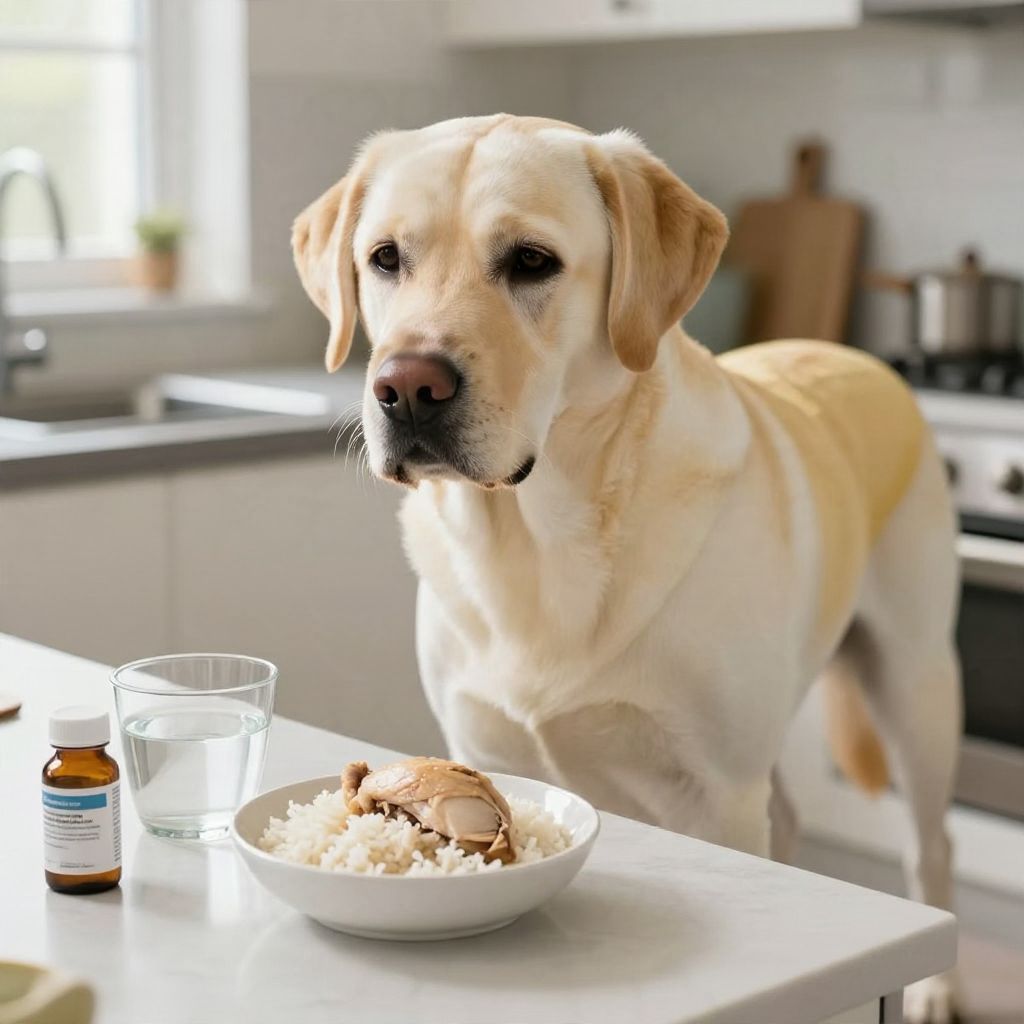
If your dog has an upset stomach, the safest first step is usually to pause rich treats and watch closely for other symptoms. Mild tummy trouble often improves with rest, access to water, and a short period of bland feeding, but some signs mean your dog needs a veterinarian right away.
What you can give depends on the cause, your dog’s age and size, and whether vomiting, diarrhea, pain, or lethargy is present. Never give human medications unless your veterinarian specifically tells you to, because some common products can be harmful to dogs.
What can I give my dog for upset stomach?
For a mild upset stomach, you can usually offer small amounts of water and a bland, easy-to-digest meal such as plain boiled chicken and white rice, if your veterinarian says it is appropriate for your dog. Keep portions small, avoid fatty foods, and seek veterinary advice if symptoms worsen or last more than a day.
First, check whether this is an emergency
Not every stomach issue is minor. Some signs need urgent veterinary care because they may point to poisoning, obstruction, pancreatitis, bloat, or another serious problem.
- Repeated vomiting or vomiting that will not stop
- Blood in vomit or stool, or black/tarry stool
- Swollen, hard, or painful belly
- Extreme lethargy, collapse, weakness, or trouble standing
- Retching without producing vomit
- Signs of dehydration such as dry gums, sunken eyes, or no interest in water
- Known toxin exposure, including chocolate, xylitol, grapes/raisins, medications, or trash
- Foreign object risk, such as chewing toys, bones, socks, or corn cobs
If your dog is a puppy, very old, small, or already has health problems, call your veterinarian sooner rather than later. These dogs can become dehydrated or weaker more quickly.
Safe things you can try at home for a mild upset stomach
If your dog is otherwise bright, alert, and only mildly nauseous or has a single episode of soft stool, simple supportive care may help. Use gentle, temporary measures and keep a close eye on your dog’s behavior.
1. Offer water, but don’t force it
Fresh water should always be available. If your dog gulps and vomits, offer small amounts more frequently instead of letting them drink a lot at once.
Some dogs do better with ice chips or a few sips at a time. If your dog refuses water completely or cannot keep it down, contact your veterinarian.
2. Give the stomach a short rest from food if advised
Many dogs with mild vomiting benefit from a brief pause in food, but this is not right for every dog. Puppies, toy breeds, dogs with diabetes, and dogs with other medical conditions may need a different plan, so ask your veterinarian if you are unsure.
3. Reintroduce food with a bland diet
When vomiting has stopped and your dog seems ready to eat, a bland diet is often the next step. Common options include:
- Plain boiled chicken or turkey with no skin, bones, or seasoning
- Plain white rice
- Plain boiled lean ground meat, if your veterinarian recommends it
- Veterinary gastrointestinal diets made for sensitive stomachs
Feed small portions rather than one large meal. If your dog keeps the food down, you can gradually return to the regular diet over a couple of days, unless your veterinarian gives different instructions.
4. Keep the environment calm
Rest can help a dog with an upset stomach feel better. Avoid hard exercise, rough play, and stressful outings until your dog is clearly improving.
A quiet space also helps you monitor symptoms more accurately. Watch for changes in appetite, stool, energy level, and whether your dog is still nauseous.
What not to give your dog
Some well-meaning home treatments can make things worse. When in doubt, leave it out and call your veterinarian.
- Human pain relievers such as ibuprofen, naproxen, or acetaminophen unless specifically prescribed for your dog
- Antidiarrheal or anti-nausea medicines without veterinary guidance
- Fatty, spicy, or heavily seasoned foods
- Table scraps that may irritate the stomach
- Milk or rich dairy, which can worsen diarrhea in some dogs
- Bones, which can cause choking, constipation, or intestinal injury
- Unknown home remedies found online without veterinary advice
Even if a product is safe for people, it may not be safe for dogs. Dose, size, age, and underlying disease all matter.
How age, size, and health can change what is appropriate
There is no one-size-fits-all answer to an upset stomach. Your dog’s individual needs can change what you should give and how quickly you should act.
Puppies
Puppies can become dehydrated quickly and may also have parasites, diet changes, or infections. If a puppy vomits, has diarrhea, seems weak, or stops eating, call your veterinarian promptly.
Small dogs and toy breeds
Smaller dogs may be more sensitive to fasting and dehydration. They can also be more affected by even small amounts of toxins or rich foods, so monitor them carefully.
Large-breed dogs
Larger dogs may be at higher risk for conditions like bloat, especially if the belly looks distended or they are trying to vomit without success. That is an emergency, not a home-care situation.
Senior dogs
Older dogs may have kidney disease, liver disease, cancer, or medication side effects that look like an upset stomach. If your senior dog has repeated digestive symptoms, a veterinary exam is important.
Dogs with chronic illness
If your dog has diabetes, pancreatitis, inflammatory bowel disease, kidney disease, or is taking regular medication, do not guess at home treatment. Ask your veterinarian what is safe before changing food or skipping meals.
Common causes of an upset stomach in dogs
Upset stomach is a symptom, not a diagnosis. The cause can be mild or serious, and the right response depends on what triggered it.
- Eating something unusual or too rich
- Sudden diet change
- Stress or anxiety
- Parasites or infection
- Food intolerance or sensitivity
- Motion sickness
- Pancreatitis
- Foreign body ingestion
- Toxin exposure
Because the causes vary, repeated stomach upset should not be treated as “just a sensitive stomach” without veterinary input.
When bland food is not enough
Home care is only appropriate when symptoms are mild and improving. If your dog still seems nauseous, refuses food, or has diarrhea that continues, they may need an exam and testing.
Your veterinarian may recommend stool testing, bloodwork, imaging, or a special diet depending on the signs. This is especially important if the problem keeps coming back.
How to feed a dog recovering from stomach upset
Once your dog starts improving, the goal is to support digestion without overloading the stomach. Small, frequent meals are usually easier to tolerate than one large meal.
- Offer a small bland meal.
- Wait and watch for vomiting or diarrhea.
- If tolerated, give another small meal later.
- Gradually mix in the regular diet over a few days if your veterinarian approves.
Do not rush back to treats, fatty chews, or table food. A sudden return to rich food can bring the problem back.
How to prevent future stomach upset
You cannot prevent every digestive upset, but a few habits reduce the risk.
- Keep garbage, compost, and food scraps out of reach
- Avoid sudden diet switches
- Use treats in moderation
- Choose chew toys that are appropriate for your dog’s size and chewing style
- Keep medications and toxic foods securely stored
- Ask your veterinarian before giving new supplements or human products
For dogs with recurring digestive issues, your veterinarian may help you identify triggers and create a feeding plan that fits your dog’s needs.
When to call the veterinarian even if it seems mild
It is a good idea to contact your veterinarian if your dog has vomiting or diarrhea that lasts more than 24 hours, if symptoms keep returning, or if your dog is not acting like themselves. Even mild signs can reveal a bigger issue when they persist.
Call sooner if your dog is very young, very old, pregnant, on medication, or has another medical condition. A quick phone call can help you decide whether home care is reasonable or whether your dog needs to be seen.
In short, the safest answer to what can I give my dog for upset stomach is usually water, rest, and a veterinarian-approved bland diet for mild cases. If your dog has red-flag symptoms, worsening signs, or repeated stomach trouble, skip home treatment and get professional help promptly.
If you want more guidance on digestive care, you may also find these related articles helpful: what to give a dog with an upset stomach and what can you give a dog for an upset stomach.