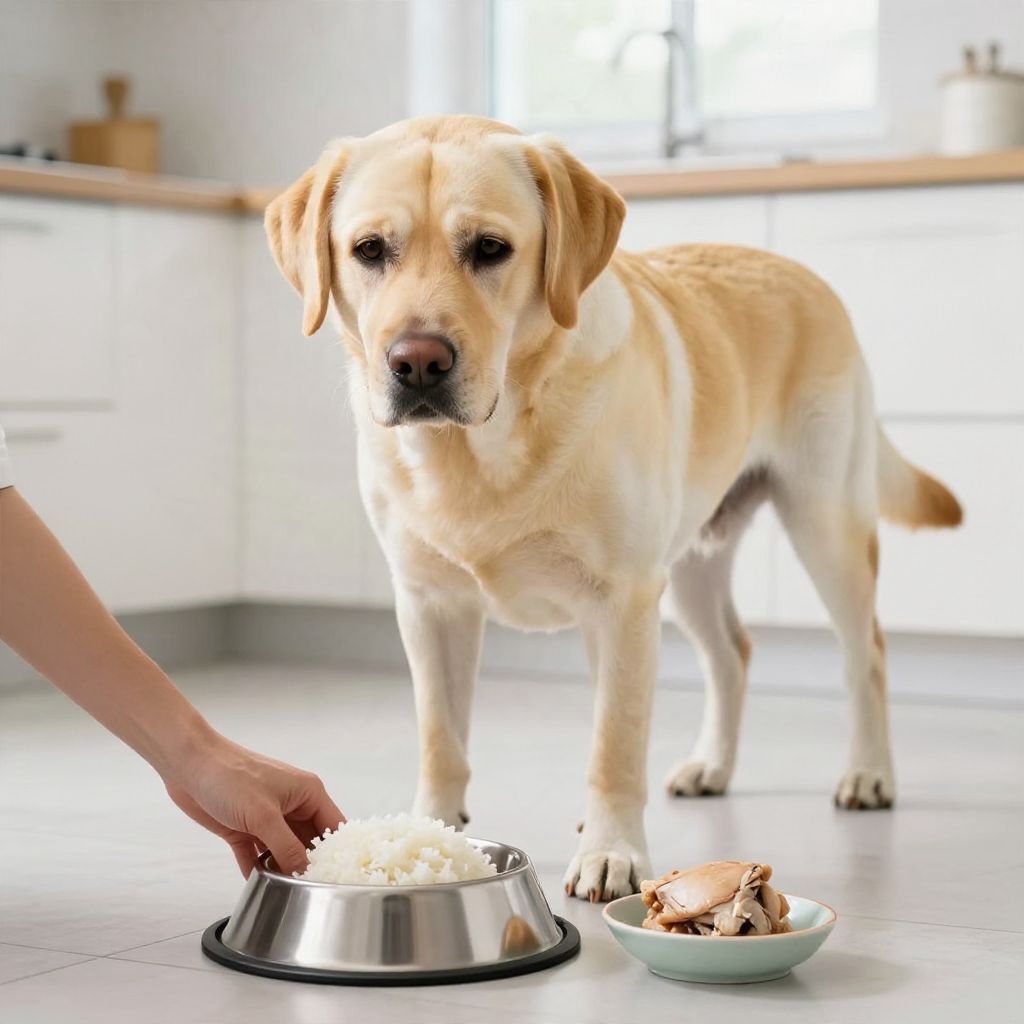
If your dog has an upset stomach, the safest first step is usually to pause food for a short time, offer small amounts of water, and watch for warning signs. Mild stomach upset can improve with rest and a bland diet, but vomiting, repeated diarrhea, pain, or weakness need veterinary advice.
What you can give a dog for an upset stomach depends on the cause, your dog’s age, size, and health history. Some dogs only need temporary digestive rest, while others need prompt veterinary care to avoid dehydration or a more serious problem.
What can you give a dog for an upset stomach?
For mild stomach upset, you can usually give your dog small sips of water, brief digestive rest, and then a bland, vet-approved diet such as plain boiled chicken and rice or another simple food your veterinarian recommends. Do not give human medications unless your vet specifically tells you to.
Start with the safest first steps
If your dog seems mildly nauseous, has a soft stool, or has vomited once but is otherwise alert, the goal is to reduce irritation and prevent dehydration. Keep things simple and avoid sudden diet changes.
- Offer fresh water in small amounts and monitor whether your dog keeps it down.
- Rest the stomach briefly if your veterinarian advises it for your dog’s age and health status.
- Keep your dog calm and indoors so you can observe symptoms closely.
- Remove access to garbage, compost, spoiled food, bones, toys, or household toxins.
Very young puppies, toy breeds, older dogs, and dogs with diabetes, kidney disease, or other medical conditions should not always fast without veterinary guidance. They can become weak or dehydrated more quickly than healthy adult dogs.
What foods are usually gentle on a dog’s stomach?
When your veterinarian says it is appropriate to feed, a bland diet is often easier to digest than regular food. The exact choice can vary by dog, but the goal is a simple, low-fat meal in small portions.
Common bland diet options
- Plain boiled chicken or turkey with no skin, seasoning, butter, or oil
- Plain white rice
- Plain cooked pumpkin in small amounts, if your vet says it is appropriate
- Plain boiled potato or sweet potato in some cases
- A veterinary gastrointestinal diet recommended by your vet
Feed small portions at first. If your dog keeps the food down and seems better, you can gradually return to the normal diet over a few days, unless your veterinarian gives different instructions.
Foods that may seem helpful but can make things worse
- Fatty foods, greasy leftovers, and rich treats
- Seasoned foods, onions, garlic, and spicy ingredients
- Milk, cream, and many dairy products
- Large meals after vomiting or diarrhea
- Sudden switches to a new food brand or flavor
Even if a food is “safe” for dogs in general, it may still upset a sensitive stomach. Individual tolerance varies with age, breed tendencies, medical history, and what your dog has eaten recently.
Should you give water, broth, or electrolytes?
Water is usually the best choice. A dog with an upset stomach may drink too much too fast and vomit again, so offer small amounts more often rather than a large bowl all at once.
- Use fresh, clean water.
- Offer ice chips if your dog prefers them and is not vomiting repeatedly.
- Ask your vet before using broth, because many broths contain onion, garlic, salt, or fat.
- Do not give sports drinks or human electrolyte products unless your veterinarian approves them.
If your dog cannot keep water down, that is a sign to call a veterinarian promptly. Ongoing vomiting can lead to dehydration and can also point to obstruction, pancreatitis, toxin exposure, or another urgent problem.
What not to give a dog with an upset stomach
Some common human remedies can be harmful or can hide symptoms that need medical care. When in doubt, avoid giving any medication or supplement unless your veterinarian has told you it is safe for your dog.
- Do not give human pain relievers such as ibuprofen or acetaminophen unless a veterinarian specifically instructs you.
- Do not use anti-diarrhea or anti-nausea medicines without veterinary guidance.
- Do not give activated charcoal at home unless a vet tells you to do so for a specific exposure.
- Avoid bismuth products unless your veterinarian says they are appropriate for your dog.
- Do not use essential oils, herbal remedies, or “detox” products without professional advice.
Many over-the-counter products are risky because the right choice depends on the cause of the stomach upset. A medication that seems harmless can be dangerous for puppies, senior dogs, small dogs, or dogs with liver, kidney, or bleeding problems.
When an upset stomach is an emergency
Some signs mean your dog needs urgent veterinary care, not home treatment. These red flags can point to poisoning, obstruction, bloat, severe infection, or another serious condition.
- Repeated vomiting or vomiting that continues for more than a short time
- Blood in vomit or stool, or black/tarry stool
- A swollen, hard, or painful abdomen
- Severe lethargy, collapse, weakness, or trouble standing
- Retching without producing vomit
- Signs of dehydration such as dry gums, sunken eyes, or marked thirst with poor urine output
- Possible toxin exposure, including chocolate, xylitol, grapes/raisins, medications, chemicals, or spoiled food
- Foreign body risk, such as chewing toys, bones, socks, corn cobs, or string
- Diarrhea or vomiting in a very young puppy or a medically fragile dog
If your dog seems painful, bloated, or unable to keep anything down, do not wait to “see if it passes.” Call your veterinarian or an emergency clinic right away.
How to help your dog recover safely
Once your dog is improving, the next step is careful refeeding and close observation. Recovery should be gradual, especially after vomiting or diarrhea.
- Offer small meals instead of one large meal.
- Keep the diet simple and low in fat.
- Watch for vomiting, worsening diarrhea, abdominal pain, or refusal to eat.
- Return to normal food slowly over several days if your vet says it is okay.
- Keep your dog away from rich treats, table scraps, and scavenging outdoors.
If your dog’s stomach upset returns repeatedly, ask your veterinarian about possible food intolerance, parasites, pancreatitis, inflammatory bowel disease, stress, or another underlying cause. Recurrent digestive signs should not be ignored.
Special considerations for puppies, seniors, and sensitive dogs
Age and health matter a lot when deciding what to give a dog for an upset stomach. A healthy adult dog with mild symptoms may tolerate a short bland-feeding plan, but puppies and older dogs can become unstable faster.
Puppies
Puppies have smaller energy reserves and can dehydrate quickly. If a puppy vomits, has diarrhea, seems sleepy, or stops eating, contact a veterinarian sooner rather than later.
Senior dogs
Older dogs may have hidden kidney, liver, heart, or metabolic disease. Even mild stomach upset can become more complicated, especially if they already take daily medication.
Dogs with chronic illness
If your dog has diabetes, Addison’s disease, kidney disease, pancreatitis, or a history of gastrointestinal problems, do not change food or medications on your own. Ask your vet for a plan tailored to your dog.
Common mistakes to avoid
Many well-meaning owners accidentally make stomach upset worse by trying too many things at once. Simplicity is usually safer.
- Switching foods repeatedly in a short time
- Giving treats “to tempt the appetite” when the stomach is irritated
- Assuming diarrhea is always minor
- Using leftover human medicine from the cabinet
- Waiting too long when symptoms are getting worse
It is also easy to overlook a swallowed object or toxin. If your dog had access to trash, medication, plants, or a chewed-up toy, tell your veterinarian exactly what happened.
When to call your veterinarian even if it seems mild
Some stomach upset looks minor at first but still deserves a call. A vet can help you decide whether home care is appropriate and whether your dog needs an exam, testing, or a different diet plan.
- Your dog is not improving within a day or two
- Symptoms keep coming back
- Your dog has a sensitive medical history
- There is a sudden change in appetite, energy, or stool quality
- You are unsure whether your dog ate something dangerous
For more focused guidance, you may also find these related reads helpful: what to give a dog with an upset stomach and what can you give a dog for diarrhea.
In most mild cases, the safest answer to what you can give a dog for an upset stomach is simple: water, rest, and a bland vet-approved diet. If your dog has repeated vomiting, blood, pain, bloating, weakness, or any toxin exposure, contact a veterinarian right away.