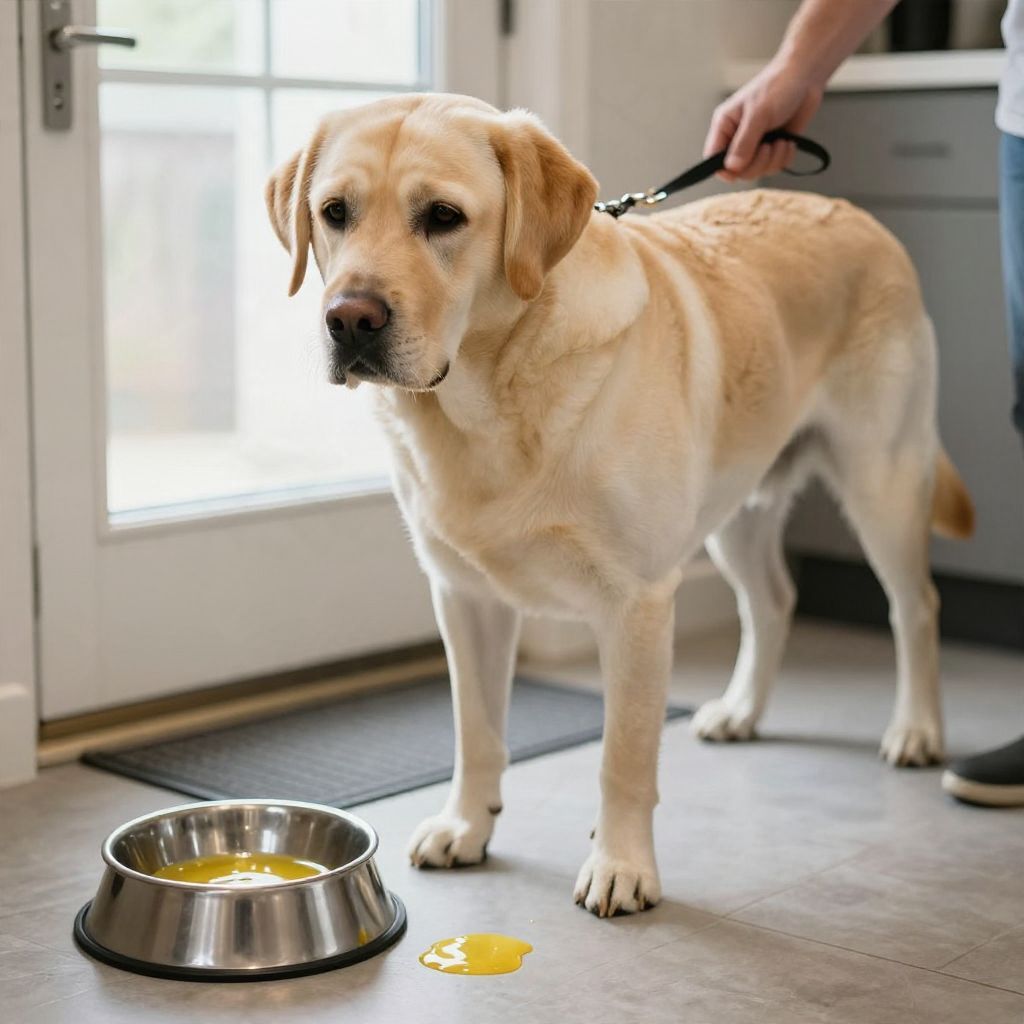
If your dog threw up yellow, you’re usually seeing bile, a digestive fluid that can come up when the stomach is empty or irritated. It can happen after skipping a meal, eating too fast, or having a mild stomach upset.
Sometimes yellow vomit is minor, but repeated vomiting, lethargy, pain, or other symptoms can signal something more serious. Watching the pattern and your dog’s overall behavior helps you decide whether home monitoring or a vet visit is needed.
Why did my dog throw up yellow?
Yellow vomit is often bile, which can appear when a dog’s stomach is empty, irritated, or moving food and fluid through too quickly. A single episode may not be an emergency, but repeated vomiting, poor appetite, diarrhea, weakness, or abdominal pain means your dog should be checked by a veterinarian.
What yellow vomit usually means
In many dogs, yellow vomit is bile mixed with stomach fluid. Bile can reflux into the stomach when it is empty for too long, especially overnight or between meals.
Common, less serious reasons include:
- Skipping meals or going too long without food
- Eating grass or something mildly irritating
- Eating too quickly and then vomiting
- Temporary stomach upset from a diet change
- Mild nausea after stress or excitement
That said, yellow vomit is a symptom, not a diagnosis. The cause can range from a simple empty stomach to pancreatitis, intestinal blockage, infection, toxin exposure, or another illness.
When yellow vomiting is more concerning
One episode of yellow vomit with an otherwise normal dog may be monitored closely. The risk goes up when vomiting is frequent, your dog cannot keep water down, or other symptoms appear.
Call your veterinarian soon if you notice:
- Repeated yellow vomiting in a day or over several days
- Loss of appetite or refusing food
- Diarrhea, especially if it lasts more than a day
- Lethargy, restlessness, or unusual hiding
- Drooling, lip licking, or signs of nausea
- Weight loss or a change in drinking habits
Seek urgent veterinary care right away if your dog has:
- A swollen or painful abdomen
- Repeated unproductive retching
- Blood in vomit or vomit that looks like coffee grounds
- Black, tarry stool
- Collapse, weakness, or trouble standing
- Possible toxin ingestion or a foreign object in the mouth or stomach
- Signs of dehydration such as dry gums, sunken eyes, or marked weakness
Do not wait if your dog is a puppy, a senior, very small, or has another health condition and is vomiting repeatedly. These dogs can become dehydrated faster.
Common reasons dogs vomit yellow
1. An empty stomach
This is one of the most common explanations. Some dogs develop bile vomiting when they go too long without eating, especially first thing in the morning.
You may notice a small amount of yellow fluid or foam, and your dog may seem normal afterward. If this happens often, the feeding schedule may need adjustment.
2. Eating something irritating
Grass, trash, spoiled food, table scraps, or a sudden diet change can upset the stomach. Some dogs are more sensitive than others, and individual tolerance varies.
Even if your dog seems fine after one episode, keep an eye out for diarrhea, abdominal discomfort, or repeated vomiting.
3. Fast eating
Dogs that gulp food may swallow air and then vomit soon after eating. The vomit may be yellow if bile is present or if the stomach is mostly empty by the time vomiting happens.
Slower feeding methods can help, but if vomiting continues, ask your vet whether another cause is likely.
4. Gastrointestinal illness
Infections, inflammation, parasites, and other digestive issues can all cause bile-colored vomit. These problems often come with diarrhea, appetite changes, or a dog that seems “off.”
Young dogs, dogs with compromised immune systems, and dogs with access to contaminated water or feces may be at higher risk.
5. More serious medical problems
Yellow vomit can also happen with pancreatitis, liver disease, kidney disease, intestinal blockage, or toxin exposure. These conditions need veterinary diagnosis and treatment.
If your dog is painful, weak, bloated, or unable to keep anything down, treat it as urgent.
What you can do at home after one mild episode
If your dog vomited yellow once, seems alert, and is otherwise acting normally, you can monitor closely for the next several hours. The goal is to reduce stomach irritation and watch for worsening signs.
- Remove access to food for a short period only if your veterinarian has previously said this is safe for your dog.
- Offer small amounts of fresh water so your dog can stay hydrated without drinking too fast.
- Watch for more vomiting, diarrhea, lethargy, or abdominal pain.
- Check for possible causes such as trash access, a diet change, or a missed meal.
- Contact your vet if vomiting happens again or your dog seems unwell.
Do not give human medications unless your veterinarian specifically tells you to. Many common medicines can be dangerous for dogs.
What not to do
When a dog vomits yellow, it is easy to try quick fixes. Some common ideas can make things worse or delay proper care.
- Do not force food if your dog is actively nauseated.
- Do not give greasy, spicy, or rich foods.
- Do not use over-the-counter human anti-nausea or pain medicines without veterinary guidance.
- Do not assume repeated vomiting is “just an empty stomach” if your dog is tired or not eating.
- Do not ignore possible toxin exposure, such as chocolate, xylitol, medications, grapes, onions, or trash.
How your vet may evaluate the problem
If the vomiting keeps happening, your veterinarian will look at the full picture rather than the color alone. They may ask about diet, timing, stool quality, access to garbage, medications, and any recent changes at home.
Depending on your dog’s signs, the exam may include:
- Physical examination and hydration assessment
- Fecal testing for parasites
- Bloodwork to check organ function and inflammation
- X-rays or ultrasound if a blockage or other internal problem is suspected
- Diet history review and feeding-plan changes
The right tests depend on your dog’s age, size, breed tendencies, and overall health. For example, a young dog that may have swallowed a toy needs a different workup than an older dog with a recurring empty-stomach pattern.
How to help prevent yellow vomiting
Prevention depends on the cause, but a few practical habits can reduce the chance of bile vomiting in many dogs.
Feeding and routine tips
- Feed consistent meals at regular times.
- If your dog vomits in the early morning, ask your vet whether a later meal or small bedtime snack is appropriate.
- Use slow-feeder bowls for dogs that eat too quickly.
- Make diet changes gradually over several days, unless your vet instructs otherwise.
- Keep trash, spoiled food, and unsafe items out of reach.
Watch for patterns
Track when the vomiting happens, what it looks like, and whether your dog ate normally beforehand. A pattern can help your veterinarian tell the difference between an empty-stomach issue and a more serious illness.
Note whether the vomit is yellow foam, yellow liquid, or food mixed with bile. Also write down any diarrhea, appetite change, or behavior change.
Does age or breed matter?
Age and individual health matter more than breed alone, but some dogs are more prone to certain digestive issues because of body size, eating style, or medical history. Puppies can dehydrate quickly, and older dogs may have more underlying disease.
Large, deep-chested, or very active dogs may be at higher risk for some urgent stomach problems, while smaller dogs may struggle more with fasting or dehydration. These are tendencies, not guarantees, so your dog’s own history matters most.
When to contact the vet even if the vomiting stops
Even if the yellow vomiting ends, you should still call your veterinarian if it keeps recurring. Repeated episodes can point to reflux, diet intolerance, parasites, or another condition that needs treatment.
Also contact your vet if your dog is on medication, has a chronic illness, recently had surgery, or has a history of vomiting after meals or overnight. Those details can change what your vet recommends.
Bottom line
Why did my dog throw up yellow? Most often, it is bile from an empty or irritated stomach, but repeated vomiting or any sign of illness needs veterinary attention. Watch for red flags, keep your dog hydrated, and get help promptly if the vomiting continues or your dog seems unwell.
If you want more general guidance, you may also find why dogs throw up and when dog vomiting is a concern helpful for comparing symptoms and knowing when to call the vet.