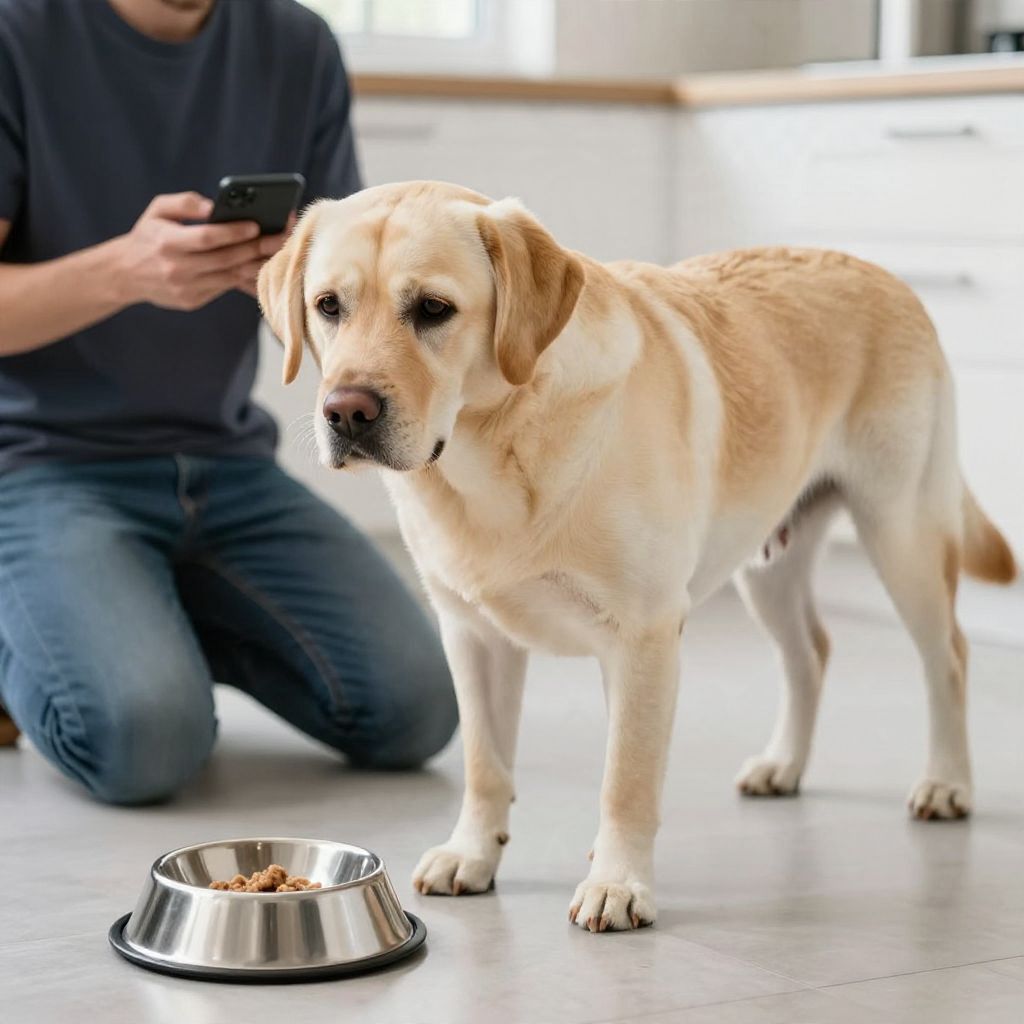
Dog vomiting can be a one-time upset stomach or a sign of something more serious. The key is to watch how often it happens, what the vomit looks like, and whether your dog is acting normally.
If your dog is otherwise bright, drinking, and keeping food down after a single vomit, it may not be an emergency. But repeated vomiting, blood, weakness, pain, or a swollen belly means you should contact a veterinarian promptly.
Dog vomiting when to worry?
Worry if your dog vomits more than once, cannot keep water down, seems weak or painful, has blood in the vomit, or shows other symptoms like diarrhea, bloating, or collapse. Puppies, senior dogs, and dogs with medical conditions need faster veterinary attention because they can dehydrate or worsen more quickly.
What a vomit episode can mean
Vomiting is a symptom, not a diagnosis. It can happen after eating too fast, dietary indiscretion, motion sickness, stress, infection, parasites, pancreatitis, toxin exposure, intestinal blockage, or other illness.
The pattern matters. A single episode in an otherwise normal dog is different from repeated vomiting over several hours or a dog that looks unwell.
Common clues to notice
- Frequency: one episode versus repeated vomiting
- Appearance: food, yellow bile, foam, blood, or foreign material
- Behavior: normal energy versus lethargy, restlessness, or hiding
- Hydration: normal drinking versus refusing water or vomiting after drinking
- Other signs: diarrhea, abdominal pain, drooling, coughing, fever, or bloating
Red flags that need urgent veterinary care
Some vomiting situations should be treated as urgent. Do not wait at home if your dog has any of the following signs.
- Repeated vomiting over a short period
- Blood in the vomit or material that looks like coffee grounds
- Swollen, hard, or painful abdomen
- Retching without producing vomit, especially with a distended belly
- Weakness, collapse, trouble standing, or extreme lethargy
- Signs of pain such as whining, panting, a hunched posture, or guarding the belly
- Possible toxin exposure or ingestion of a foreign object
- Vomiting plus diarrhea that is severe, bloody, or ongoing
- Inability to keep water down
- Puppies, toy breeds, seniors, or medically fragile dogs that are vomiting repeatedly
If your dog may have swallowed a toy, bone, sock, string, medication, chocolate, xylitol, grapes, raisins, or another toxin, call a veterinarian or emergency clinic right away.
When a vet visit is still important, even if it is not an emergency
Some vomiting cases are not immediate emergencies, but they still deserve a veterinary exam if they keep happening or do not resolve quickly.
- Vomiting lasts longer than a day
- Your dog vomits after every meal
- Your dog is losing weight
- There is a history of chronic stomach issues
- Your dog recently started a new food, supplement, or medication
- Your dog is older and vomiting is new or unusual
Recurring vomiting can point to food intolerance, inflammatory disease, organ problems, parasites, or other conditions that need proper diagnosis.
What you can do right away at home
For a single mild episode in a dog who otherwise seems normal, the safest approach is careful observation and gentle support. Do not give human medications unless your veterinarian specifically told you to do so.
- Remove food for a short period only if your veterinarian has previously said this is safe for your dog.
- Offer small amounts of fresh water and watch whether your dog keeps it down.
- Keep your dog calm and indoors so you can monitor behavior.
- Check for possible access to trash, toys, plants, chemicals, or medications.
- Note the time, number of vomiting episodes, and what the vomit looked like.
If vomiting continues, stop home management and call your veterinarian. Puppies and dogs with diabetes, kidney disease, or other chronic illness should not be managed casually at home.
What not to do
Some well-meaning actions can make the situation worse or delay proper care.
- Do not give over-the-counter human nausea or pain medicine without veterinary guidance.
- Do not force food or water into a vomiting dog.
- Do not assume grass-eating is harmless if vomiting is repeated.
- Do not wait if there is bloating, collapse, blood, or suspected toxin exposure.
- Do not use punishment or scolding if your dog vomited indoors; the dog is not misbehaving.
Age and size matter
How worried you should be can depend on your dog’s age, body size, and health history.
Puppies
Puppies can dehydrate quickly and may become seriously ill faster than adult dogs. Repeated vomiting in a puppy should be taken seriously, especially if the puppy is also sleepy, not eating, or has diarrhea.
Small dogs
Smaller dogs can become weak from fluid loss sooner than larger dogs. A small dog that vomits repeatedly or cannot keep water down needs prompt veterinary advice.
Senior dogs
Older dogs may have underlying disease that makes vomiting more concerning. New vomiting in a senior dog is worth a call to the vet even if the dog otherwise seems only mildly off.
Dogs with chronic conditions
If your dog has diabetes, kidney disease, liver disease, pancreatitis, Addison’s disease, or a history of gastrointestinal problems, vomiting should be discussed with a veterinarian sooner rather than later.
Food, treats, and stomach upset
Diet changes are a common reason for mild vomiting, but not every stomach upset is food-related. A sudden switch in food, rich table scraps, scavenging, or eating too quickly can trigger vomiting in some dogs.
That said, repeated vomiting should not be blamed on food alone. If the problem keeps happening, your vet may need to check for parasites, infection, obstruction, inflammation, or another cause.
Helpful feeding habits
- Make diet changes gradually when possible
- Keep trash, compost, and spoiled food out of reach
- Use puzzle feeders or slow-feeding bowls if your dog gulps meals
- Supervise dogs that tend to scavenge outdoors
Vomiting versus regurgitation
It can help to tell whether your dog is vomiting or regurgitating, because they are not the same problem.
- Vomiting usually involves abdominal effort, nausea, and bringing up digested or partially digested material.
- Regurgitation is often more passive and may happen soon after eating, with undigested food coming back up.
If you are not sure which one you are seeing, take a photo or short video for your veterinarian. That can help them assess the issue more accurately.
What your veterinarian may ask
When you call, be ready to describe your dog’s symptoms clearly. This helps the clinic decide how urgent the situation is.
- How many times your dog vomited
- What the vomit looked like
- Whether your dog is eating, drinking, and acting normally
- Any diarrhea, pain, bloating, or weakness
- Possible exposure to toxins, garbage, toys, bones, or medications
- Any recent diet changes or new treats
- Your dog’s age, breed mix, and medical history
How to reduce the risk of future vomiting
You cannot prevent every stomach upset, but you can lower the chances of avoidable episodes.
- Feed a complete, appropriate diet for your dog’s life stage
- Avoid sudden food changes unless your veterinarian recommends one
- Keep garbage, string, bones, socks, and toys out of reach
- Use leash control and supervision on walks if your dog scavenges
- Schedule routine parasite prevention and wellness care
- Watch for patterns after specific foods, treats, or activities
Bottom line
Dog vomiting when to worry comes down to the pattern and the dog’s overall condition. One mild episode may pass, but repeated vomiting, blood, pain, bloating, weakness, or toxin exposure needs prompt veterinary attention. When in doubt, call your vet sooner rather than later.
If you want more background on common causes and next steps, you may also find why dogs throw up and what to do when your dog is throwing up helpful.