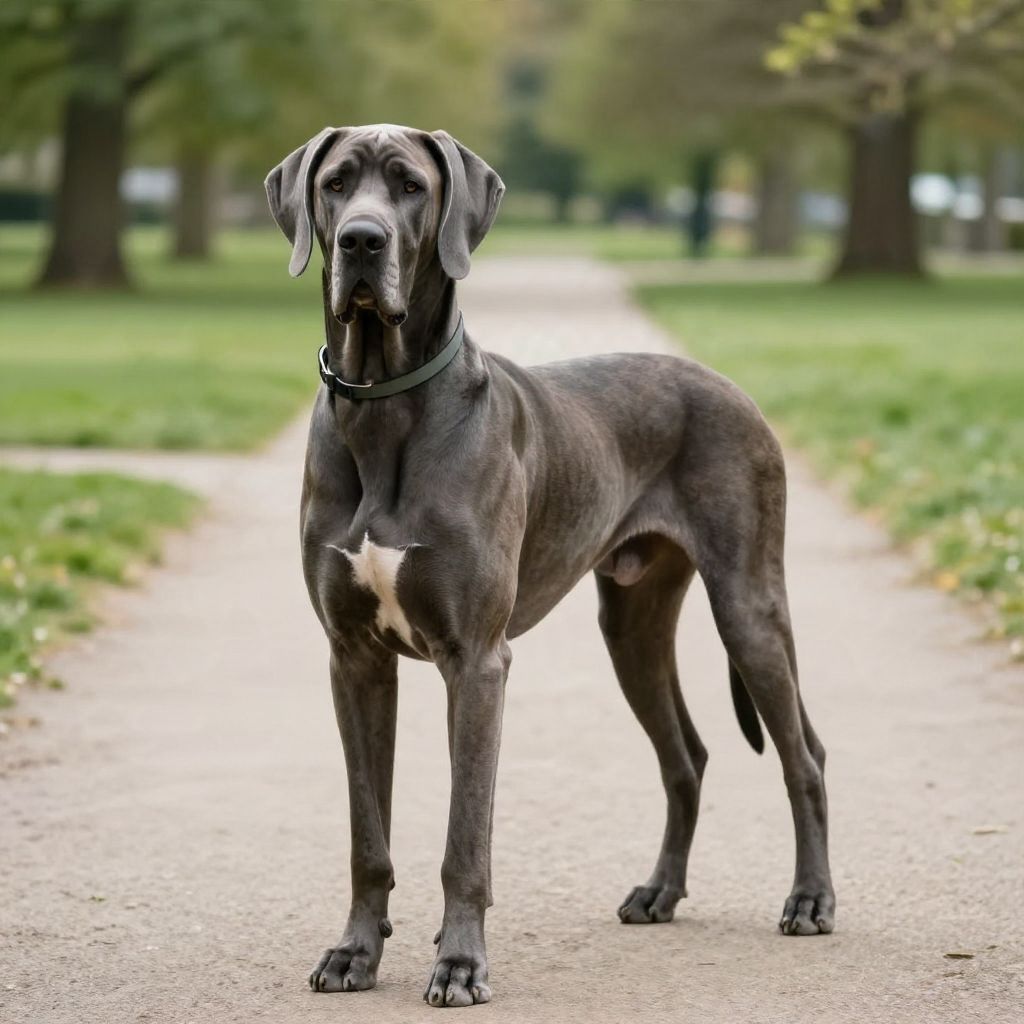
What is the biggest dog? In everyday conversation, people usually mean the largest dog breed by height or the heaviest dog by weight. The answer depends on which measurement you use, because different breeds can “win” in different ways.
If you’re asking because you want a giant dog, it helps to understand size, care needs, and health risks before choosing one. Very large dogs can be wonderful companions, but they also need thoughtful feeding, training, space, and veterinary care.
What Is The Biggest Dog?
The biggest dog is usually considered the Great Dane when people mean tallest breed, while the heaviest dogs are often giant breeds such as the Mastiff. “Biggest” can mean height, weight, or overall mass, so the exact answer depends on the measurement you use and the individual dog.
What “Biggest” Can Mean
There is no single universal winner because dog size is measured in different ways. A dog may be the tallest at the shoulder, the heaviest on a scale, or simply the most massive-looking in build.
- Height: measured from the ground to the shoulder.
- Weight: measured on a scale, which can favor very heavy, broad-bodied breeds.
- Overall size: a mix of height, length, bone structure, and muscle.
That means the “biggest dog” question can have more than one correct answer. For many dog lovers, Great Danes are the best-known answer for height, while Mastiff-type dogs are often discussed for sheer bulk.
Common Giant Dog Breeds People Mean By “Biggest”
Great Dane
Great Danes are often the first breed people think of when asking what the biggest dog is. They are known for exceptional height and a tall, elegant frame, though individual dogs vary in size.
Mastiff
Mastiff breeds are usually discussed when people mean the heaviest dogs. They tend to have a broad, powerful build and can look enormous even if they are not the tallest dogs in the room.
Irish Wolfhound
Irish Wolfhounds are another giant breed often mentioned in size comparisons. They are typically very tall and lean, with a different body shape from the heavier mastiff-type breeds.
Saint Bernard
Saint Bernards are famous for their large frame and substantial weight. Like all giant breeds, they can vary widely from one dog to another depending on genetics, diet, and overall health.
Why Size Matters More Than Curiosity
Asking what is the biggest dog is not just trivia. Giant dogs have special care needs, and their size affects daily life in practical ways.
- They may need more space to move safely indoors.
- They can be harder to lift, transport, or restrain in an emergency.
- Joint, heart, and digestive problems can be more concerning in large breeds.
- Training and socialization matter because a large dog’s behavior has more physical impact.
Even gentle giant breeds can accidentally knock over children, older adults, or fragile objects. Good management is important, not because giant dogs are “bad,” but because their size changes the risks.
Care Needs Of Very Large Dogs
Feeding
Large and giant dogs need carefully managed nutrition. Overfeeding can worsen joint stress and increase the risk of unhealthy weight gain, while underfeeding can affect growth in puppies.
- Choose a complete, balanced diet appropriate for age and life stage.
- Monitor body condition, not just the number on the scale.
- Ask your veterinarian how much to feed if your dog is still growing.
Giant-breed puppies are especially sensitive to nutrition and growth rate. Fast growth is not the goal; steady, healthy development is.
Exercise
Big dogs usually need regular exercise, but the right amount depends on age, breed, and health. A young giant puppy should not be pushed into intense running or repetitive jumping, while an adult may enjoy longer walks and structured play.
- Use controlled walks and low-impact activity.
- Avoid excessive stair climbing for dogs with joint concerns.
- Watch for fatigue, stiffness, or limping after activity.
Training
Training is essential because a 120-pound dog that pulls, jumps, or rushes the door can be difficult to manage. Reward-based training works well for giant breeds and helps build reliable manners without fear or force.
- Teach loose-leash walking early.
- Practice calm greetings and “four paws on the floor.”
- Work on recall, settle, and polite door behavior.
Socialization matters too. Expose your dog gradually and positively to new people, dogs, sounds, and environments so size does not become a handling problem later.
Home Setup
Large dogs need a safe home setup. Crates, beds, harnesses, and car restraints should be sized correctly for a giant body, not adapted from smaller-dog gear.
- Choose sturdy bowls and bedding.
- Make sure gates and fences are strong enough.
- Use a properly fitted harness for walks if your dog pulls.
Health Concerns That Can Be More Important In Giant Dogs
Not every big dog will develop health problems, but very large breeds can be at higher risk for some issues. This is one reason it is worth asking your veterinarian about breed-specific care.
- Joint stress: hips, elbows, and knees may be more vulnerable.
- Heart disease: some giant breeds are more prone to cardiac concerns.
- Bloat: deep-chested dogs can be at risk for gastric dilatation-volvulus, a life-threatening emergency.
- Shorter lifespan: many giant breeds age faster than smaller dogs.
If your large dog suddenly has a swollen abdomen, retches without producing vomit, seems distressed, or collapses, seek emergency veterinary care immediately. These can be signs of bloat or another urgent problem.
How To Tell If A Dog Is “The Biggest” In Real Life
If you are comparing dogs in person, the most useful way is to look at objective measurements rather than appearance alone. A fluffy coat can make a dog look larger, while a lean dog may be taller than expected.
- Measure height at the shoulder if possible.
- Weigh the dog on a scale.
- Compare body length and chest depth.
- Ask about age, sex, and whether the dog is still growing.
Puppies can change dramatically as they mature, so a young dog that seems enormous may not end up being the largest adult. Genetics, nutrition, and health all influence final size.
Common Mistakes When Caring For A Giant Dog
People sometimes assume a big dog can handle more than it actually should. That can lead to preventable injuries or behavior issues.
- Overexercising a growing puppy.
- Allowing rough jumping or repeated stair use.
- Feeding too much because the dog “looks thin” during growth.
- Skipping training because the dog seems calm.
- Using equipment that is too small or weak for the dog’s strength.
It is also a mistake to assume all giant dogs are naturally gentle or naturally difficult. Temperament varies by individual, training history, and early social experiences.
When To Talk To A Veterinarian
Check with your veterinarian if you have a giant-breed puppy, a very large adult dog, or any concerns about growth or movement. A vet can help you monitor body condition, joint health, and diet.
Get prompt veterinary help if you notice any of the following:
- Sudden lameness or reluctance to stand
- Swollen or painful abdomen
- Repeated unproductive retching
- Collapse, weakness, or trouble breathing
- Persistent vomiting, diarrhea, or refusal to eat
These symptoms can signal serious illness, especially in a large dog where problems may progress quickly.
So, What Is The Biggest Dog?
If you mean the tallest dog, the Great Dane is the name most people expect. If you mean the heaviest or most massive, mastiff-type breeds are often at the top of the conversation. The best answer depends on how you define “biggest.”
If you are considering a giant breed, focus on responsible care, training, and regular veterinary guidance. For more breed-related reading, you may also find dog breed information useful, and if you are interested in giant-breed health, see how long Rottweilers live.