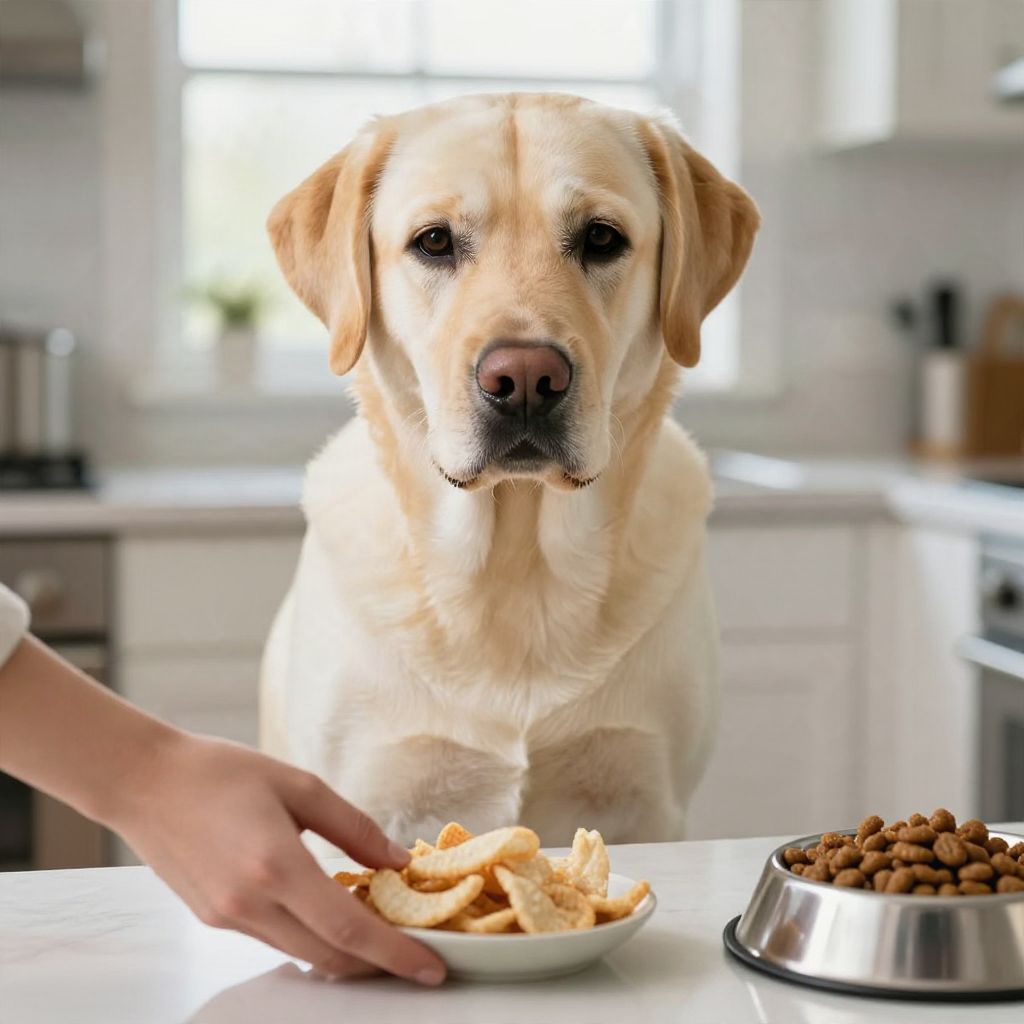
Can dogs eat pork rinds? In most cases, they’re not a good snack for dogs. Pork rinds are usually high in fat, salt, and seasoning, which can upset your dog’s stomach and may contribute to more serious problems in some dogs.
If your dog grabbed one by accident, a small amount may not cause trouble, but larger amounts or heavily seasoned pork rinds are riskier. The safest approach is to treat pork rinds as an occasional human snack, not a dog treat.
Can Dogs Eat Pork Rinds?
Dogs should generally not eat pork rinds regularly. Plain pork rinds are still too fatty and salty for most dogs, and flavored versions often contain onion, garlic, spice blends, or other ingredients that can be harmful. A tiny accidental bite may be okay for some dogs, but it is not a healthy or recommended food.
Why Pork Rinds Are a Problem for Dogs
Pork rinds are fried pork skin, so they are dense, greasy, and easy to overeat. That combination makes them hard on a dog’s digestive system and can be especially troublesome for dogs with sensitive stomachs or a history of pancreatitis.
High fat content
Fatty foods can trigger vomiting, diarrhea, abdominal pain, and in some dogs, pancreatitis. Smaller dogs may be affected by less food simply because their bodies are smaller, but any dog can react badly if they eat enough.
High sodium content
Many pork rinds are heavily salted. Too much sodium can cause excessive thirst, stomach upset, and in more serious cases, dangerous electrolyte problems, especially if a dog eats a large amount.
Seasonings and flavorings
Spicy, smoky, barbecue, or “loaded” pork rinds may contain ingredients that are not dog-safe. Onion and garlic powders are common seasoning risks, and some spice mixes can irritate the mouth and stomach even when they are not toxic.
What Happens If a Dog Eats Pork Rinds?
A dog who eats a small piece may have no symptoms at all. Others may develop mild digestive upset within hours, especially if the snack was greasy, salty, or heavily seasoned.
- Vomiting
- Diarrhea
- Gas or bloating
- Drooling
- Restlessness
- Loss of appetite
More serious signs can happen after a larger amount or in dogs prone to pancreatitis. Watch for repeated vomiting, obvious belly pain, weakness, or a hunched posture.
When Pork Rinds Become an Emergency
Call your veterinarian promptly if your dog ate a large amount of pork rinds, especially if they are very salty or seasoned. Seek urgent care right away if your dog has repeated vomiting, severe diarrhea, a swollen or painful abdomen, trouble breathing, collapse, extreme lethargy, or signs of dehydration.
If the pork rinds contained onion or garlic powder, or if your dog has a known medical condition such as pancreatitis, kidney disease, heart disease, or a sodium-restricted diet, contact your vet for guidance as soon as possible.
Are Plain Pork Rinds Safer Than Flavored Ones?
Plain pork rinds are usually less risky than flavored versions, but they are still not an ideal dog food. “Plain” does not mean healthy, because the fat and salt content can still be too much for many dogs.
If your dog only ate a tiny crumb or one small piece, you may simply monitor them for stomach upset. If they ate several pieces, a whole bag, or any seasoned variety, the risk goes up.
Which Dogs Should Avoid Pork Rinds Completely?
Some dogs are more likely to get sick from fatty or salty foods. For these dogs, pork rinds are a particularly poor choice.
- Dogs with a history of pancreatitis
- Dogs with sensitive stomachs
- Dogs with obesity or weight-management plans
- Dogs with kidney or heart disease
- Dogs on prescription diets
- Puppies, who can be more prone to digestive upset
- Senior dogs with medical conditions or slower digestion
Breed alone does not decide whether a dog can tolerate pork rinds. Individual health, body size, age, and medical history matter much more than breed labels.
What To Do If Your Dog Ate Pork Rinds
Stay calm and check the package if you can. Knowing whether the pork rinds were plain, heavily salted, or seasoned with onion or garlic can help your veterinarian judge the risk.
- Remove the remaining pork rinds so your dog cannot eat more.
- Note how much was eaten and whether the bag was plain or flavored.
- Watch for vomiting, diarrhea, belly pain, or unusual behavior.
- Contact your veterinarian if your dog ate a large amount or has any symptoms.
- Go to urgent care if severe symptoms appear.
Do not try home treatments without veterinary advice, especially if your dog ate a large amount or the snack had questionable ingredients.
Can Dogs Have Pork Rinds as an Occasional Treat?
It is better to choose a dog-safe treat instead. Pork rinds do not offer meaningful nutritional benefits for dogs, and the risks usually outweigh the value of sharing them.
If you still want to offer a tiny taste, keep it very occasional, plain, and minimal, and only if your dog is healthy and has no history of digestive or pancreas problems. Even then, a safer treat is a better choice.
Better snack alternatives
- Small pieces of plain cooked lean meat with no seasoning
- Commercial dog treats made for your dog’s size and diet
- Crunchy vegetables your dog tolerates, such as carrot pieces
- Vet-approved training treats in small amounts
Common Mistakes Dog Owners Make
People often assume that because pork rinds are “just pork skin,” they must be harmless. The issue is not the ingredient alone, but the way the snack is processed and seasoned.
- Offering pork rinds during training because they are crunchy and convenient
- Letting dogs finish the crumbs from a bag or bowl
- Assuming “baked” or “air-fried” means safe
- Ignoring flavored varieties with hidden onion or garlic powder
- Waiting too long to call the vet after a large accidental intake
Even if your dog seems fine at first, digestive signs can appear later, so monitoring matters after a bigger snack incident.
How To Prevent Accidental Snacking
If your dog has a habit of counter-surfing or scavenging, prevention is the best protection. Dogs often go after pork rinds because they are aromatic, salty, and easy to steal.
- Store snacks in sealed containers and out of reach
- Do not leave open bags on low tables or couches
- Teach a reliable “leave it” cue using reward-based training
- Feed your dog on a routine so they are less likely to hunt for people food
- Supervise children and guests who may share snacks
If stealing food is a repeated behavior, a certified trainer can help you build safer habits without punishment or intimidation.
Bottom Line: Should You Feed Pork Rinds to Dogs?
Can dogs eat pork rinds? The safest answer is no, not as a regular treat. They are too fatty, salty, and often too heavily seasoned to be a smart choice for most dogs. If your dog ate a small amount, watch for stomach upset, but contact your vet quickly if the amount was large or symptoms appear.
If you want to read more about pork-related dog safety, see can dogs eat raw pork and can dogs eat pork chop bones for related guidance.