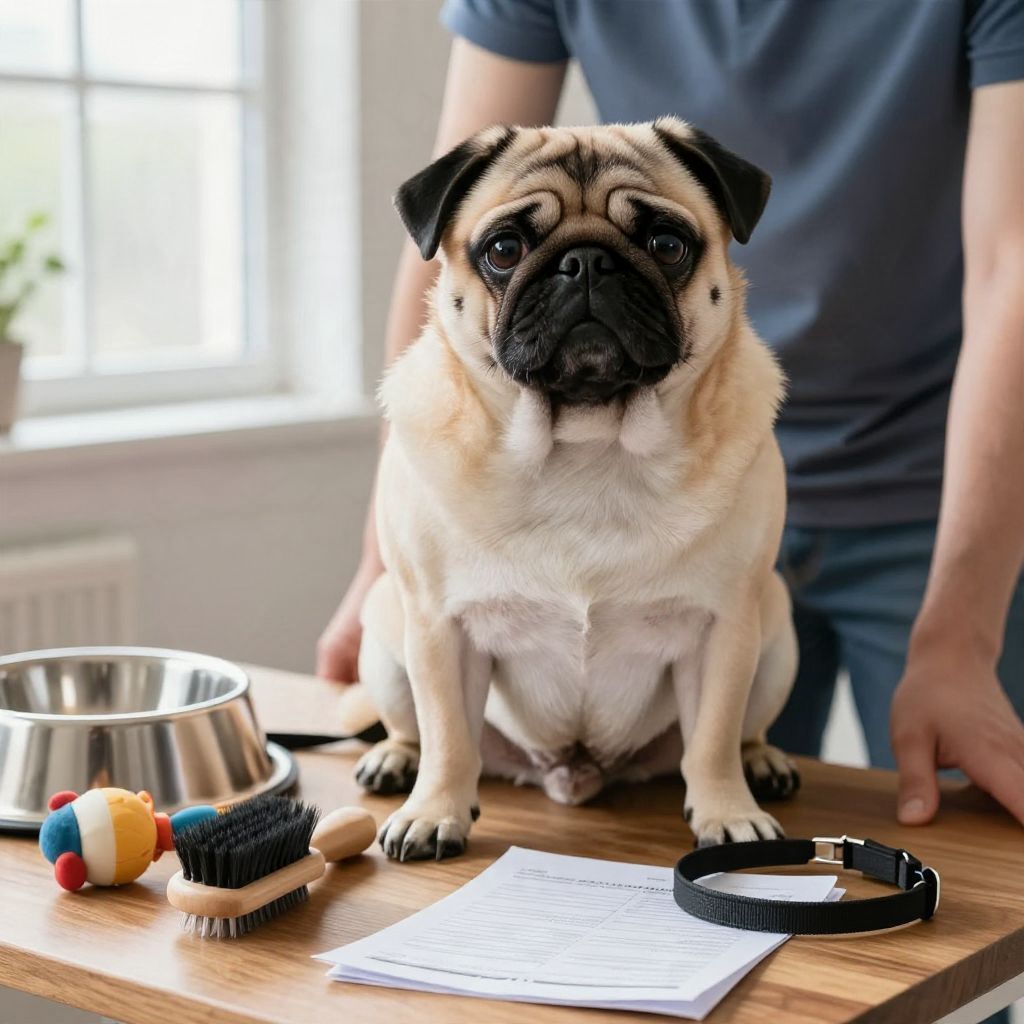
If you’re asking how much a Pug costs, the answer depends on where you buy, the dog’s age, pedigree, and health screening. A Pug puppy from a responsible breeder usually costs more upfront than one from a rescue or shelter.
It’s also important to budget for the ongoing cost of care. Pugs can need extra attention for breathing, skin, eye, and weight management, so the true cost is more than the purchase price.
How much is a Pug?
A Pug typically costs anywhere from a few hundred dollars at a rescue or shelter to well over a thousand dollars from a responsible breeder. The exact price varies with age, location, pedigree, health testing, and whether the dog has already had early veterinary care, vaccines, and spay/neuter surgery.
What affects the price of a Pug?
Several factors can raise or lower the price you pay. A lower price is not always a better deal if the dog has poor health, missing records, or comes from an irresponsible source.
- Source: Rescue and shelter adoptions are usually less expensive than breeder purchases.
- Age: Puppies often cost more than adults.
- Health care included: Vaccines, deworming, microchipping, and spay/neuter can affect the price.
- Breeder practices: Ethical breeders who screen for health issues and raise puppies carefully often charge more.
- Location: Prices can vary by region and local demand.
- Appearance or pedigree: Dogs marketed as show quality or from titled lines may cost more.
Why a very cheap Pug can cost more later
A low purchase price may hide future expenses. Puppies from poor breeding or unknown backgrounds may be more likely to need veterinary care for breathing problems, eye issues, skin disease, parasites, or poor socialization.
How much does a Pug puppy cost?
Pug puppies usually cost more than adult dogs because they are in higher demand and require more early care. If you are comparing puppies, ask exactly what is included: vet exam, vaccinations, deworming, microchip, registration papers, and a written health guarantee if one is offered.
Be cautious if a seller offers a puppy at an unusually low price, pressures you to pay quickly, or will not let you meet the puppy’s mother or see where the puppies were raised. Those are common warning signs that the dog may not have received proper care.
How much does it cost to adopt a Pug?
Adoption fees are often lower than breeder prices and may include some initial veterinary care. A rescue or shelter may also provide temperament information, which can help you choose a dog that fits your home.
Adoption can be a great option if you are open to an adult Pug. Adult dogs may already have basic house training, and their personality is often easier to assess than a very young puppy’s.
What ongoing costs should you expect?
The purchase price is only the beginning. Like any dog, a Pug needs routine care, but this breed can also have extra veterinary needs because of its short muzzle and tendency toward certain health concerns.
- Routine veterinary visits: wellness exams, vaccines, parasite prevention, and dental care
- Food: a complete, balanced diet in appropriate portions
- Grooming supplies: brushes, wipes, nail care tools, and skin-safe cleaning products
- Training and socialization: classes or private help if needed
- Pet insurance or emergency savings: useful for unexpected illness or injury
- Supplies: crate, bed, leash, harness, bowls, toys, and cleaning products
Health-related expenses to plan for
Pugs can be prone to breathing difficulty, eye injuries, skin fold irritation, and weight gain. Not every Pug will develop these problems, but their body shape can make preventive care especially important.
Because of that, many owners should budget for more frequent checkups and a lower threshold for veterinary advice if something seems off.
How to tell whether a Pug price is fair
A fair price is one that reflects the dog’s age, care, and background without cutting corners on welfare. A responsible breeder or rescue should be transparent and willing to answer questions.
- Ask what veterinary care has already been done.
- Request health records and proof of vaccines or deworming.
- Find out whether the puppy has been socialized in a home environment.
- Ask about the parents’ health screening if buying from a breeder.
- Compare the total package, not just the sticker price.
If the seller cannot explain the dog’s history clearly, that is a reason to walk away.
What should you ask before buying a Pug?
Good questions can help you avoid costly surprises. They also give you a better sense of whether the dog was raised responsibly.
- What is included in the price?
- Has the puppy seen a veterinarian?
- Are vaccines, deworming, and microchipping done?
- Have the parents been screened for relevant health issues?
- Can I see where the puppy lives?
- What support do you offer after adoption or purchase?
For an adult Pug, ask about house training, behavior around children or other pets, and any known medical conditions.
How much does it cost to care for a Pug each month?
Monthly costs vary widely based on your location, the dog’s age, and health. A healthy adult Pug may be fairly manageable, but a dog with chronic skin, eye, or breathing issues can require more frequent care.
To keep costs predictable, set aside money for food, parasite prevention, and routine vet care. If your Pug needs medication, allergy management, or dental treatment, your budget may need to be higher.
Ways to keep costs reasonable without cutting corners
- Choose a reputable source instead of the cheapest available puppy.
- Keep your Pug at a healthy weight to reduce strain on breathing and joints.
- Use preventive veterinary care to catch problems early.
- Brush teeth and maintain grooming to reduce avoidable issues.
- Train with rewards and consistency so you avoid costly behavior problems later.
Are Pugs expensive dogs to own?
They can be. Pugs are not always the most expensive breed to buy, but they may be more expensive to maintain than some people expect because of their health needs and sensitivity to heat and overexertion.
If you are deciding whether a Pug fits your budget, think about the long term. The right question is not only “How much is a Pug?” but also “Can I comfortably afford a Pug for the next 10 to 15 years?”
How to avoid common money mistakes
Many new owners focus on the purchase price and forget the rest. That can lead to stressful decisions later, especially if the dog needs unexpected treatment.
- Do not buy based on price alone.
- Do not skip a veterinary exam after bringing the dog home.
- Do not assume a small dog has small-care needs; Pugs can still need significant veterinary attention.
- Do not overfeed treats, which can contribute to weight gain and breathing strain.
When should you see a veterinarian?
You should schedule a veterinary visit soon after bringing a Pug home, especially if the dog is a puppy, newly adopted, or has an unknown medical history. A vet can check overall health, discuss vaccines, parasite prevention, and help you plan for breed-related concerns.
Seek urgent veterinary care if your Pug has severe breathing trouble, collapse, blue or pale gums, repeated vomiting, sudden eye injury, extreme lethargy, or signs of heat stress. These can become emergencies quickly.
Bottom line: how much is a Pug?
A Pug can cost a little or a lot depending on whether you adopt, buy from a breeder, and what care is already included. The smartest approach is to compare the total cost of ownership, not just the purchase price, and choose a dog from a source that prioritizes health and welfare.
If you’re still comparing breeds and budgets, you may also find it helpful to read about how much a French Bulldog costs or how much a Pomeranian is.