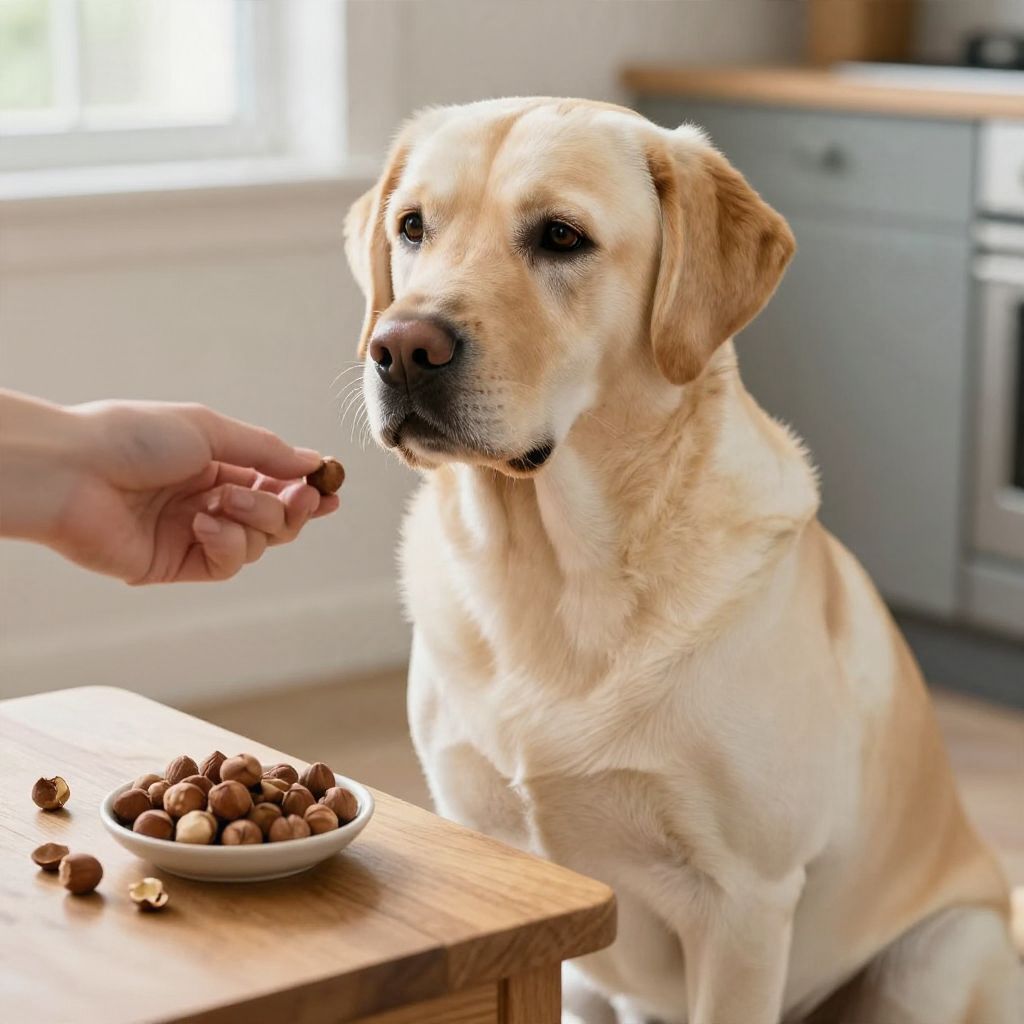
Can dogs eat hazelnuts? In small amounts, plain hazelnuts are not usually toxic to dogs, but they are not a great snack. The bigger concerns are choking, stomach upset, mold, and the high fat content, which can be risky for some dogs.
If your dog grabbed one hazelnut, they will often be fine, but larger amounts or hazelnuts mixed into candy, baked goods, or chocolate can be dangerous. Watch closely for vomiting, diarrhea, coughing, or signs of distress, and call your vet if you are unsure.
Can dogs eat hazelnuts?
Plain, unsalted hazelnuts are not considered highly toxic to dogs, but they are not recommended as a regular treat. The main risks are choking, digestive upset, and pancreatitis from the fat content, especially in dogs that are small, overweight, or prone to stomach problems.
Why hazelnuts can be a problem for dogs
Even when a food is not poisonous, it can still be unsafe for dogs. Hazelnuts are dense, oily, and hard, which makes them a poor choice for many pets.
1. Choking and blockage risk
Whole hazelnuts can be difficult for dogs to chew, especially for small dogs, enthusiastic eaters, and puppies. A dog may try to swallow one whole, which can lead to choking or, less commonly, an intestinal blockage if enough nuts are eaten.
2. Stomach upset
Some dogs handle a small amount without issue, while others develop vomiting, diarrhea, gas, or abdominal discomfort. Dogs with sensitive stomachs may react more easily to rich or fatty foods.
3. High fat content
Hazelnuts contain a lot of fat. For some dogs, a fatty snack can trigger pancreatitis, a painful and potentially serious inflammation of the pancreas. This risk is higher in dogs with a history of pancreatitis, digestive disease, or weight problems.
4. Mold and spoilage
Old or improperly stored nuts may develop mold or rancidity. Moldy nuts are unsafe for dogs and can cause illness. If a hazelnut smells off, looks discolored, or tastes stale to you, do not share it with your dog.
What if your dog ate hazelnuts?
If your dog ate one plain hazelnut, monitor them closely and remove any remaining nuts. If they ate several, a bagful, or hazelnuts mixed with unsafe ingredients, contact your veterinarian for advice.
Watch for these signs
- Vomiting or repeated retching
- Diarrhea
- Lethargy or unusual restlessness
- Loss of appetite
- Abdominal pain, a hunched posture, or whining when picked up
- Coughing, gagging, or trouble breathing
- Signs of choking, such as pawing at the mouth or panic
Get urgent veterinary help right away if you notice
- Difficulty breathing
- A swollen or painful belly
- Repeated vomiting
- Collapse, extreme weakness, or severe distress
- Suspected choking
- Possible ingestion of chocolate, xylitol, raisins, macadamia nuts, or alcohol along with the hazelnuts
Hazelnuts with chocolate, sugar, or seasoning are much riskier
The nut itself is only part of the issue. Hazelnuts are often found in foods that are unsafe for dogs because of added ingredients.
- Chocolate hazelnut spreads may contain chocolate and sometimes xylitol, both of which can be dangerous.
- Cookies, cakes, and pastries may include sugar, butter, chocolate, raisins, or artificial sweeteners.
- Salted or spiced nuts can upset your dog’s stomach and add unnecessary sodium.
- Nut mixes may contain macadamia nuts, which are toxic to dogs.
If your dog ate a dessert or snack containing hazelnuts, check the ingredient list right away and call your vet or an emergency clinic if any toxic ingredients may be involved.
Are hazelnuts ever safe for dogs?
For most dogs, hazelnuts are best treated as an occasional accidental food rather than a planned treat. If you do offer one, it should be plain, unsalted, unseasoned, and given only in a very small amount.
If you choose to offer a hazelnut
- Use only plain, fresh, unsalted hazelnuts.
- Offer a tiny piece, not a handful.
- Supervise your dog while they chew.
- Stop if your dog has a sensitive stomach, is overweight, or has a history of pancreatitis.
- Do not use hazelnuts as a training reward or daily snack.
That said, there are usually better treat choices for dogs, such as small pieces of dog-safe fruit or commercially made treats designed for canine digestion.
Which dogs should avoid hazelnuts completely?
Some dogs are more likely to have trouble with rich foods, even in small amounts. Individual health matters more than breed alone, but certain dogs deserve extra caution.
- Puppies, because they are more likely to swallow food whole and have sensitive stomachs
- Small dogs, because even one nut can be a choking hazard
- Dogs with pancreatitis history
- Dogs with chronic digestive issues
- Overweight dogs, since high-fat snacks can add unnecessary calories
- Dogs with dental problems, because hard nuts can be difficult to chew safely
Senior dogs may also be more vulnerable if they have slower digestion or other health conditions, so it is wise to keep nuts out of reach.
What not to do
When a dog eats something questionable, it is easy to make the situation worse by guessing or trying unsafe home fixes. Stick to safe, practical steps.
- Do not give more nuts to “see what happens.”
- Do not feed hazelnut spreads, baked goods, or trail mix to soothe your dog.
- Do not force vomiting unless a veterinarian specifically instructs you to do so.
- Do not assume your dog is fine just because they seem normal at first; some symptoms take time to appear.
How to prevent hazelnut accidents
Prevention is simpler than dealing with a sick dog later. Many nut-related problems happen when food is left within reach or shared casually during snack time.
- Store nuts and nut-based foods in sealed containers.
- Keep desserts, trail mix, and chocolate products off low tables and counters.
- Remind children and visitors not to share nuts with your dog.
- Use dog-safe treats for training instead of human snacks.
- Check ingredient labels before offering any new food.
Better treat options than hazelnuts
If you want a safe snack for your dog, choose options that are easier to digest and less likely to cause choking or stomach upset. The best treat depends on your dog’s size, diet, and health status.
- Small pieces of plain cooked meat without seasoning
- Commercial dog treats made for your dog’s size
- Dog-safe fruits or vegetables in small amounts, if your vet says they are appropriate
- Part of your dog’s regular kibble used as training rewards
Keep treats to a small part of your dog’s daily food intake so you do not unbalance their diet.
When to call your veterinarian
Contact your vet if your dog ate more than a tiny amount of hazelnuts, if the nuts were mixed with other ingredients, or if your dog has any health condition that makes fatty foods risky. Call promptly if your dog is vomiting, uncomfortable, or acting unusually quiet.
If your dog is choking, struggling to breathe, collapsing, or showing severe abdominal pain, seek emergency veterinary care immediately.
Bottom line
Can dogs eat hazelnuts? A plain hazelnut is not usually toxic, but hazelnuts are not an ideal dog treat because of choking risk, stomach upset, and their high fat content. If your dog eats a small amount, monitor them closely; if they eat a lot or any hazelnut-containing human food, call your vet.
If you want to compare hazelnuts with another nut, you may also find it helpful to read about can dogs eat chestnuts and review the related hazelnut safety guide for dogs.