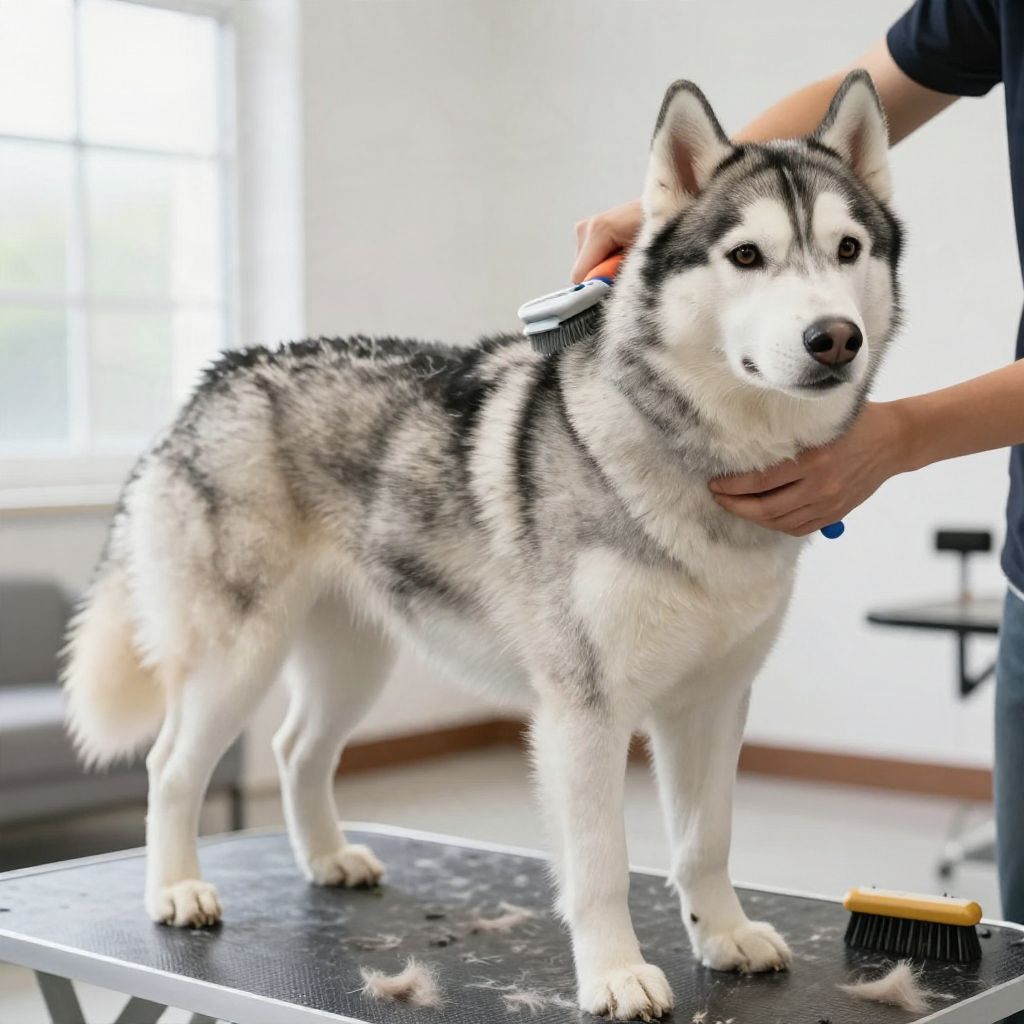
Do Huskies shed? Yes—usually a lot. Most Huskies have a dense double coat that sheds year-round, with heavier “coat blows” seasonally when they lose more undercoat. Regular grooming, a good diet, and proper home care can make the shedding easier to manage, but it will not stop completely.
If you’re considering a Husky or already living with one, the key is learning how to control loose hair safely and keep the coat healthy. Heavy shedding is normal for many Huskies, but sudden changes in coat loss can sometimes point to a health problem.
Do Huskies Shed?
Yes, Huskies shed year-round, and many shed heavily during seasonal coat changes. Their thick double coat is designed for insulation, so loose hair is normal. You can reduce mess with regular brushing and grooming, but you cannot prevent a Husky from shedding entirely.
Why Huskies Shed So Much
Huskies have two coat layers: a softer undercoat that helps with temperature control and a topcoat that offers protection. The undercoat is the main source of heavy shedding, especially when the seasons change or when the dog is adapting to indoor living.
Year-round shedding vs. seasonal shedding
- Year-round shedding: Small amounts of loose hair come off continuously.
- Seasonal shedding: Many Huskies “blow coat” and lose much more undercoat in spring and fall.
- Individual variation: Age, health, hormones, stress, and grooming habits can affect how much your dog sheds.
What affects shedding in an individual Husky?
- Indoor temperature and time spent indoors
- Spaying or neutering status
- Nutrition and overall health
- Skin conditions, allergies, or parasites
- Age, with puppies and seniors sometimes having different coat patterns
How to Manage Husky Shedding at Home
The best way to manage Husky shedding is consistent grooming. Brushing removes loose undercoat before it ends up on your furniture, and it also helps you notice skin problems early.
Brushing routine that works
- Brush several times a week, and more often during heavy shedding periods.
- Use tools made for double coats, such as an undercoat rake or slicker brush.
- Work gently in sections so you do not tug at the skin.
- Pay attention to areas that mat more easily, like behind the ears, under the legs, and around the tail.
Bathing and drying tips
- Bathe your Husky only as needed, since overbathing can dry the skin.
- Use a dog-safe shampoo, not human shampoo.
- Dry the coat thoroughly after bathing so trapped moisture does not irritate the skin.
- Brush after the coat is dry to help remove loosened hair.
Home cleanup tips
- Use washable covers on furniture and dog beds.
- Vacuum frequently, especially during seasonal coat blows.
- Keep a lint roller or pet hair remover in common rooms.
- Wash bedding regularly to reduce loose hair buildup.
What Not to Do With a Shedding Husky
Some common shortcuts can harm the coat or skin. A Husky’s double coat should be cared for, not shaved as a routine shedding fix.
- Do not shave the coat unless a veterinarian recommends it for a medical reason.
- Do not use harsh de-shedding methods that scrape the skin.
- Do not ignore mats, because they can trap moisture and irritate the skin.
- Do not assume all shedding is normal if the coat loss is sudden or patchy.
Diet, Skin Health, and Shedding
Good nutrition supports skin and coat health, but no food will stop a Husky from shedding. If the coat looks dull, dry, or brittle, it is worth discussing diet and overall health with your veterinarian.
Helpful nutrition basics
- Feed a complete and balanced dog food appropriate for your dog’s life stage.
- Keep fresh water available at all times.
- Avoid frequent diet changes unless your vet recommends them.
- If you are considering supplements, ask your veterinarian first rather than guessing.
When diet may be part of the problem
Excessive shedding can sometimes happen with poor nutrition, food intolerance, or a medical issue affecting the skin. If your dog is also itchy, has ear problems, or has digestive signs, bring that information to your vet.
When Husky Shedding Is Not Normal
Shedding is expected, but some coat loss patterns need veterinary attention. A sudden increase in shedding, bald spots, or irritated skin can signal an underlying problem.
Call your veterinarian if you notice:
- Patchy hair loss or obvious bald areas
- Red, flaky, greasy, or smelly skin
- Constant scratching, licking, or chewing
- Scabs, sores, or thickened skin
- Hair loss along with weight change, low energy, or behavior changes
- Shedding that starts suddenly after a new food, medication, or grooming product
Urgent warning signs
Seek prompt veterinary care if your Husky has severe itching, swelling, open wounds, trouble breathing, vomiting after a suspected toxin exposure, or appears painful or very unwell. Those signs are not just grooming issues.
Do Husky Puppies Shed Too?
Yes, puppies shed as they grow and transition into their adult coat. The change is usually gradual, but some young Huskies go through noticeable coat shifts as their fur thickens and matures.
- Brush puppies gently so they learn grooming is normal.
- Use short, positive sessions with treats and praise.
- Check the skin while brushing so you can spot irritation early.
How to Make Grooming Easier for You and Your Dog
Many Huskies tolerate grooming well when it is introduced calmly and consistently. The goal is to make brushing a normal part of life, not a battle.
- Start with short sessions.
- Let your dog sniff the brush first.
- Reward calm behavior with treats or praise.
- Brush a little at a time instead of trying to finish everything at once.
- Stop if your dog becomes stressed, and try again later.
Signs your Husky is uncomfortable
- Moving away from the brush
- Turning the head repeatedly
- Lip licking, yawning, or freezing
- Growling or snapping
If grooming is difficult, a professional groomer experienced with double-coated breeds may help, but they should use gentle, humane handling methods.
Common Questions About Husky Shedding
Do Huskies shed more than other dogs?
Many Huskies shed heavily compared with short-coated breeds, but shedding varies by dog. Some dogs with thick double coats shed a lot too, while some Huskies are easier to manage than others.
Will a deshedding tool stop the shedding?
No. A good tool can remove loose hair more efficiently, but it only manages shedding. It does not change the fact that Huskies naturally shed.
Does indoor living make Huskies shed more?
It can contribute to more noticeable shedding because indoor temperatures may reduce the normal seasonal coat cycle. That does not mean anything is wrong, but it can make grooming more important.
Can I reduce shedding with supplements?
Maybe a little, depending on the cause, but supplements are not a cure. Ask your veterinarian before adding anything, especially if your dog already has skin issues or is on other medications.
Conclusion
So, do Huskies shed? Absolutely—and usually a lot. The best approach is regular brushing, sensible bathing, good nutrition, and watching for signs that shedding is becoming a health issue. If the coat loss seems sudden, patchy, or uncomfortable for your dog, contact your veterinarian.
If you want to learn more about managing heavy hair loss in dogs, you may also find why is my dog shedding so much? helpful.