
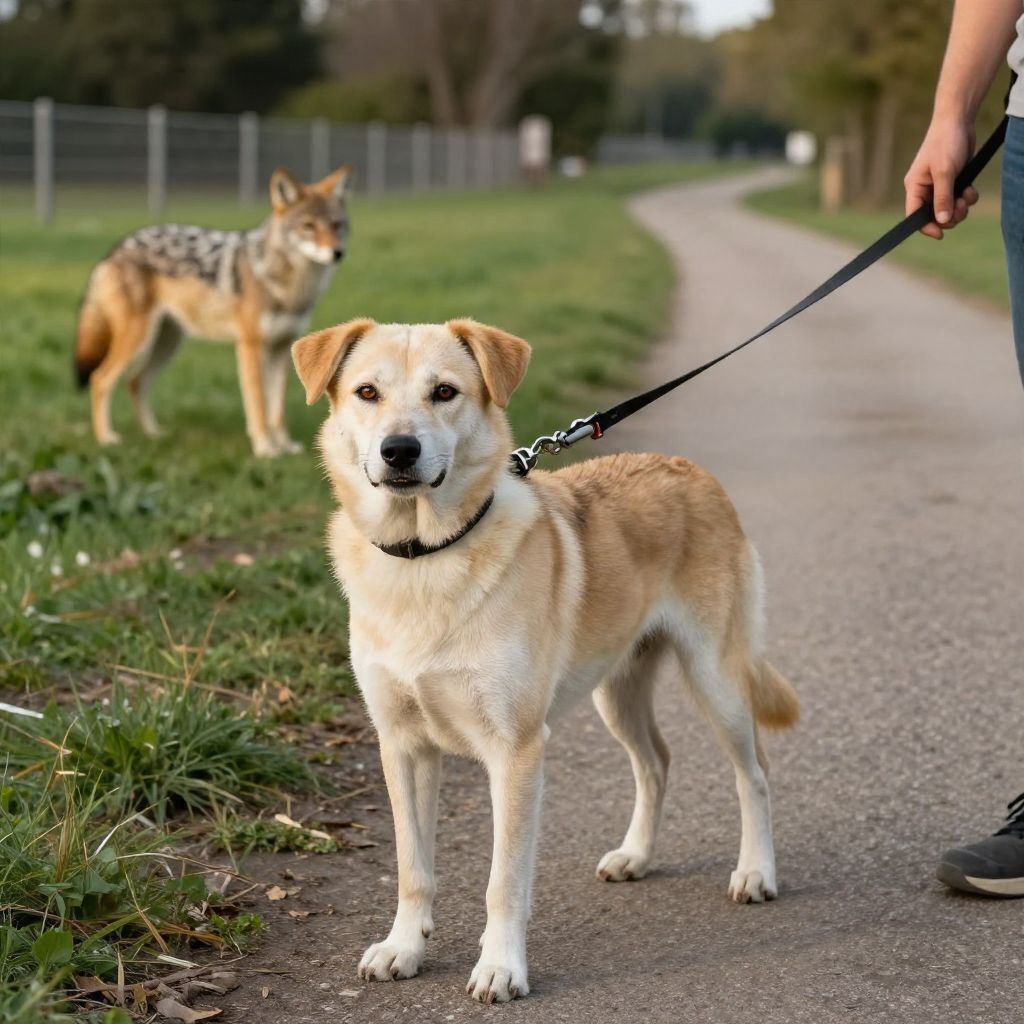
Is a coyote a dog? Not exactly. Coyotes and domestic dogs are both canids, which means they belong to the same animal family, but a coyote is a wild species, not a pet dog.
That difference matters for safety, behavior, and care. If you live near coyotes, the goal is to keep your dog protected, reduce attractants, and know when a wildlife encounter needs urgent attention.
Is a coyote a dog?
No. A coyote is not a domestic dog, even though both are in the Canidae family. Coyotes are wild animals with instincts, behaviors, and health risks that differ from those of companion dogs, so they should not be treated, handled, or expected to behave like pets.
What makes coyotes different from dogs?
Dogs were domesticated over thousands of years to live with people, while coyotes remained wild. That means their responses to people, food, territory, and stress are usually more cautious, unpredictable, and survival-driven than a pet dog’s.
Key differences you may notice
- Social behavior: Dogs are widely adapted to human households; coyotes are adapted to wild environments.
- Training: Most dogs can learn household routines and cues. Coyotes are not suitable for normal pet training or living.
- Risk tolerance: Coyotes may avoid people, but they can become bold if they find food or feel cornered.
- Health concerns: Coyotes can carry parasites and diseases that can affect dogs.
Can a coyote and a dog breed?
In some cases, coyotes and dogs can interbreed, but that does not make a coyote a dog. Hybrid animals are rare in everyday pet life and should never be assumed to be safe, predictable, or appropriate as household companions.
If you encounter an animal that looks like a mix, do not try to catch, feed, or approach it. A wildlife professional or veterinarian may be able to help identify it safely.
What should you do if you see a coyote near your dog?
Stay calm and create distance. Most coyotes will leave if they do not have access to food or if they realize people are nearby, but you should still protect your dog and avoid turning your back on the animal.
- Leash your dog immediately if possible.
- Pick up small dogs if it is safe to do so.
- Stand tall, make noise, and back away slowly.
- Do not run, which can trigger chasing behavior.
- Move toward a secure area, such as a home, vehicle, or fenced yard.
If a coyote is acting unusually bold, stalking, or approaching repeatedly, contact local animal control or wildlife authorities.
How to keep your dog safe in coyote country
Prevention is the best protection. Your dog’s risk depends on size, age, temperament, supervision, and the local coyote population, so there is no one-size-fits-all plan.
Practical safety steps
- Keep dogs on a leash during walks, especially at dawn and dusk.
- Supervise outdoor time, even in fenced yards.
- Use a secure fence, and check for gaps or weak spots.
- Bring pet food indoors after meals.
- Do not leave trash, fallen fruit, or outdoor feeding stations accessible.
- Remove water bowls and toys from the yard at night if coyotes visit your area.
- Never allow your dog to chase wildlife.
Why small dogs may need extra caution
Smaller dogs can be more vulnerable simply because of their size, especially if they are outside alone. That does not mean every small dog is at equal risk, but it does mean close supervision matters more.
Can coyotes make dogs sick?
Yes. Coyotes can expose dogs to parasites, wounds, and infectious diseases. The risk depends on where you live and whether your dog has direct contact, bites, scratches, shared water sources, or contaminated areas.
Health concerns to watch for
- Wounds from bites or scratches
- Fever, lethargy, or reduced appetite after an encounter
- Vomiting or diarrhea
- Coughing, nasal discharge, or breathing changes
- Skin irritation or signs of parasites
If your dog was bitten, scratched, or had a close physical encounter with a coyote, contact your veterinarian promptly. Even small wounds can become infected, and your vet may want to assess rabies risk, vaccination status, and the need for follow-up care.
When is a coyote encounter an emergency?
Some situations need urgent veterinary or emergency care. Do not wait to “see how it goes” if your dog has serious injuries or sudden symptoms after an encounter.
Get urgent help if you notice
- Heavy bleeding
- Deep puncture wounds
- Difficulty breathing
- Collapse, weakness, or inability to stand
- Severe pain, swelling, or limping
- Neurologic signs such as stumbling, tremors, or unusual behavior
- Any concern for rabies exposure
Rabies is a medical emergency. If there is any chance your dog was exposed to a rabid or possibly rabid wild animal, contact your veterinarian and local public health or animal control guidance immediately.
How should you respond if a coyote bites your dog?
First, keep yourself safe. Then get your dog to a veterinarian as soon as possible, even if the wound looks minor, because punctures can seal over and trap infection beneath the skin.
- Separate your dog from the area and keep them calm.
- If bleeding is severe, apply gentle pressure with a clean cloth.
- Do not use human medications unless your veterinarian tells you to.
- Call your veterinarian or an emergency clinic right away.
- Report the incident if local authorities request it.
Do not try to clean a serious wound aggressively if your dog is painful or frightened. A veterinarian can assess the injury safely and decide whether stitches, pain control, antibiotics, or other treatment is needed.
Can you train your dog to stay away from coyotes?
You can improve safety, but you cannot guarantee perfect avoidance. Training works best when combined with management, supervision, and environmental control.
Helpful training and management habits
- Practice a reliable recall in low-distraction settings first.
- Use leash manners so you can move your dog quickly and calmly.
- Reward your dog for checking in with you outdoors.
- Teach a strong “leave it” cue for wildlife and food on the ground.
- Avoid off-leash time in known coyote areas unless the space is secure and permitted.
If your dog is highly prey-driven, fearful, or reactive, work with a certified trainer or veterinary behaviorist. Humane, reward-based training is safer and more effective than punishment-based methods.
Should you feed or try to befriend coyotes?
No. Feeding coyotes can make them less fearful of people and more likely to linger near homes, parks, and walking routes. That increases risk for dogs, people, and the coyotes themselves.
Do not leave out pet food, scraps, or accessible garbage. If coyotes are repeatedly visiting your property, remove attractants and contact local wildlife authorities for guidance.
What if your dog is curious or reactive around coyotes?
Many dogs react to wildlife with barking, lunging, or intense interest. That response is normal, but it can put your dog in danger if they pull toward a coyote or run after one.
Safer handling tips
- Use a sturdy leash and well-fitted harness.
- Increase distance as soon as you spot wildlife.
- Reward calm attention back to you.
- Choose quieter walking times and routes when possible.
- Avoid letting your dog “practice” chasing behavior.
If your dog becomes extremely aroused or fearful around wildlife, a trainer can help you build safer habits without using intimidation or harsh corrections.
Bottom line: is a coyote a dog?
A coyote is not a domestic dog. It is a wild canid with different behavior, needs, and risks, and your best approach is to keep your dog supervised, reduce attractants, and treat any bite or close contact as a veterinary concern.
If you want more context about wild canids, you may also find is a fox a dog and can you have a fox as a pet helpful for comparison.