
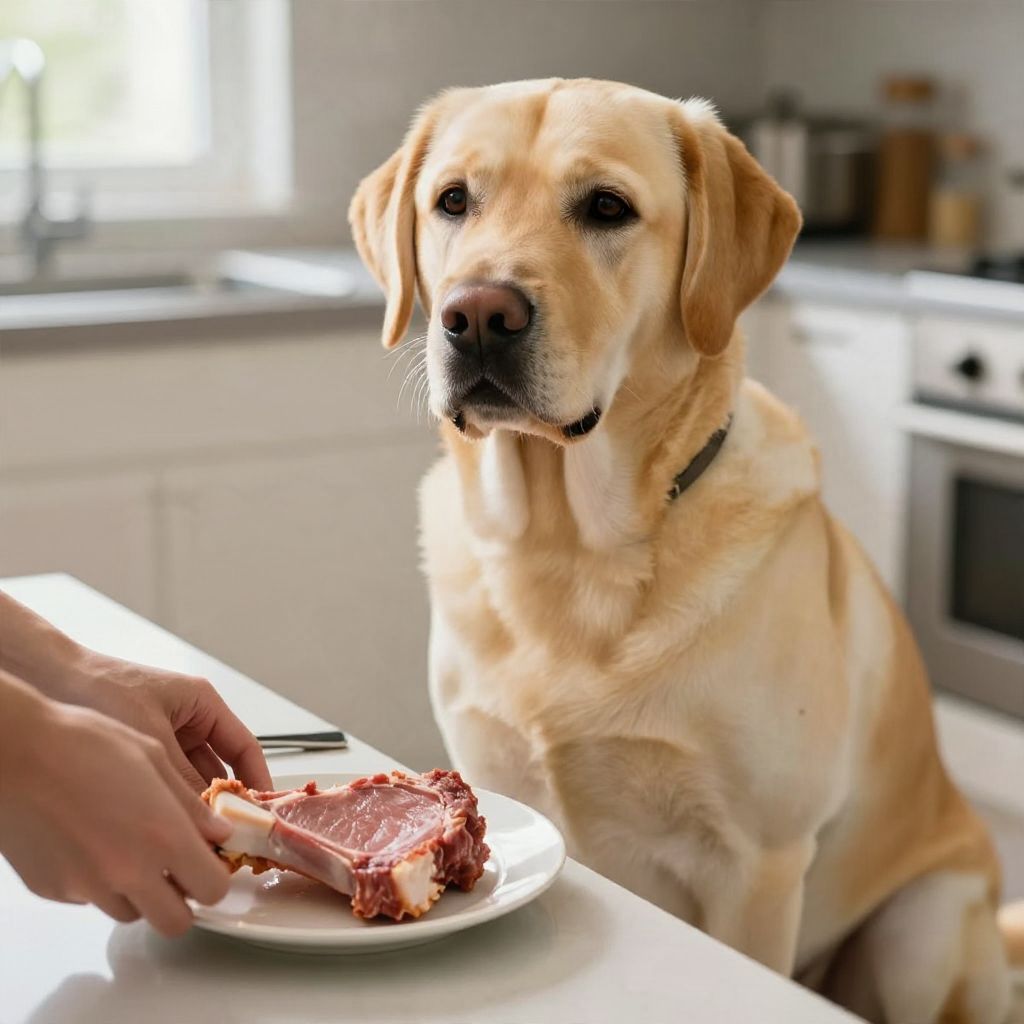
Can dogs have pork chops? Sometimes, but only if they are plain, fully cooked, and served without bones, seasoning, or sauce. Pork chops are not a balanced dog food, and the wrong preparation can cause choking, stomach upset, or more serious problems.
If you want to share a small amount, focus on safety first. The cut, cooking method, and your dog’s health all matter, especially for puppies, seniors, and dogs with pancreatitis, sensitive stomachs, or a history of chewing bones.
Can dogs have pork chops?
Yes, dogs can eat a small amount of plain, fully cooked pork chop meat if it is boneless, unseasoned, and cooled. Avoid fatty pieces, cooked bones, garlic, onion, and heavy sauces. Pork chops should be an occasional treat only, not a regular meal or a substitute for complete dog food.
When pork chops are safe for dogs
The safest way to offer pork chop is as a tiny portion of lean meat from the center of the chop. Trim visible fat, remove all bone, and make sure the meat is cooked through without added ingredients.
Safer preparation guidelines
- Use plain pork with no salt, pepper, seasoning blends, or marinades.
- Remove all bones before offering any meat.
- Trim excess fat to reduce digestive upset.
- Cook thoroughly and let it cool before serving.
- Cut it into small pieces to lower choking risk.
Even when prepared safely, pork chop should make up only a tiny part of your dog’s daily intake. Treats of any kind are best kept to a small share of calories so your dog’s main diet stays balanced.
Why pork chops can be risky for dogs
Pork itself is not automatically dangerous, but pork chops often come with hazards. The main concerns are bones, fat, seasoning, and the way the meat is cooked.
1. Cooked pork bones
Cooked bones can splinter and cause mouth injuries, choking, intestinal blockage, or tears in the digestive tract. This is one of the biggest reasons pork chops are not a casual table food for dogs.
If your dog grabbed a pork chop bone, watch closely for coughing, gagging, repeated swallowing, drooling, vomiting, belly pain, constipation, or trouble passing stool. These signs need veterinary advice quickly, and breathing trouble is an emergency.
2. High fat content
Pork chops can be fatty, especially around the edges. Too much fat may trigger vomiting, diarrhea, or pancreatitis in susceptible dogs, and some dogs are more sensitive than others.
Dogs with a history of pancreatitis, obesity, or chronic digestive issues should only get pork after you check with your veterinarian.
3. Seasonings and sauces
Many pork chops are cooked with ingredients that are unsafe for dogs. Garlic, onion, chives, heavy salt, butter, and rich sauces can all be problematic, and some marinades contain ingredients that upset the stomach even in small amounts.
- Avoid seasoned pork chops from the grill, restaurant, or deli.
- Avoid gravy, glaze, barbecue sauce, and spice rubs.
- Avoid any pork chop cooked with onion or garlic.
4. Raw or undercooked pork
Raw pork is not a safe choice for dogs. It can carry parasites or bacteria that may make your dog sick, and undercooked meat also increases the risk of foodborne illness.
If you want more detail on that topic, see can dogs eat raw pork.
How much pork chop can a dog have?
The right amount depends on your dog’s size, activity level, and overall diet. A small dog may only tolerate a bite or two, while a larger dog may handle a little more, but pork chop should still stay an occasional treat.
A good rule is to offer only a very small portion compared with your dog’s normal food. If your dog is on a weight-loss plan, has a sensitive stomach, or has a medical condition, ask your veterinarian before sharing any human food.
Practical portion tips
- Start with a tiny piece and see how your dog responds.
- Do not replace a meal with pork chop unless your vet specifically advises it.
- Limit treats from all sources, including training rewards and table scraps.
Dogs that should avoid pork chops
Some dogs should not eat pork chops at all, or should only do so after veterinary guidance. Individual health matters more than breed labels, so consider your dog’s history and current condition.
- Dogs with pancreatitis or a history of repeated vomiting
- Dogs with sensitive stomachs or chronic diarrhea
- Dogs who are overweight or prone to weight gain
- Dogs with food allergies or suspected food intolerances
- Dogs that gulp food or have a strong tendency to chew and swallow bones
- Puppies with very small airways or immature digestion
- Senior dogs with dental problems or slower digestion
For puppies and seniors, the issue is not just the pork itself. Smaller teeth, weaker chewing, and less predictable digestion can make even a “safe” food harder to handle.
What to do if your dog ate a pork chop bone
If your dog swallowed a pork chop bone, do not try to make them vomit unless a veterinarian tells you to do so. The safest next step depends on the size of the bone, your dog’s size, and whether symptoms are already present.
Call a veterinarian promptly if you notice:
- Gagging, choking, or repeated coughing
- Vomiting or retching
- Drooling or pawing at the mouth
- Abdominal pain or a tense belly
- Constipation, straining, or no stool
- Lethargy or refusal to eat
Seek urgent veterinary care immediately if your dog has trouble breathing, collapses, has a swollen abdomen, cannot keep water down, or seems in severe distress. Bone-related blockages and injuries can become serious quickly.
What to do if your dog ate seasoned pork chop meat
If your dog ate a small amount of seasoned pork chop meat, they may only have mild stomach upset, but some ingredients are more concerning than others. Garlic and onion are especially important to mention to your vet, even if your dog seems fine at first.
Watch for vomiting, diarrhea, drooling, weakness, poor appetite, or unusual behavior. If the pork chop had heavy seasoning, a sugary glaze, or a rich sauce, contact your veterinarian for advice based on what was eaten and how much.
How to serve pork chop more safely
If your veterinarian says pork is okay for your dog, keep it simple. The goal is to reduce risk, not to make pork a staple food.
- Choose a plain, boneless pork chop.
- Cook it fully without seasoning, oil-heavy marinades, or sauce.
- Trim visible fat and discard bones completely.
- Let it cool, then cut into small pieces.
- Offer a tiny amount and monitor your dog afterward.
If your dog has a sensitive stomach, introduce any new food slowly and separately from other new treats. That makes it easier to tell whether pork agrees with them.
Better alternatives to pork chops
If you want a protein-based treat, there are often safer options than a pork chop from the table. The best choice depends on your dog’s diet and health needs.
- Plain cooked chicken or turkey, without skin or seasoning
- Commercial dog treats made for training or sensitive stomachs
- Small pieces of your dog’s regular kibble used as rewards
- Veterinary-recommended treats for dogs with special diets
For dogs with medical conditions, ask your veterinarian before switching proteins or offering human foods. What is “safe” for one dog may not be a good fit for another.
Common mistakes to avoid
Most pork chop problems happen when the food is treated like a harmless snack. A few simple mistakes can turn a small treat into a real risk.
- Giving pork chop with the bone still attached
- Sharing grilled or restaurant pork chop with seasoning
- Offering fatty scraps from the plate
- Letting your dog chew on cooked bones
- Using pork chop as a regular meal topper without balance
- Ignoring vomiting, diarrhea, or signs of pain after eating it
When to call your vet
Contact your veterinarian if you are unsure whether the pork chop was safe, especially if your dog has a medical condition or ate more than a small bite. It is better to ask early than to wait for symptoms to worsen.
Get veterinary help right away for choking, breathing problems, repeated vomiting, severe lethargy, abdominal swelling, or suspected bone swallowing. If your dog seems normal but you know they ate a bone, a quick call can still help you decide what to watch for.
In short, dogs can have pork chops only in a very limited, carefully prepared form: plain, cooked, boneless, and in small amounts. If there is any bone, seasoning, or rich sauce involved, skip it and choose a safer treat instead. For more food-safety guidance, you may also want to read about pork bones and raw pork before sharing from your plate.