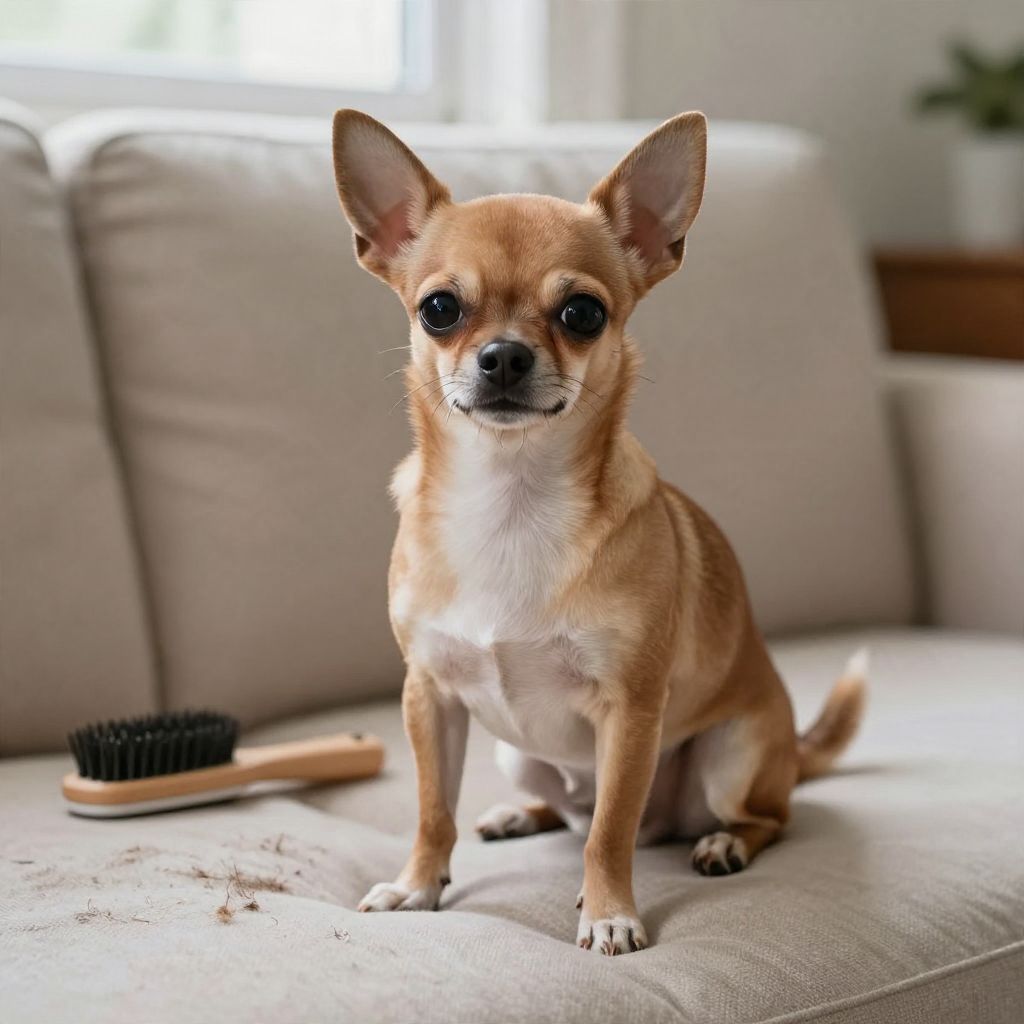
Do Chihuahuas shed? Yes, they do—just usually not as heavily as some larger breeds. How much hair you notice depends on whether your Chihuahua has a smooth or long coat, plus factors like season, age, health, and grooming routine.
Most shedding is normal, but sudden hair loss, bald patches, itching, or skin changes can signal a problem. With the right brushing, bathing, and nutrition, you can keep shedding manageable and your dog comfortable.
Do Chihuahuas Shed?
Yes. Chihuahuas shed year-round, and shedding can increase during seasonal coat changes. Smooth-coated Chihuahuas usually shed short hairs that can stick to clothing and furniture, while long-coated Chihuahuas may shed a bit more visibly because the hairs are longer and tangle more easily.
Why Chihuahuas Shed
Shedding is a normal part of the hair growth cycle. Old hairs fall out so new ones can grow in, and that process happens in every dog to some degree.
Common reasons shedding looks worse
- Seasonal coat changes: Many dogs shed more when daylight and temperature shift.
- Grooming gaps: Loose hair builds up if you do not brush regularly.
- Dry skin: Low humidity or frequent bathing can make shedding more noticeable.
- Stress: Changes in routine, travel, or anxiety can affect coat condition.
- Health issues: Allergies, parasites, hormonal disease, or skin infections can cause abnormal hair loss.
What Kind of Shedding to Expect From a Chihuahua
Chihuahuas are often considered moderate shedders for their size, but individual dogs vary. Coat type, coat density, and overall health matter more than labels alone.
Smooth-coated Chihuahuas
Smooth-coated dogs have short, fine hair that can shed steadily. The hairs are small, so they may seem less dramatic at first but still end up on fabric, bedding, and car seats.
Long-coated Chihuahuas
Long-coated Chihuahuas can shed too, and the longer hairs may be easier to spot. They also need more brushing to prevent tangles and mats, especially behind the ears, under the legs, and around the chest.
How to Reduce Chihuahua Shedding at Home
You cannot stop normal shedding completely, but you can reduce loose hair and keep the coat healthier. The goal is steady maintenance, not aggressive grooming.
- Brush regularly. A few short brushing sessions each week often help more than occasional long sessions.
- Use the right tool. A soft bristle brush, grooming glove, or fine comb may work well depending on coat type.
- Bathe only as needed. Overbathing can dry the skin and make shedding worse.
- Dry the coat thoroughly. Damp skin can irritate and encourage skin problems.
- Feed a complete, balanced diet. Good nutrition supports skin and coat health.
- Keep up with parasite prevention. Fleas and mites can trigger itching and hair loss.
Brushing tips that help most
- Brush in the direction of hair growth.
- Use gentle pressure, especially on a small dog’s skin.
- Check the armpits, belly, tail base, and neck for loose hair or irritation.
- Reward calm behavior so grooming stays positive.
When Shedding Is Normal vs. When It Is a Problem
Normal shedding is even, gradual, and not usually accompanied by skin damage. Problem shedding tends to be sudden, patchy, or paired with discomfort.
Normal signs
- Light to moderate hair loss throughout the coat
- More shedding during seasonal changes
- No obvious redness, sores, or strong odor
- Your dog seems comfortable and acts normally
Warning signs to watch for
- Bald spots or thinning in one area
- Frequent scratching, licking, or biting at the skin
- Redness, scabs, flakes, or greasy skin
- Strong odor from the coat or skin
- Changes in appetite, energy, or weight along with coat changes
If you notice these signs, a veterinarian should check your Chihuahua. Skin disease, allergies, parasites, and hormone-related conditions can all look similar without an exam.
Health Issues That Can Cause Extra Shedding
Several medical problems can make a Chihuahua shed more than usual or lose hair in patches. A vet can help identify the cause and recommend safe treatment.
Common possibilities
- Fleas or mites: These often cause itchiness, hair loss, and skin irritation.
- Allergies: Environmental or food-related allergies may lead to chronic scratching and coat damage.
- Skin infections: Bacterial or yeast infections can create redness, odor, and hair loss.
- Hormonal disorders: Some endocrine conditions can affect the coat and skin.
- Poor nutrition or malabsorption: A dull coat can sometimes reflect an underlying health issue.
Seek urgent veterinary care if your Chihuahua has open sores, swelling, severe itching, trouble breathing, facial swelling, sudden weakness, or a rapidly spreading skin problem. Those signs need prompt attention.
Grooming Routine for a Chihuahua
A simple routine is usually enough for many Chihuahuas. Consistency matters more than using lots of products.
Weekly care checklist
- Brush the coat several times a week, or more often during heavier shedding.
- Check ears, paws, and skin for redness or debris.
- Trim nails regularly so your dog stays comfortable.
- Wipe away dirt from the coat after outdoor play if needed.
- Monitor for dandruff, hair breakage, or changes in coat texture.
Bathing basics
Use a dog-safe shampoo and avoid overbathing. If your Chihuahua has sensitive skin, ask your veterinarian which grooming products are appropriate before trying new ones.
Nutrition and Coat Health
A healthy coat starts with good overall care. A complete, balanced dog food is more important than supplements or trendy ingredients.
- Choose food appropriate for your dog’s life stage.
- Do not switch diets too quickly, especially if your dog has a sensitive stomach.
- Talk to your veterinarian before adding supplements.
- If your dog has chronic skin problems, diet may be part of the picture, but it should be assessed professionally.
Human foods are not a substitute for a proper diet. If you want to improve coat condition, focus first on consistency, quality nutrition, and medical evaluation when needed.
Do Chihuahuas Shed More as Puppies or Seniors?
Age can affect shedding, but not always in the same way for every dog. Puppies may have softer coats that change as they mature, while older dogs may shed more if they develop skin dryness, hormonal changes, or other health issues.
Young dogs
Young Chihuahuas may go through coat changes as they grow. Some puppies shed their softer baby coat as the adult coat comes in.
Older dogs
Seniors may need gentler grooming and more attention to skin health. If an older Chihuahua suddenly sheds more, it is worth a veterinary visit rather than assuming it is just age.
How Temperament Affects Grooming Success
Chihuahuas are often alert and people-focused, but each dog has a different comfort level with handling. A nervous or under-socialized dog may resist brushing more than a relaxed one.
Make grooming easier by keeping sessions short, calm, and reward-based. If your Chihuahua is fearful, work gradually and avoid forcing the issue.
- Start with brief touches and short brush strokes.
- Pair grooming with treats and praise.
- Stop before your dog becomes overwhelmed.
- Ask a certified trainer or groomer for help if handling is difficult.
Common Mistakes That Make Shedding Worse
- Brushing too hard or too infrequently
- Using harsh shampoos or bathing too often
- Ignoring fleas, itching, or skin redness
- Switching foods repeatedly without a plan
- Waiting too long to see a vet when hair loss is unusual
When to Call the Veterinarian
Contact your veterinarian if shedding is suddenly heavier than usual, if your Chihuahua has bald patches, or if you notice skin irritation. A vet can help determine whether the issue is normal shedding, allergies, parasites, infection, or something else.
Call promptly for urgent signs such as trouble breathing, facial swelling, severe lethargy, repeated vomiting, or rapidly worsening skin lesions. Those symptoms should not wait.
Bottom Line
So, do Chihuahuas shed? Yes, but usually in a manageable way with regular brushing and good skin care. If the shedding seems excessive or comes with itching, bald spots, or discomfort, schedule a veterinary exam to find the cause early.
If you want to keep learning about everyday dog care, you may also enjoy browsing more dog breed guides and other helpful owner resources.