
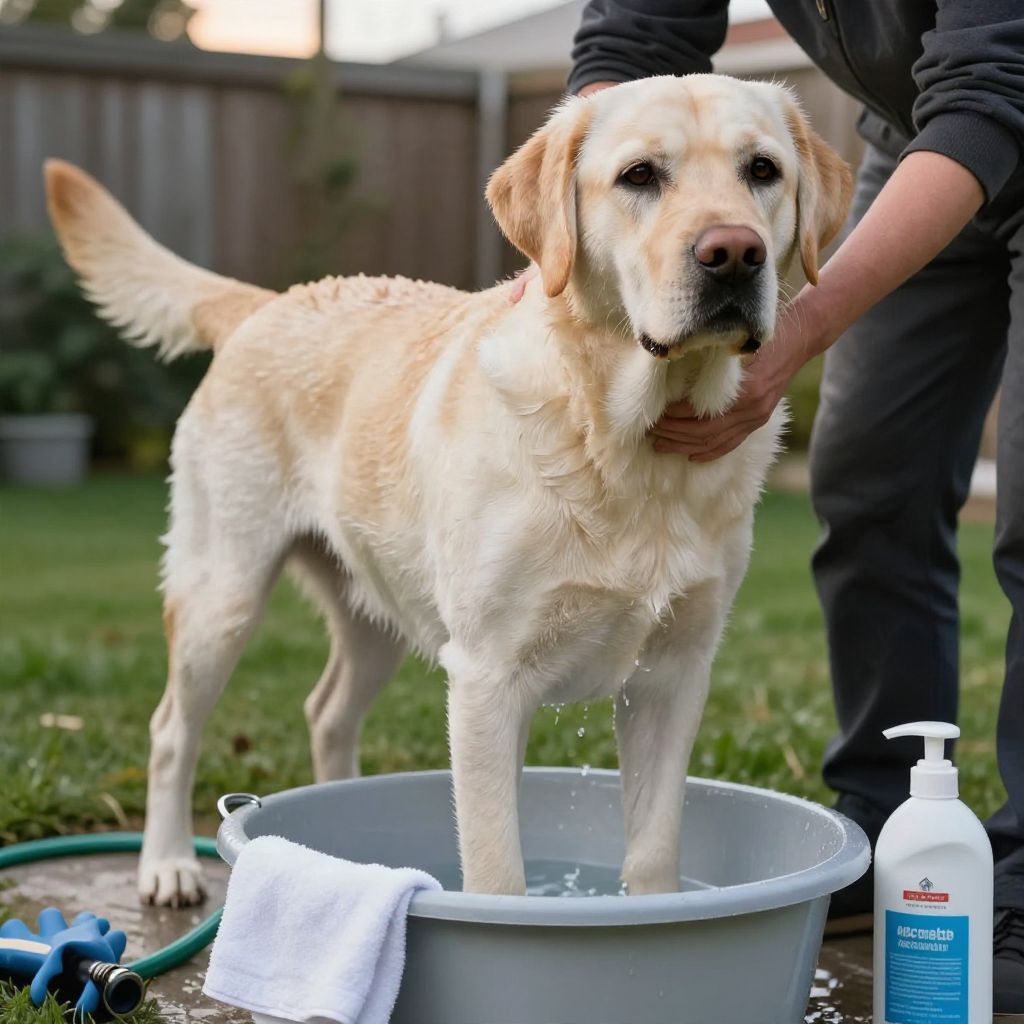
If your dog gets sprayed by a skunk, act quickly and stay calm. The smell can be intense, but the bigger concern is whether spray got into your dog’s eyes, mouth, or nose, or whether your dog was bitten while chasing the skunk.
Most dogs are uncomfortable, not poisoned, but you should rinse, clean, and watch closely for eye irritation, breathing trouble, or signs of injury. If your dog seems unwell or was bitten, contact your veterinarian promptly.
What To Do If Your Dog Gets Sprayed By A Skunk
Move your dog outside if possible, keep them away from furniture, and check for eye irritation, bites, or swelling. Rinse affected areas with lukewarm water, then wash your dog with a skunk-removal cleanser or a vet-approved pet shampoo. Seek veterinary help right away for eye pain, vomiting, breathing issues, or any bite wound.
First steps to take right away
Skunk spray is oily and can cling to fur, skin, and fabrics. The sooner you start, the easier it is to reduce odor and irritation.
- Keep your dog outside or in a washable area. This helps protect your home from the smell.
- Check your dog’s face first. Look for squinting, redness, drooling, pawing at the eyes, or nasal irritation.
- Look for bite marks or scratches. A skunk encounter can include a fight, and bites need veterinary attention.
- Rinse the coat with lukewarm water. Avoid getting water forcefully into the eyes, ears, or nose.
- Use a skunk odor remover or pet-safe shampoo. Follow the product directions carefully.
How to clean your dog safely after a skunk spray
The goal is to remove the oily spray without making irritation worse. Use gentle handling, especially with puppies, senior dogs, anxious dogs, or dogs with eye, skin, or breathing problems.
What to wash first
- Face and muzzle: Wipe carefully with a damp cloth if spray is near the eyes or mouth.
- Body and legs: Work from the least contaminated areas toward the most affected areas.
- Tail and paws: These often pick up odor when dogs roll or run after a spray.
What to avoid
- Do not use harsh household cleaners on your dog’s skin.
- Do not put anything into the eyes unless your veterinarian tells you to.
- Do not use very hot water, which can irritate skin.
- Do not trap the smell indoors by bathing your dog in a closed bathroom without ventilation.
If you use a commercial skunk-removal product, choose one made for pets and follow the label. If you are unsure what is safe for your dog’s coat or skin, ask your veterinarian for guidance.
Why skunk spray can be more than a smell problem
Skunk spray can irritate the eyes, nose, and mouth. Some dogs react more strongly than others, depending on how close the spray was, how much they inhaled, and whether they already have sensitive skin or respiratory issues.
Watch for these warning signs
- Persistent squinting or eye redness
- Excessive drooling or pawing at the mouth
- Coughing, gagging, or trouble breathing
- Vomiting after the exposure
- Facial swelling or hives
- Lethargy, weakness, or unusual behavior
Go to a veterinarian urgently if your dog has trouble breathing, seems disoriented, has severe eye pain, or may have been bitten. A bite wound can become infected even if it looks small at first.
When a skunk encounter needs veterinary care
Many dogs recover well at home after a mild spray, but some situations need professional help. Don’t wait if the exposure was more than a simple smell problem.
Call your veterinarian promptly if your dog:
- Got spray directly in the eyes
- Was bitten or scratched
- Has swelling around the face or muzzle
- Is vomiting repeatedly
- Has a history of eye disease, asthma-like symptoms, or other respiratory concerns
- Is a very young puppy, older dog, or medically fragile dog
Dogs with short noses, such as some brachycephalic breeds, may be more sensitive to breathing irritation because they already have narrower airways. That does not mean every dog of those breeds will have a problem, but it does mean you should watch closely.
Common mistakes to avoid after skunk spray
It is easy to focus on the smell and miss the real health risks. These mistakes can make the situation worse.
- Bathing too late: The longer the spray sits, the harder it is to remove.
- Using strong fragrances only: Perfume may mask odor briefly, but it does not remove the spray.
- Ignoring the eyes: Eye irritation should never be brushed off.
- Letting your dog rub on carpets or furniture: This spreads the oils and smell.
- Assuming no bite occurred: Check carefully, especially around the face and neck.
How to reduce the smell in your home
Once your dog is cleaned, the odor may still linger on bedding, collars, towels, and nearby surfaces. Cleaning these items quickly helps prevent the smell from spreading through the house.
- Wash your dog’s bedding, blankets, and washable toys separately.
- Rinse collars, harnesses, and leashes if they were exposed.
- Air out the area if weather allows.
- Use pet-safe cleaners on hard surfaces.
- Keep your dog away from soft furniture until the smell is under control.
If your dog has diarrhea, vomiting, or seems stressed after the event, that may be from the encounter, the cleaning process, or another issue entirely. If digestive upset continues, it is worth checking with your veterinarian rather than assuming it is only from the skunk spray.
What to do if the spray got in your dog’s eyes
Eye exposure deserves special attention. The eyes can be very painful, and dogs may keep pawing at them, which can cause more irritation.
- Rinse gently with clean lukewarm water if you can do so safely.
- Do not force your dog’s eyelids open if they are resisting.
- Do not use human eye drops unless a veterinarian instructs you to do so.
- Call your vet if redness, squinting, discharge, or pain continues.
If your dog cannot open one or both eyes, or seems highly distressed, treat it as urgent.
How age, size, and health can affect the response
Different dogs can react differently to the same skunk encounter. A healthy adult dog may handle a mild spray well, while a puppy, senior dog, or dog with chronic illness may need closer monitoring.
Puppies
Puppies may be more likely to lick themselves, rub their faces, or become stressed during cleaning. Keep the process calm and brief, and call your vet if the puppy seems weak, vomits, or has eye irritation.
Senior dogs
Older dogs may have sensitive skin, joint pain, or eye conditions that make handling harder. Move slowly and avoid forcing them into awkward positions during bathing.
Dogs with skin or breathing concerns
Dogs with allergies, eye disease, or respiratory problems may react more strongly. If your dog has a known medical condition, ask your veterinarian how best to manage future encounters and what signs to watch for.
How to lower the chance of another skunk encounter
Prevention matters because skunks often appear around dusk, dawn, and in quiet outdoor areas. A few simple changes can lower the risk for your dog.
- Keep your dog on leash during evening walks.
- Supervise outdoor time in unfenced or wooded areas.
- Secure trash cans and pet food left outside.
- Block access to porches, sheds, and crawl spaces where skunks may hide.
- Teach a reliable recall and leave-it cue using reward-based training.
Training will not guarantee your dog ignores a skunk, especially if prey drive or excitement is high, but it can improve your ability to interrupt a chase before contact happens.
What to expect after the smell is gone
Most dogs return to normal after the coat is cleaned and any irritation settles. If your dog still seems uncomfortable, keeps rubbing the face, or develops new symptoms later in the day, do not assume everything is fine.
Delayed problems can happen if there was a bite, if spray contacted the eyes, or if your dog inhaled a significant amount of spray. A quick veterinary exam can help rule out complications.
Bottom line
If your dog gets sprayed by a skunk, rinse, clean, and check for eye irritation or injury right away. Watch closely for red-flag symptoms like breathing trouble, vomiting, swelling, or bite wounds, and contact your veterinarian promptly if any of those occur.
For more help with related dog-care issues, you may also find it useful to read how to clean a dog wound and how to stop dog diarrhea.