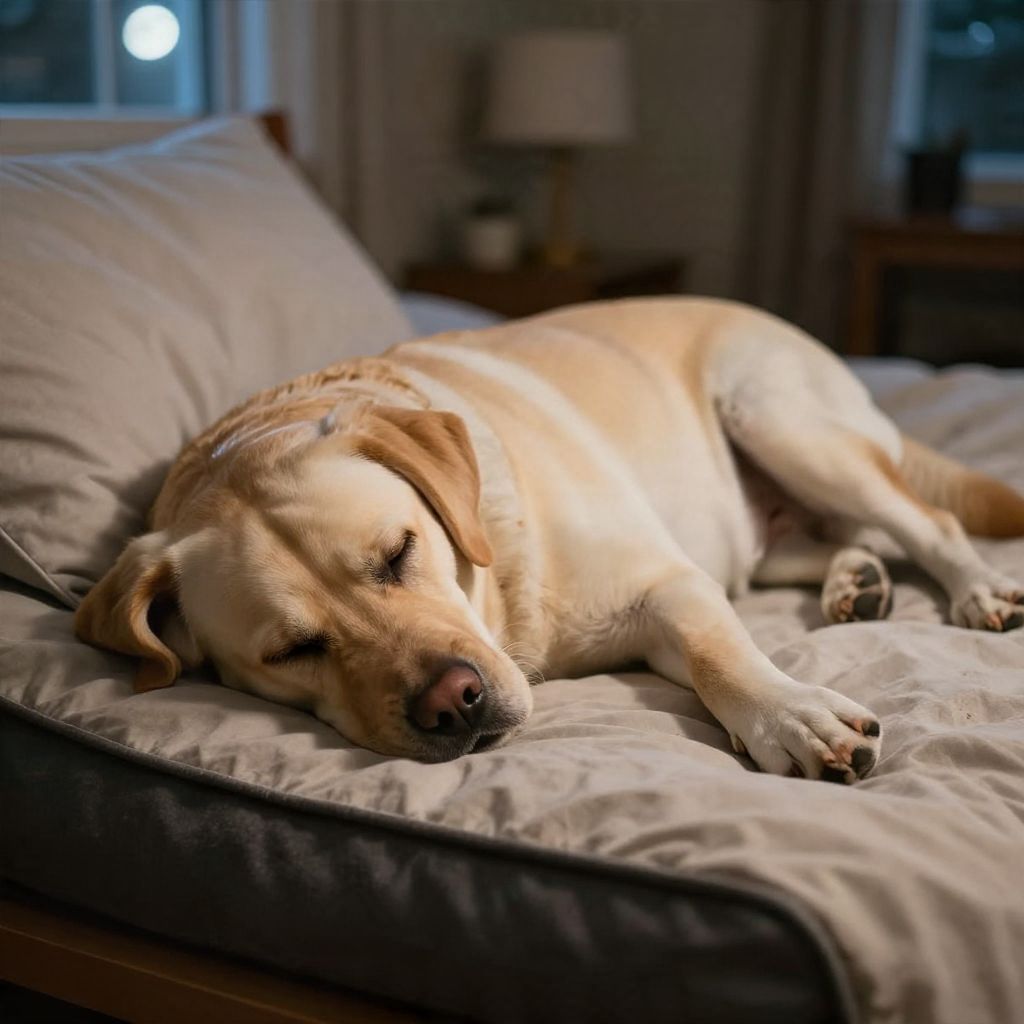
Can dogs have nightmares? Yes—dogs can likely experience dream states during sleep, and some of those dreams may be unpleasant. You may notice twitching, whimpering, paddling, or brief restlessness, especially during deeper sleep. Most of the time, this is normal and passes on its own.
The key is knowing what looks harmless versus what could signal pain, seizures, anxiety, or another health problem. If your dog seems distressed, injured, or hard to wake, it’s worth getting veterinary advice promptly.
Can dogs have nightmares?
Yes, dogs can have nightmares or other vivid dreams during sleep. Small movements, soft vocalizing, and brief startle-like behavior are usually normal, but repeated distress, confusion, or unusual episodes may point to a medical or behavioral issue that should be checked by a veterinarian.
What a dreaming dog may look like
Dogs cycle through sleep stages much like people do, and active dreaming often shows up during deeper sleep. You might see a dog’s legs twitch, whiskers move, ears flick, or breathing change for a short time.
Common dream-time behaviors include:
- Soft barking, whining, or growling
- Leg paddling or running motions
- Facial twitching or lip movements
- Rapid eye movements under closed lids
- A brief startle when waking
These signs alone do not mean your dog is suffering. Many dogs appear to “act out” a dream and then settle right back down.
When it is probably normal
Most sleep movements are harmless if they are brief and your dog wakes up normally afterward. Puppies may seem especially active in sleep because their brains are still developing, and older dogs may also have more noticeable sleep changes.
It is usually normal when:
- The episode lasts only a short time
- Your dog wakes easily and recognizes you
- There is no stiffness, collapse, or loss of awareness
- Your dog acts normal once awake
Some dogs naturally dream more visibly than others. Temperament, age, sleep quality, stress, and recent activity can all affect how noticeable those dreams are.
When a “nightmare” may be something else
Not every nighttime episode is a dream. Seizures, pain, breathing problems, and some sleep disorders can look similar to nightmares, especially if you only catch part of the event.
Warning signs to take seriously
- Rigid limbs or repeated jerking that does not stop
- Loss of consciousness or unresponsiveness
- Blue, pale, or very strained gums
- Drooling, urination, or defecation during the episode
- Confusion, stumbling, or disorientation after waking
- Frequent episodes that are getting worse
- Signs of pain, such as yelping, guarding, or reluctance to move
If you see these signs, contact your veterinarian. If your dog has trouble breathing, collapses, or has a prolonged seizure-like episode, seek urgent veterinary care right away.
Should you wake a dog having a nightmare?
Usually, it is better not to startle a sleeping dog awake unless you think there is immediate danger. A sudden touch can trigger a frightened reaction, especially in a dog who is deeply asleep or easily startled.
If you do need to wake your dog, use a calm voice first and avoid reaching straight for the face. Give them space to orient themselves before touching them.
Safer ways to respond
- Watch for a few seconds to see whether the episode ends on its own.
- Say your dog’s name softly from a short distance.
- Turn on a light if needed so you can assess what is happening.
- Let your dog wake gradually before petting or moving them.
For dogs with a history of fear, pain, or reactivity, extra caution matters. A startled dog may snap reflexively even if they normally trust you.
What may trigger more vivid dreams or restless sleep
There is no single cause of nightmares in dogs, but some factors may make sleep more active or unsettled. These can vary a lot from one dog to another.
- Overtiredness after an unusually busy day
- Stress, anxiety, or recent changes in routine
- Discomfort from pain or illness
- Sleeping in an unfamiliar or noisy environment
- Poor sleep quality from itching, coughing, or breathing issues
If your dog has suddenly started having more sleep disturbances, look at the bigger picture. Changes in appetite, mobility, mood, or bathroom habits can help your vet narrow down the cause.
How to support better sleep
A calm, predictable routine can help many dogs sleep more comfortably. Good sleep habits will not “cure” nightmares, but they may reduce stress and improve overall rest.
Helpful steps at home
- Keep bedtime and wake-up times consistent when possible
- Provide a quiet, comfortable sleeping area
- Make sure your dog gets regular exercise during the day
- Offer mental enrichment such as sniffing games or training
- Avoid rough play right before bed if it seems to overstimulate your dog
For puppies, age-appropriate daytime activity is important, but so is enough rest. Young dogs often need more sleep than owners expect, and overtired puppies can become more restless, not less.
Feeding guide: can diet affect nightmares?
Food does not usually directly cause nightmares in dogs, but diet can affect comfort, digestion, and sleep quality. A dog who is too hungry, too full, gassy, or itchy may sleep more restlessly.
Feeding habits that may help
- Feed a complete, balanced diet appropriate for your dog’s life stage
- Keep meal times consistent when practical
- Avoid very large meals right before bedtime if your dog seems uncomfortable afterward
- Watch for food sensitivities if itching, ear problems, or stomach upset are present
Some dogs do better with a small evening meal, while others sleep fine on their usual schedule. The right approach depends on age, body size, activity level, and any medical conditions.
Foods and treats: what to avoid
Do not use human foods as a way to “treat” nightmares or improve sleep. Some foods are unsafe, and others can upset the stomach or interfere with a balanced diet.
- Unsafe foods: chocolate, grapes, raisins, onions, garlic, xylitol-containing products, alcohol, and caffeine
- Potentially okay in small amounts: plain cooked lean meats, some dog-safe fruits or vegetables, and veterinary-approved treats
If your dog has digestive issues, allergies, pancreatitis risk, diabetes, or another health concern, ask your veterinarian before changing food or treats.
Breed, age, and individual differences
Any dog can dream, but how obvious those dreams look can vary. Puppies often twitch more in sleep, while senior dogs may have more changes in sleep patterns because of age-related discomfort or cognitive changes.
Breed alone does not determine whether a dog will have nightmares. Individual temperament, health, and daily routine matter more than stereotypes. A calm dog may still have vivid dreams, and an energetic dog may sleep quietly.
When to call the vet
Contact your veterinarian if your dog’s sleep episodes are new, frequent, intense, or changing. It is especially important if your dog also seems painful, anxious, or unwell during the day.
Make an appointment if you notice:
- Repeated nighttime episodes that worry you
- Snoring, coughing, or breathing difficulty during sleep
- Daytime lethargy, confusion, or behavior changes
- Signs of pain, limping, or stiffness
- Itching, scratching, or skin problems that disrupt rest
Bring a short video if you can safely record one. That often helps your vet tell the difference between a normal dream and a medical problem.
Common mistakes to avoid
When you wonder, “Can dogs have nightmares?” it is easy to overreact. The goal is to stay calm, observe carefully, and avoid actions that could make your dog feel more frightened or unsafe.
- Do not punish a dog for vocalizing in sleep
- Do not shake or grab a sleeping dog abruptly
- Do not assume every twitch is a nightmare
- Do not delay care if episodes look seizure-like or painful
If your dog seems anxious at bedtime, a certified trainer or veterinary behaviorist may help if the issue is behavioral rather than medical. If the problem is linked to pain, illness, or breathing trouble, a veterinarian should be the first stop.
In short, dogs can have nightmares or dream-like episodes, and most are harmless. Watch for red flags, keep sleep routines calm, and seek veterinary help if the episodes are frequent, severe, or accompanied by other symptoms. For more dog sleep questions, you may also find why dogs sleep so much and whether dogs sleep with their eyes open helpful.