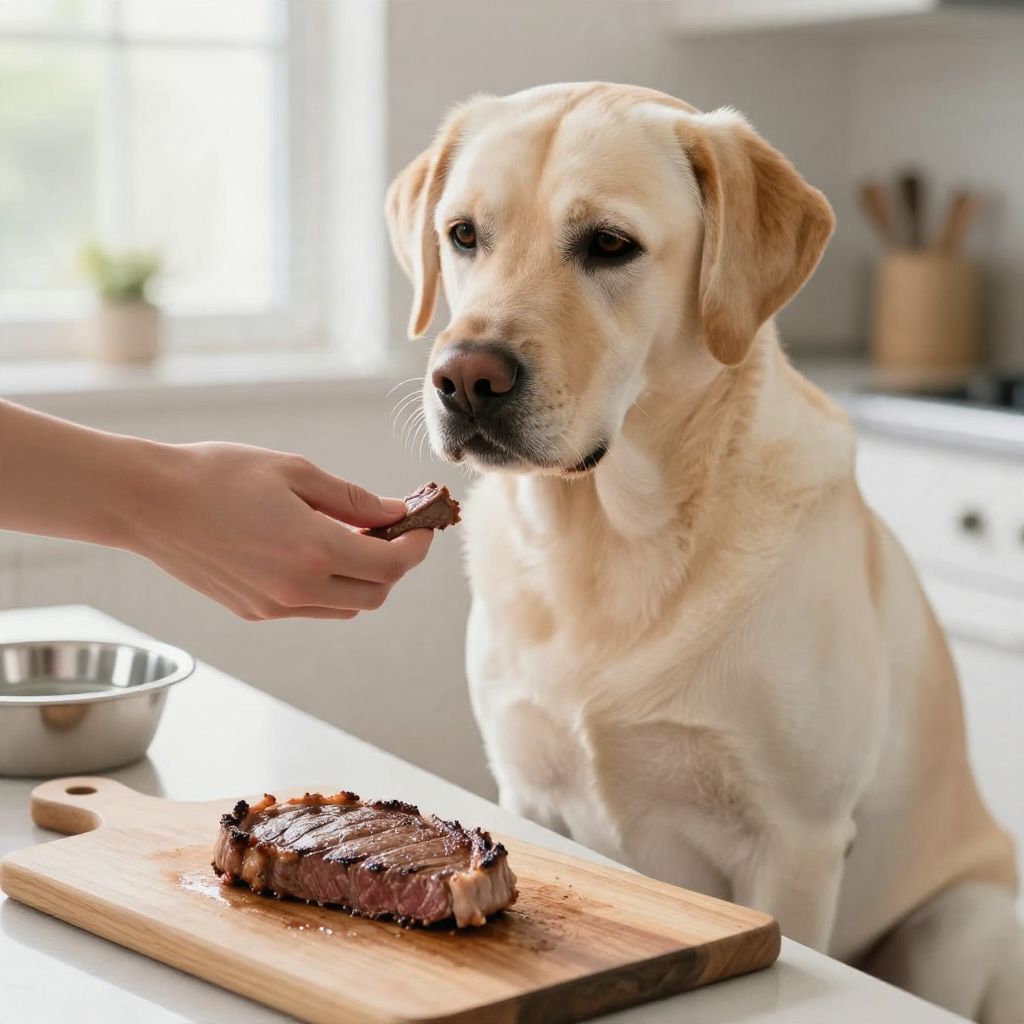
Can dogs have steak? Yes, dogs can eat plain, fully cooked steak in small amounts as an occasional treat. It should never replace a balanced dog food diet, and it must be prepared without seasoning, onions, garlic, sauces, or excess fat.
The main concerns are choking, digestive upset, pancreatitis, and bone hazards. How much and how often is safe depends on your dog’s size, age, health, and whether the steak is lean, cooked properly, and cut into manageable pieces.
Can Dogs Have Steak?
Yes, most healthy dogs can have small pieces of plain cooked steak as an occasional treat. Keep it unseasoned, trim off visible fat, and offer only a modest amount so it does not upset digestion or unbalance your dog’s diet.
What Kind of Steak Is Safe for Dogs?
The safest option is plain, thoroughly cooked steak with no added seasoning or sauce. Leaner cuts are usually easier on a dog’s stomach than heavily marbled, fatty cuts.
Best preparation tips
- Cook the steak completely.
- Remove bones before serving.
- Trim excess fat and gristle.
- Cut it into small, bite-sized pieces.
- Serve it plain, without butter, salt, pepper, or marinades.
If your dog has never had steak before, start with a very small amount and watch for vomiting, diarrhea, or itching. Some dogs tolerate steak well, while others are more sensitive to rich foods.
What Steak Ingredients Are Unsafe for Dogs?
Steak itself is not the only issue. Many common seasonings and add-ons can be harmful to dogs, even in small amounts.
- Onions and garlic: toxic to dogs.
- Heavy salt: can be dangerous, especially for small dogs or dogs with heart or kidney disease.
- Butter, cream, and rich sauces: may trigger stomach upset or pancreatitis.
- Hot spices and marinades: can irritate the digestive tract.
- Cooked bones: can splinter and cause choking or internal injury.
If steak has been cooked with onion, garlic, or a seasoning blend, do not share it unless you are certain it is safe. When in doubt, skip it and offer a plain dog-safe treat instead.
How Much Steak Can a Dog Have?
Steak should be treated as an occasional treat, not a meal replacement. A good rule is to keep treats, including steak, to a small portion of your dog’s daily calories so their regular food still provides complete nutrition.
Factors that affect portion size
- Body size: a large dog can usually handle more than a toy breed.
- Age: puppies and seniors may need smaller, easier-to-digest portions.
- Activity level: active dogs may tolerate treats better than sedentary dogs.
- Health conditions: dogs with pancreatitis, obesity, kidney disease, or sensitive stomachs may need to avoid steak or have only a tiny amount.
Because individual needs vary, your veterinarian can help you decide whether steak is appropriate for your dog and how often it fits into their diet.
When Steak Is a Bad Idea
Some dogs should not have steak, or should only have it if your veterinarian says it is appropriate. Rich meats can worsen certain medical problems or cause digestive flare-ups.
Use extra caution if your dog has:
- A history of pancreatitis
- Chronic vomiting or diarrhea
- Obesity or weight-management needs
- Kidney disease
- Heart disease or a sodium-restricted diet
- Food allergies or suspected food sensitivities
Puppies can eat tiny amounts of plain cooked steak, but their main diet should still be a complete puppy food. Too much rich food can upset their stomach and interfere with balanced growth.
Raw Steak vs Cooked Steak
Cooked steak is generally safer than raw steak because cooking reduces the risk of harmful bacteria. Raw meat can carry pathogens that may sicken dogs and people in the home, especially children, older adults, or anyone with a weakened immune system.
If you are considering raw feeding, talk with your veterinarian first. Raw diets can create food-safety risks and are not automatically healthier just because they are less processed.
Can Dogs Eat Steak Bones?
No, cooked steak bones are not safe for dogs. They can splinter, cause choking, damage teeth, or lead to blockages and internal injury.
Even if a bone looks large or sturdy, it can still break unexpectedly. If your dog has already swallowed a bone, contact your veterinarian promptly for advice.
Signs Steak Did Not Agree With Your Dog
Some dogs handle steak fine, but others may develop digestive upset after eating it. Mild symptoms sometimes pass, but more serious signs need veterinary attention.
Watch for:
- Vomiting
- Diarrhea
- Excessive drooling
- Abdominal discomfort
- Refusing food
- Lethargy
Get urgent veterinary help if your dog has repeated vomiting, a swollen or painful abdomen, trouble breathing, collapse, pale gums, or you suspect they swallowed a bone or large fatty piece.
Common Mistakes to Avoid
Most problems happen when steak is shared in a human-style form rather than a dog-safe form. A few simple precautions can prevent many issues.
- Do not give steak seasoned with onion or garlic.
- Do not feed fatty trimmings or greasy scraps.
- Do not give cooked bones.
- Do not use steak as a regular meal substitute.
- Do not offer a large portion “just because they love it.”
How to Safely Offer Steak as a Treat
If your dog can have steak, keep it simple and controlled. Think of it as a special reward, not something to serve from the table.
- Cool the steak before serving.
- Remove all bones, fat, and seasoning.
- Cut into tiny pieces for training or a small snack.
- Offer it after your dog has eaten their regular meal, if needed, to avoid overfeeding.
- Monitor your dog afterward for stomach upset.
For training, use very small pieces so you can reward good behavior without overdoing calories. If your dog is on a weight-loss plan, ask your vet for treat options that fit the plan better than steak.
Frequently Asked Questions About Dogs and Steak
Can dogs eat steak every day?
Usually no. Daily steak can add too much fat and calories and may crowd out balanced dog food. Occasional small portions are a better choice.
Can dogs eat steak fat?
It is best to avoid steak fat. Fatty scraps are more likely to cause stomach upset and may increase the risk of pancreatitis in susceptible dogs.
Can dogs eat steak if it is rare?
It is safer to serve steak fully cooked. Rare meat can carry a higher bacterial risk, especially for dogs with sensitive digestion or weakened immune systems.
Can dogs eat steak sauce?
No, steak sauce is usually not a good idea because it may contain onion, garlic, salt, sugar, or spices that are unsafe or irritating for dogs.
When to Call Your Veterinarian
Contact your veterinarian if your dog has a medical condition, is on a special diet, or reacts poorly after eating steak. You should also call if you are unsure whether the steak had unsafe ingredients.
Seek immediate veterinary care if your dog may have eaten cooked bones, has repeated vomiting, severe diarrhea, abdominal pain, weakness, or any breathing difficulty.
Bottom Line
Can dogs have steak? Yes, most can have a small amount of plain, fully cooked steak as an occasional treat. Keep it unseasoned, boneless, and lean, and avoid fatty scraps, sauces, and bones. If your dog has health issues or shows any warning signs, check with your veterinarian before offering more.
If you want to compare safe preparation methods, you may also find this guide to dogs and steak and this article on raw steak for dogs helpful.