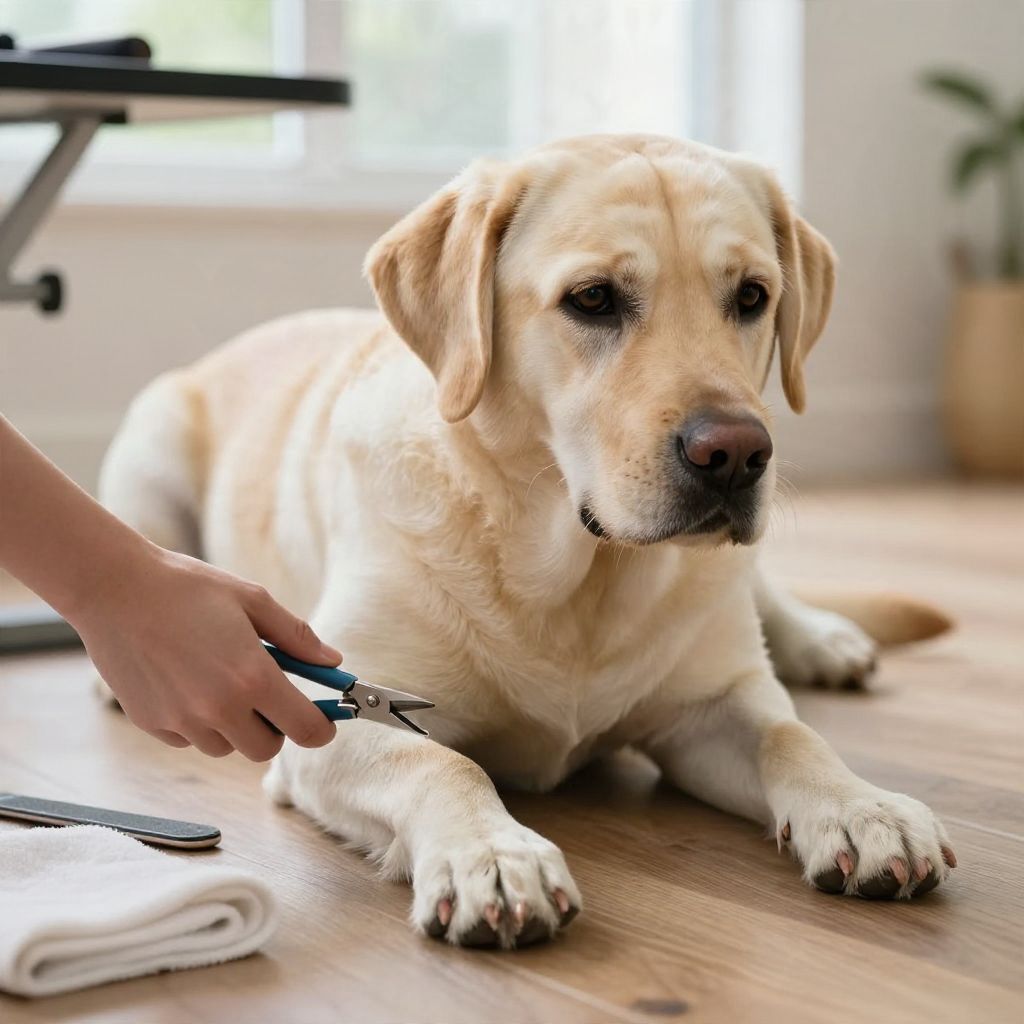
If you are wondering how short to cut dog nails, the safest answer is: trim only the tip unless you can clearly see where the quick ends. For many dogs, that means removing small amounts at a time rather than trying to shorten the nail all at once.
The goal is to keep nails off the floor and avoid cutting into the quick, which can hurt and bleed. How much you can trim depends on nail color, nail shape, age, activity level, and whether your dog is used to nail handling.
How short to cut dog nails?
Cut dog nails short enough that they do not click on the floor, but not so short that you hit the quick. In light-colored nails, stop before the pink center. In dark nails, trim tiny amounts from the tip and watch for a chalky or darker center that signals you are getting close.
Why nail length matters for your dog
Overgrown nails can change how your dog stands and walks. Long nails may press into the ground, push the toes forward, and make movement less comfortable.
When nails get too long, they can also split, snag, or curl into the paw pad. That can lead to pain, bleeding, infection, or a reluctance to walk.
Signs your dog’s nails are too long
- You hear clicking on hard floors.
- The nails touch the ground when your dog is standing.
- The toes look spread or splayed.
- Your dog slips more on smooth surfaces.
- Your dog licks or guards a paw after activity.
How to tell where to stop cutting
The quick is the living tissue inside the nail. It contains blood vessels and nerves, so cutting into it is painful and causes bleeding.
Light-colored nails
These are usually easier to trim safely. You can often see a pink quick inside the nail, and you should stop before reaching it.
Dark-colored nails
Black or dark nails are harder to judge. Trim a little at a time and look at the cut surface after each small snip. A safer stop point is when the center of the nail starts to look softer, grayish, or less powdery.
What about dewclaws?
Dewclaws often grow differently because they may not wear down naturally. They still need regular checks, and they can curl or snag if left too long.
How often should you trim dog nails?
There is no single schedule that fits every dog. Active dogs that walk on rough surfaces may wear nails down naturally, while indoor dogs, small dogs, puppies, seniors, and less active dogs may need more frequent trims.
A practical rule is to check nails every 1 to 2 weeks and trim as needed. If you can hear them on the floor, they are usually too long.
How to trim safely at home
Use a sharp, dog-specific nail clipper or grinder, and work in a calm, well-lit area. If your dog is nervous, keep sessions short and reward cooperation with treats and praise.
- Gently hold a paw and separate one nail.
- Clip a very small amount from the tip.
- Pause and inspect the nail after each cut.
- Stop if you see a darker center, a soft-looking area, or your dog becomes uncomfortable.
- Repeat over several sessions if needed instead of forcing a full trim.
If you use a grinder, introduce it slowly so your dog learns that the sound and vibration are safe. Keep the tool moving and avoid holding it in one spot, which can heat the nail.
What happens if you cut too short?
If you nick the quick, the nail may bleed and your dog may pull away or react suddenly. This is common and usually not dangerous, but it is painful and should be handled calmly.
Apply gentle pressure with a clean cloth or gauze. If bleeding does not stop, if the nail is split badly, or if your dog is very distressed, contact your veterinarian.
Get urgent veterinary help if you notice
- Bleeding that will not stop after steady pressure.
- A nail torn off or hanging loose.
- Severe limping or refusal to bear weight.
- Swelling, pus, or a bad smell from the toe.
- Your dog seems weak, pale, or unusually upset after the injury.
Breed, age, and lifestyle can change what “short enough” means
Different dogs wear their nails differently. A very active dog that runs on pavement may need less frequent trimming than a dog that mostly walks on grass or carpet.
Puppies often need frequent, gentle handling so nail care becomes normal. Senior dogs may need more help because they move less, may have arthritis, or may resist standing for long periods. Some dogs with curly or fast-growing nails may also need more regular care.
Dogs with anxiety or a history of bad nail trims
If your dog fears nail care, do not force a full trim in one session. Instead, pair handling with treats, keep sessions brief, and work gradually on paw touch, nail exposure, and tool introduction.
If fear is severe, a certified trainer or veterinary behaviorist can help you build a safer plan. For dogs that become highly panicked or aggressive, your veterinarian may also suggest a different grooming approach.
Common mistakes to avoid
- Cutting too much at once.
- Waiting until nails are severely overgrown.
- Using dull tools that crush the nail.
- Ignoring dewclaws.
- Trying to finish the job when your dog is stressed.
- Assuming dark nails can be trimmed the same way as light nails.
Another common mistake is focusing only on the front paws. Back nails can also overgrow and should be checked regularly.
When to ask a veterinarian or groomer for help
Professional help is a good idea if your dog has very thick nails, a history of bleeding, painful paws, arthritis, or strong anxiety about handling. A groomer or veterinary team can show you a safer technique and may be able to trim the nails more comfortably.
You should also contact your veterinarian if the nails look infected, the toe is swollen, or your dog suddenly starts limping. Nail problems can sometimes be linked to paw injuries or other health issues that need attention.
How to make nail trims easier over time
Most dogs do best when nail care is routine, predictable, and rewarded. Short, positive practice sessions are usually more effective than infrequent, stressful attempts.
- Touch paws briefly during calm moments.
- Reward your dog for allowing nail handling.
- Trim one or two nails at a time if needed.
- Use good lighting so you can see the nail clearly.
- Stop before your dog becomes overwhelmed.
If your dog tolerates it, regular tiny trims are often easier than waiting for a major cutback. That approach also reduces the chance of hitting the quick because the quick may gradually recede when nails are kept shorter over time.
Bottom line
How short to cut dog nails depends on the nail itself, but the safest rule is to trim only small amounts and stop well before the quick. Keep nails short enough that they do not click on the floor, and get help if your dog is painful, fearful, or hard to trim safely.
If you want a step-by-step walkthrough, you may also find how to trim dog nails at home helpful for safe technique and handling tips.