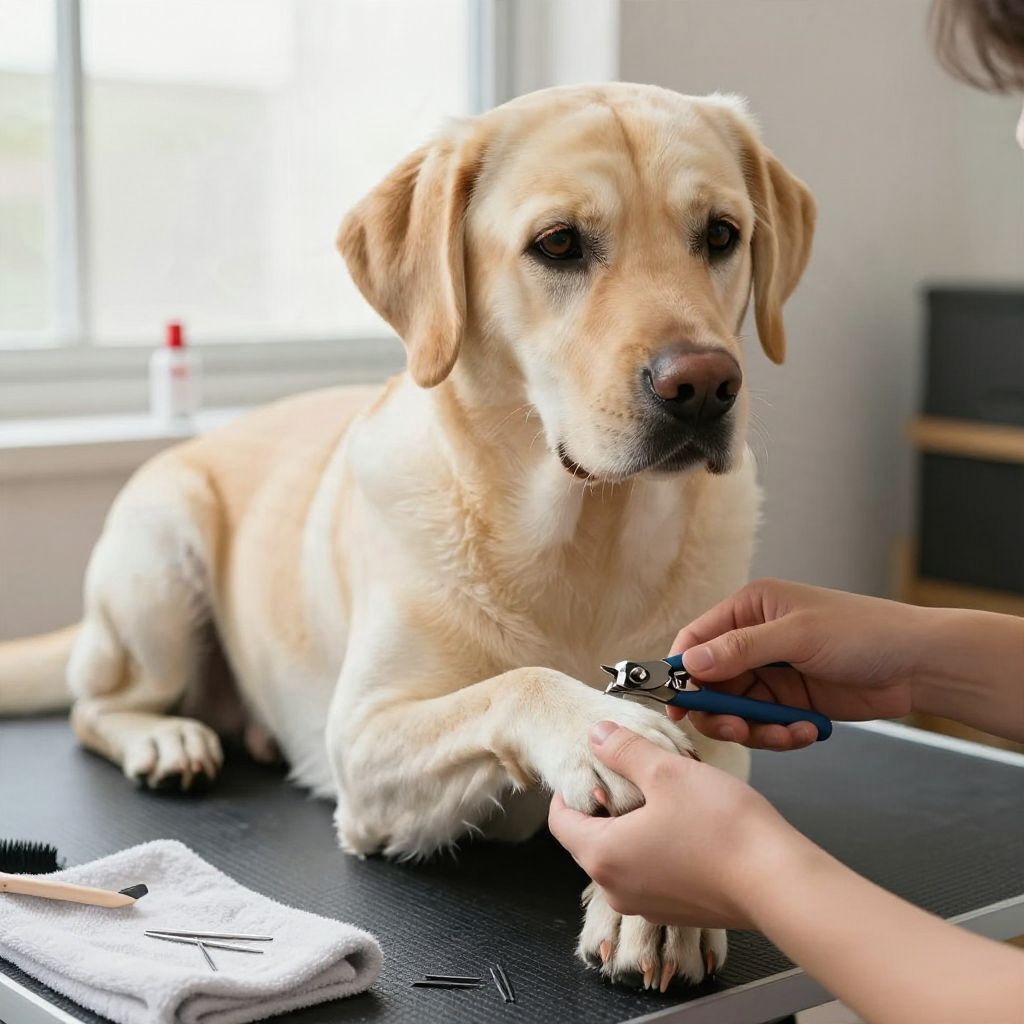
How to trim dog nails at home safely starts with calm handling, the right tools, and small cuts. If you can see the nail shape clearly and your dog stays relaxed, you can usually do basic maintenance at home.
The goal is to shorten the nail without cutting into the quick, which can hurt and bleed. With practice, many dogs learn to tolerate nail trims well, but some need extra training or a groomer or veterinarian’s help.
How To Trim Dog Nails At Home?
To trim dog nails at home, use sharp dog nail clippers or a grinder, hold one paw steady, and remove tiny bits at a time. Stop before the quick, the sensitive inner part of the nail. If you are unsure, trim less rather than more and work in short sessions.
What you need before you start
Good preparation makes the process safer and less stressful for both of you. Gather everything first so you do not have to stop midway and lose your dog’s focus.
- Dog nail clippers or a nail grinder made for pets
- Styptic powder or another vet-approved bleeding control product
- Treats your dog likes
- A towel or non-slip mat
- Good lighting
If your dog has very dark nails, thick nails, or a history of fear during grooming, extra patience matters. Some dogs do better with a grinder, while others prefer quick clip-and-pause handling.
Step-by-step: how to trim dog nails at home
- Choose a calm time. Pick a quiet moment when your dog is relaxed, not after a stressful walk or when overly excited.
- Get your dog comfortable with paw handling. Touch the paws and nails briefly, reward calm behavior, and stop before your dog becomes tense.
- Inspect each nail. Look for cracks, curling, splitting, or signs of pain. If a nail looks infected or injured, skip trimming and call your vet.
- Hold the paw securely but gently. Support the toe so the nail is steady, but do not squeeze.
- Trim tiny amounts. Clip small slivers from the tip of the nail rather than taking off a large section.
- Check the cut surface. Stop when you see a pale center, a darker dot, or the nail begins to look softer and more oval, depending on nail color and thickness.
- Reward and pause often. Give treats after each nail or after a few nails if your dog is comfortable.
How to tell where to stop
The quick is easier to see in light-colored nails, where it often appears pink. In dark nails, you usually need to trim in very small increments and watch the cut end closely. If the nail starts showing a gray or black center with a chalky ring around it, you are getting closer and should slow down.
Dog nail clipping vs. grinding
Both methods can work. The best choice depends on your dog’s temperament, your confidence, and the nail type.
- Clippers are faster and useful if your dog tolerates brief handling.
- Grinders can help smooth rough edges and may be easier for thick nails, but some dogs dislike the noise or vibration.
If you use a grinder, introduce it gradually. Let your dog sniff it first, then turn it on briefly at a distance, pairing the sound with treats before you ever touch the nail.
How often should you trim dog nails?
Frequency varies by dog. Active dogs who walk on rough surfaces may wear nails down naturally, while indoor dogs, small dogs, puppies, seniors, and dogs with certain gait or orthopedic issues often need more frequent trims.
A practical rule is to check nails every one to two weeks. If you hear clicking on hard floors, the nails are likely getting too long.
Signs the nails are too long
Long nails can affect comfort and movement, especially if they are allowed to grow for a long time. Watch for these signs:
- Clicking sounds on floors
- Nails touching the ground when standing
- Toes spreading out or feet splaying
- Reluctance to walk on hard surfaces
- Snagging on rugs or blankets
Very overgrown nails may curve and press into the paw or alter posture. If you suspect pain, limping, or toe deformity, ask your veterinarian to assess the feet.
How to make nail trims easier for nervous dogs
Many dogs dislike nail trims because of restraint, past bad experiences, or sensitivity in the paws. You can improve cooperation with gradual training and positive reinforcement.
- Touch paws briefly during calm moments, then reward.
- Pair the clippers or grinder with treats before using them.
- Trim one nail, then stop and praise.
- Keep sessions short and predictable.
- Use a helper only if that person stays calm and gentle.
For very fearful dogs, focus on desensitization over several days or weeks. If your dog panics, freezes, growls, or tries to bite, do not force the trim. A groomer, trainer, or veterinary team can help you build a safer plan.
Common mistakes to avoid
Most nail-trim problems come from rushing or cutting too much at once. Avoid these common errors:
- Using dull clippers that crush the nail
- Taking off large chunks instead of small slices
- Trimming in poor light
- Ignoring a dog that is clearly stressed
- Forgetting to reward calm behavior
- Trying to “fix” a bad trim by cutting deeper immediately
If you accidentally cut the quick, stay calm. Apply a bleeding-control product if you have one and contact your veterinarian if bleeding does not stop promptly or if the nail looks badly damaged.
When you should not trim at home
Some situations are better handled by a professional. Consider veterinary or groomer help if your dog has:
- Very dark nails and you cannot see where to stop
- Severely overgrown, twisted, or split nails
- Painful paws, swelling, or a broken nail
- Arthritis or mobility issues that make paw handling difficult
- Extreme fear or aggression during grooming
Do not try to push through if your dog is struggling. Safety matters more than finishing the trim in one session.
Red-flag problems that need veterinary care
Call your veterinarian promptly if you notice any of the following:
- Persistent bleeding after a nail trim
- Severe limping or refusal to bear weight
- Redness, swelling, pus, or a foul smell around the nail
- A torn nail that is hanging loose or exposing tissue
- Repeated nail cracking or unusual nail shape changes
These signs can point to injury, infection, or another medical issue that needs professional treatment. Do not wait if your dog seems painful.
Helpful tips for puppies, seniors, and different coat types
Age and lifestyle can change how you approach nail care. Puppies benefit from gentle, frequent handling so nail trims become normal early in life. Senior dogs may need extra support because stiff joints can make standing still uncomfortable.
Dogs with thick nails, fast-growing nails, or less outdoor wear may need more regular maintenance. Dogs that spend a lot of time on soft surfaces often need trims more often than dogs that naturally wear nails down on pavement or rough ground.
Conclusion
How to trim dog nails at home comes down to patience, tiny cuts, and knowing when to stop. Keep sessions short, reward calm behavior, and get professional help if your dog is fearful, painful, or has nails that are hard to manage safely.
If you want to keep building good grooming habits, you may also find it helpful to read about how to clean dogs’ teeth and how to stop a dog from licking paws.