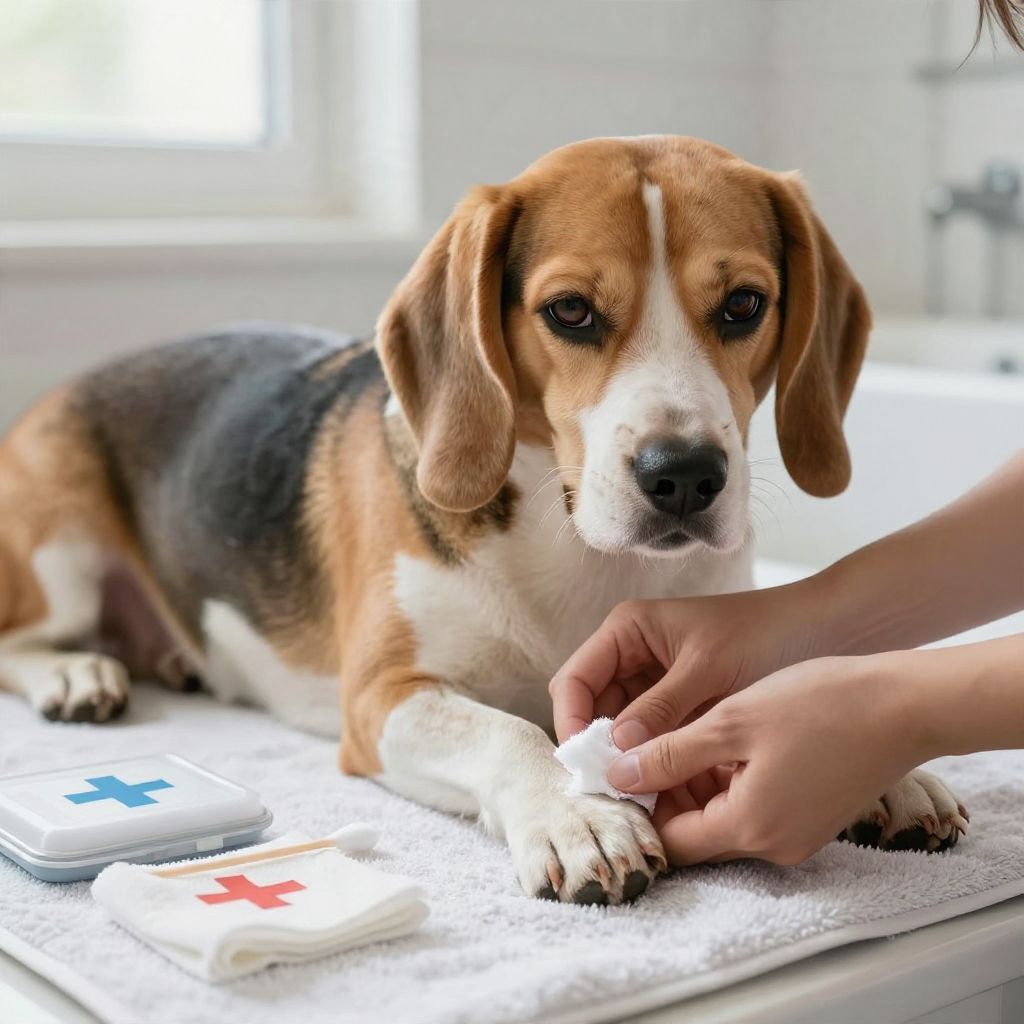
If your dog’s nail starts bleeding, stay calm and act quickly. Most nail bleeds are caused by trimming too short or a split nail, and they usually stop with direct pressure and a simple clotting aid.
The key is to control the bleeding, keep the paw clean, and watch for signs that need a vet. If the nail is badly torn, keeps bleeding, or your dog is in pain, get professional help promptly.
How To Stop Dog Nail Bleeding?
Apply firm pressure with clean gauze or a cloth for several minutes, then use a pet-safe clotting product if needed. Keep your dog still, avoid rinsing the nail repeatedly, and protect the paw afterward. If bleeding does not slow within 10 to 15 minutes, or the nail is split or hanging, contact a veterinarian.
What to do right away
- Stay calm and restrain gently. A worried dog may lick, pull away, or make the bleeding worse.
- Apply direct pressure. Use gauze, a clean towel, or cloth against the nail tip for several minutes without checking constantly.
- Use a clotting aid if available. Pet styptic powder, styptic pencil, or cornstarch can help minor bleeding stop. Follow the product directions.
- Keep the paw clean and dry. Once bleeding slows, avoid soaking the foot or letting your dog run around right away.
- Prevent licking. Licking can reopen the nail and delay clotting. Use a cone if needed.
Why dog nails bleed
Dog nails bleed when the quick is cut or damaged. The quick contains blood vessels and nerves, so even a small trim mistake can cause a lot of bleeding and pain. A nail can also bleed if it cracks, splits, or gets caught on something.
Common causes
- Trimming too far back during nail care
- A broken, torn, or split nail
- Trauma from running, jumping, or snagging the nail
- Underlying nail or paw problems that make nails brittle
Step-by-step guide to stopping the bleeding
For a minor nail bleed, use a simple, calm approach. The goal is to help the blood clot while protecting the injured nail from more damage.
1. Prepare supplies
- Clean gauze or a small towel
- Pet styptic powder or styptic pencil
- Optional: cornstarch if you do not have a pet product
- A cone or soft collar if your dog keeps licking
2. Hold steady pressure
Press gauze or cloth directly on the bleeding nail. Keep steady pressure for several minutes before checking.
Do not keep lifting the cloth every few seconds. That interrupts clotting and can make the bleeding last longer.
3. Apply a clotting product
If the nail is still bleeding, touch the nail tip to styptic powder or use a styptic pencil as directed. These products are made for minor nail bleeds and are often the fastest way to stop them.
If you only have cornstarch, it may help with very small bleeds, but it is not a substitute for veterinary care when the injury is significant.
4. Recheck carefully
After pressure and clotting aid, look for slowing or stopping. If blood is still actively dripping or pooling, repeat pressure once more and then call your vet if it does not stop.
5. Protect the paw afterward
Keep your dog quiet for a while. Short leash walks are better than running, rough play, or jumping, which can reopen the nail.
When a nail injury needs a vet
Some nail bleeds are minor, but others need prompt veterinary attention. A torn nail can expose sensitive tissue, become infected, or be too painful for home care.
Call a veterinarian soon if:
- The nail keeps bleeding after repeated pressure
- The nail is split, loose, or partially torn off
- Your dog is limping or avoiding weight on the paw
- The toe looks swollen, hot, or very painful
- You suspect a foreign object or deeper paw injury
Seek urgent care now if:
- Bleeding is heavy or will not stop
- Your dog seems weak, distressed, or unusually pale
- The injury involves a large tear or exposed tissue
- There is severe pain, major swelling, or obvious deformity
- Your dog has a bleeding disorder or is on medications that affect clotting
What not to do
Some common mistakes can make a nail injury worse. Keep the response simple and avoid anything that delays clotting or increases pain.
- Do not keep trimming the nail to “fix” the bleed.
- Do not use human medications unless your veterinarian specifically tells you to.
- Do not wrap the paw so tightly that circulation is reduced.
- Do not let your dog lick or chew the nail continuously.
- Do not ignore a cracked nail that keeps catching on surfaces.
How to care for the nail after bleeding stops
Once the bleeding has stopped, the nail still needs a little care to heal well. The area may stay tender for a day or two, and some dogs will protect the paw by limping slightly.
Helpful aftercare
- Keep activity calm for the rest of the day
- Check the nail once or twice for renewed bleeding
- Keep the paw dry and clean
- Use a cone if licking starts
- Watch for redness, discharge, or worsening pain
If the nail was badly damaged, your vet may recommend an exam to trim away loose fragments, clean the area, and reduce the risk of infection.
How to prevent future nail bleeding
Prevention is mostly about regular nail care and careful trimming. Some dogs need trims more often than others depending on how quickly their nails grow, how active they are, and what surfaces they walk on.
Safer nail-trimming habits
- Trim small amounts at a time instead of trying to remove a lot at once
- Use sharp, dog-specific nail tools
- Work in good light so you can see the quick more clearly
- Take breaks if your dog gets anxious
- Reward calm behavior with treats and praise
Some dogs have dark nails, which can make the quick harder to see. In those cases, trimming tiny slices and checking the nail cross-section can help reduce the chance of cutting too far.
Breed, age, and individual differences
Dogs vary a lot. Active dogs that wear their nails down on pavement may need less frequent trimming, while smaller, older, or less active dogs may need more regular care. Puppies often need gentle handling practice, and nervous dogs may do better with short, reward-based sessions.
What if the nail keeps breaking?
Repeated nail breaks can point to a grooming issue, but they can also suggest brittle nails, poor footing, or a medical problem. If your dog’s nails split often, ask your veterinarian to examine the paws and discuss whether an underlying issue may be contributing.
For dogs that resist nail care, gradual training can help. Pair touching the paws with treats, keep sessions short, and stop before your dog becomes overwhelmed.
How to know if it is a minor trim nick or a bigger problem
A tiny trim nick usually bleeds a little, then stops after pressure and a clotting aid. A bigger problem is more likely if the nail is cracked, the toe is swollen, or your dog continues to limp after the bleeding stops.
When in doubt, treat the injury as more serious. Nail injuries can look small but still be painful or prone to infection.
Conclusion
To stop dog nail bleeding, apply steady pressure, use a pet-safe clotting aid, and keep your dog calm while the nail clots. Watch closely afterward, and contact your veterinarian if the bleeding persists, the nail is torn, or your dog seems painful.
If you want to avoid future accidents, it can help to review how to trim dog nails at home so you can make nail care safer and more confident next time.