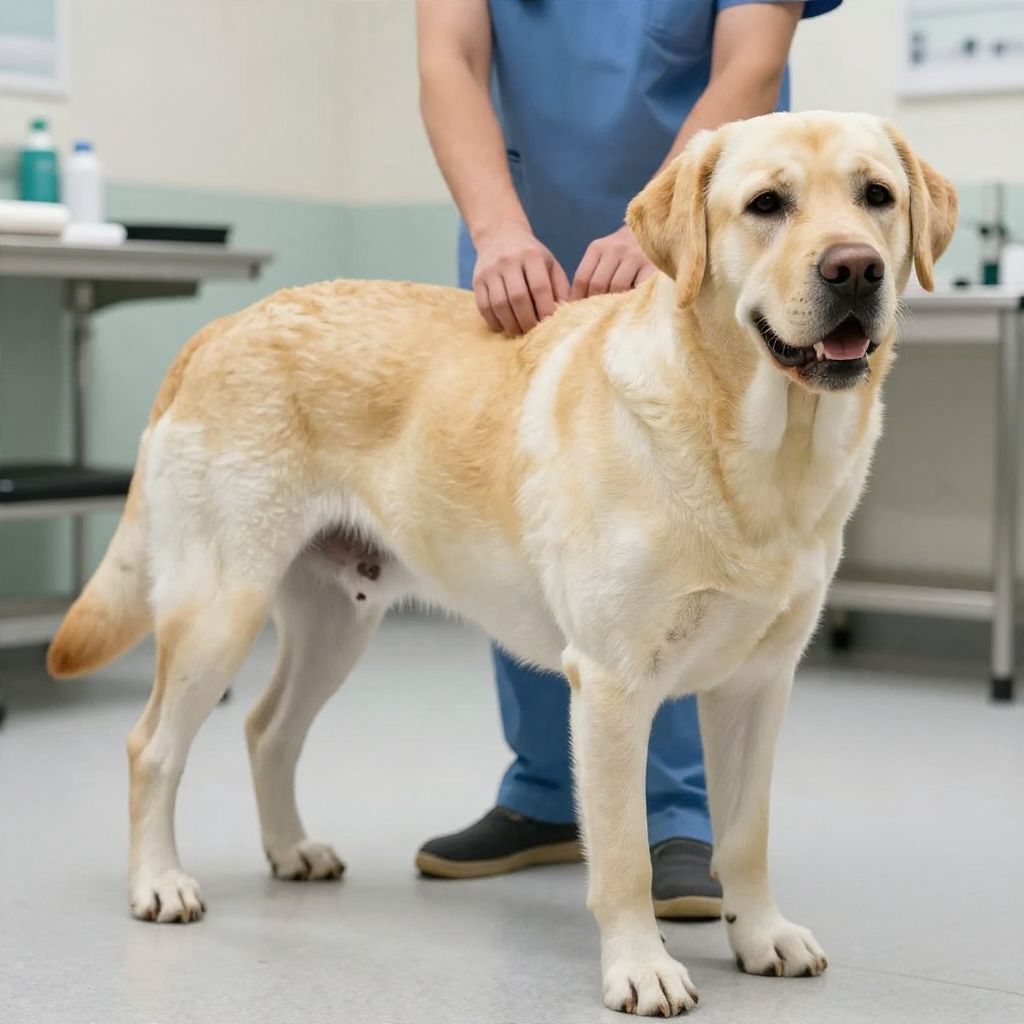
Do boy dogs have nipples? Yes, male dogs usually do. Just like female dogs, male dogs are born with nipples because nipples develop before sex-specific traits do.
In most dogs, nipples are normal and harmless. They can be easy to miss under fur, and they may vary in size, number, and visibility from dog to dog.
Do Boy Dogs Have Nipples?
Yes. Male dogs typically have nipples, and that is completely normal. Puppies develop nipples before their sex organs fully differentiate, so both male and female dogs usually have them. The nipples do not serve a nursing function in males, but they are still part of normal anatomy.
Why Male Dogs Have Nipples
Early in development, male and female embryos share many body structures. Nipples form before the body fully develops into male or female anatomy, so male dogs keep them after birth. In other words, having nipples does not mean something is wrong or unusual.
Most male dogs have a row of nipples on the underside of the body, usually paired along the chest and belly. Some are more visible than others, especially in short-coated breeds or dogs with little body fat.
What nipples usually look like in dogs
- Small, rounded bumps on the chest and abdomen
- Often arranged in pairs
- Similar in color to the surrounding skin or slightly darker
- More noticeable in some dogs than others
How Many Nipples Do Boy Dogs Have?
The number can vary. Many dogs have several pairs, but there is no single exact number that applies to every dog. Breed, body shape, and individual variation all affect how visible the nipples are and how many you can easily count.
If you are trying to identify a lump, remember that normal nipples are usually symmetrical and located in a predictable line along the underside of the body. A new lump, swelling, or sore spot that does not match the dog’s usual nipple pattern should be checked by a veterinarian.
How to Tell a Nipple From a Lump or Skin Problem
It is common for owners to notice a bump and wonder whether it is a nipple, tick, wart, or something more serious. A quick visual and hands-on check can help, but if you are unsure, a vet exam is the safest choice.
Signs it may be a normal nipple
- Located in a line along the belly or chest
- Similar on both sides of the body
- Present since puppyhood or noticed in the same place before
- Small, smooth, and attached to the skin
Signs it may be something else
- Sudden appearance of a new bump
- Redness, heat, pain, or discharge
- Rapid growth or a change in shape
- Bleeding, crusting, or open skin
- A bump that seems attached to the skin surface like a tick or wart
Do not squeeze, pick at, or cut off a bump at home. If you cannot confidently identify it as a nipple, have your veterinarian examine it.
When a Male Dog’s Nipples Need Veterinary Attention
Most nipples never cause problems, but changes in the area can signal skin irritation, infection, trauma, or a mass. Any new or changing lump should be taken seriously, especially in older dogs.
Call your veterinarian soon if you notice
- A nipple that is swollen, painful, or warm
- Discharge, bleeding, or crusting
- One side looking different from the others
- A firm lump under or near a nipple
- Excessive licking or chewing at the area
Seek urgent veterinary care if your dog has
- Sudden severe swelling
- Active bleeding that does not stop
- Marked pain or distress
- Open wounds, pus, or a foul odor
- Signs of illness such as lethargy, fever, or loss of appetite along with the skin change
These signs do not prove a serious disease, but they do mean your dog needs prompt professional assessment.
Do Boy Dogs’ Nipples Change With Age?
Yes, nipples can look different as dogs grow. Puppies often have tiny, subtle nipples, while adult dogs may have more visible ones depending on coat length and body condition. Older dogs can also develop skin changes that make nipples easier to notice.
Weight changes can affect how obvious nipples appear. A lean dog may show them more clearly, while a heavier dog may have them hidden in skin folds or fur. That said, a new lump should never be dismissed as “just weight” without checking if it is unusual.
Common Questions Owners Ask
Can male dogs get breast cancer?
Male dogs can develop mammary gland tumors, although they are less common than in females. A lump near a nipple is not automatically cancer, but it should be examined by a veterinarian because early evaluation matters.
Can a male dog’s nipples produce milk?
It is uncommon, but hormonal issues or certain medical conditions can sometimes cause nipple discharge or mammary changes in male dogs. Any milk-like discharge, swelling, or hormone-related change should be checked by a vet.
Do neutered male dogs still have nipples?
Yes. Neutering does not remove nipples. It only affects the reproductive organs and related hormones, not normal skin anatomy.
Can nipples get irritated from harnesses or rough play?
Yes. Friction, licking, scratches, or rough surfaces can irritate the skin around nipples. If the area is red or sore, reduce friction and contact your vet if it does not improve quickly or if the skin breaks open.
How to Check Your Dog Safely at Home
A gentle monthly body check is a useful habit, especially for adult and senior dogs. It helps you notice changes early without overreacting to normal anatomy.
- Run your hands slowly along the chest and belly during grooming or petting.
- Look for a regular, symmetrical line of small bumps.
- Note any lump that is new, larger, firmer, or painful.
- Check for redness, discharge, scabs, or hair loss.
- If something feels different, schedule a veterinary exam.
Try to compare both sides of the body. A normal nipple pattern is usually fairly even, while a suspicious lump often stands out because it does not match the others.
Common Mistakes to Avoid
Owners sometimes worry that nipples mean a dog is female, unhealthy, or “not fully developed.” That is not true. Male dogs having nipples is normal anatomy, not a sign of a sex mix-up or a medical problem.
- Do not assume every bump is a nipple.
- Do not ignore a nipple that changes shape, color, or size.
- Do not try to pop, burn, or remove a bump at home.
- Do not rely on photos alone if the area is painful or changing.
If your dog is licking the area repeatedly, that can worsen irritation and make it harder to tell what is happening. A vet may recommend an exam to rule out skin disease, infection, or a mass.
When to Ask a Vet Even If You Think It Is Normal
It is reasonable to ask for help whenever you are unsure. A quick exam can give you peace of mind and may catch a problem early if the bump is not actually a nipple.
Bring your dog in if the area is new to you, if your dog is older, or if you notice any change over time. This is especially important for dogs with a history of skin lumps, hormone-related issues, or repeated irritation around the belly.
Bottom Line
Yes, boy dogs have nipples, and in most cases they are a normal part of canine anatomy. What matters most is whether the nipples look and feel stable over time. If you notice swelling, discharge, pain, or a new lump, have your veterinarian check it promptly.
If you want to keep learning about your dog’s body and health, you may also find it helpful to read about whether dogs have tonsils or whether dogs have knees.