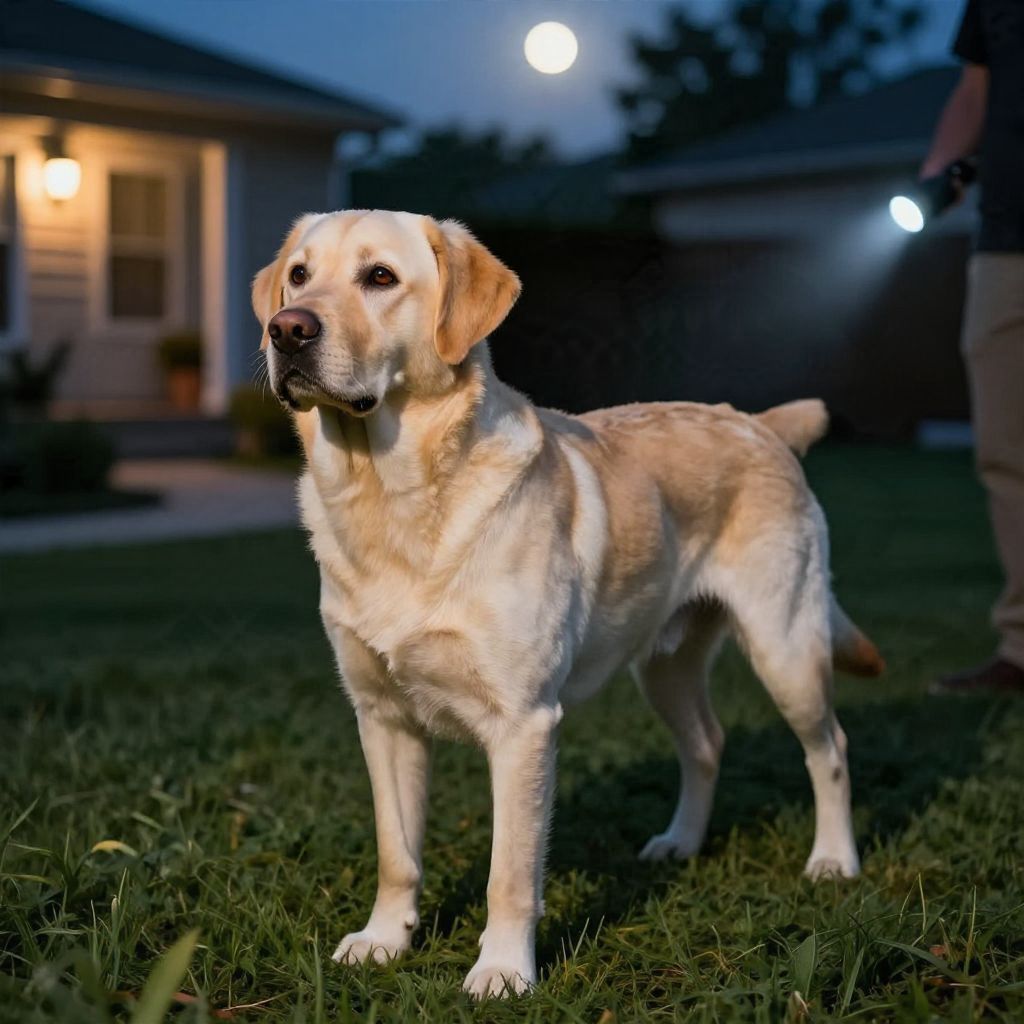
Can dogs see at night? Yes, dogs usually see much better than people in low light, but they are not true night-vision animals. Their eyes are adapted to gather more available light, so they can navigate dim spaces more easily than you can.
That said, poor lighting can still be risky for dogs, especially puppies, seniors, and dogs with eye disease. Understanding what dogs can and cannot see at night helps you keep walks, stairs, yards, and indoor spaces safer.
Can dogs see at night?
Dogs can see in the dark better than humans because their eyes are built for low-light vision. They have more light-sensitive cells and a reflective layer behind the retina that improves dim-light vision, but they still need some light to see clearly and safely.
How dog vision works in low light
Several parts of a dog’s eye help with night vision, and the exact effect can vary by age, breed, and eye health. Dogs generally rely more on motion, shape, and contrast than fine detail when the light is low.
Why dogs see better than people in dim light
- More rod cells: Rods help detect light and movement in dim conditions.
- Tapetum lucidum: This reflective layer bounces light back through the retina, giving the eye a second chance to use it.
- Wider pupils: Dogs can let in more light than humans can in the dark.
What dogs still struggle with at night
- Fine detail and sharp focus
- Very dark areas with no ambient light
- Sudden changes in lighting, such as walking from a bright room into a dark yard
- Cluttered spaces, stairs, or unfamiliar routes
What affects how well a dog sees at night?
Night vision is not the same for every dog. A healthy young dog may move confidently in dim light, while an older dog or one with an eye condition may hesitate, bump into objects, or seem anxious after dark.
Age
Puppies are still learning to navigate their environment, so they may be clumsy in low light. Senior dogs may have reduced vision from normal aging or medical problems, which can make nighttime movement harder.
Breed and body differences
Some dogs may seem more comfortable in low light because of their eye shape, coat color, facial structure, or general alertness, but there are no guarantees. Breed tendencies can influence vision and behavior, yet individual dogs vary a lot.
Eye health
Conditions such as cataracts, retinal disease, glaucoma, dry eye, and injury can reduce a dog’s ability to see at night. If your dog’s nighttime behavior changes suddenly, schedule a veterinary exam.
Temperament and training
A calm, well-trained dog may appear to “see better” simply because they are confident and familiar with the environment. A nervous dog may freeze or hesitate in the dark even when vision is normal.
Signs your dog may be struggling to see at night
If your dog has trouble in low light, you may notice behavior changes before you notice obvious eye problems. These signs can be subtle at first.
- Bumping into furniture or door frames
- Hesitating at stairs, curbs, or thresholds
- Startling easily when approached in the dark
- Refusing to go into dim rooms or outside at night
- Watching sounds closely but missing visual cues
- Cloudy eyes, redness, squinting, or discharge
Seek veterinary care promptly if the change is sudden, one-sided, or paired with pain, eye redness, cloudiness, discharge, or a visibly enlarged or injured eye.
How to keep your dog safe at night
Even if your dog sees well in low light, a few simple changes can make nighttime much safer. Focus on visibility, predictable routes, and reducing hazards.
- Add gentle lighting: Use night-lights in hallways, near stairs, and by doors.
- Keep pathways clear: Remove shoes, bags, toys, and cords from walking routes.
- Use a leash outside: A leash helps prevent accidents, escapes, and sudden run-ins with cars or wildlife.
- Consider reflective gear: Reflective collars, harnesses, and leash trim improve visibility for drivers and you.
- Stay consistent: Keep furniture and feeding areas in familiar places when possible.
- Guide older dogs carefully: Use slow, predictable movement on stairs and uneven ground.
Night walks: what to watch for
Night walks can be enjoyable, but they also come with extra risks. Your dog may see some obstacles well enough, yet still miss hazards like holes, glass, wildlife, or moving vehicles.
Safety tips for evening outings
- Choose well-lit routes when possible.
- Use a secure harness if your dog tends to pull or startle.
- Keep your dog close near roads and parking lots.
- Watch for slippery surfaces, especially after rain or frost.
- Avoid off-leash time in dark, unfenced, or unfamiliar areas.
If your dog seems fearful at night
Do not force your dog into dark spaces. Instead, use gradual, reward-based confidence building with treats, praise, and calm repetition. If fear is intense or worsening, ask a certified trainer or veterinary behaviorist for help.
When nighttime vision changes mean a vet visit
Some vision changes develop slowly, while others need urgent attention. Because eye problems can worsen quickly, it is best not to guess at the cause.
Make a veterinary appointment soon if you notice:
- Gradual bumping into things in dim light
- Cloudy or bluish eyes
- Increased hesitation on stairs or in dark rooms
- Frequent squinting or pawing at the eyes
- New anxiety in familiar places after sunset
Get urgent veterinary care now if you notice:
- Sudden blindness or sudden severe vision loss
- A painful, red, swollen, or bulging eye
- Eye trauma, bleeding, or a foreign object
- Marked disorientation, collapse, or severe lethargy along with vision changes
Common mistakes owners make
Most nighttime problems are preventable, but a few common mistakes can make them worse. Small changes in routine can protect your dog and reduce stress.
- Assuming a dog “should be fine” in the dark without checking for hazards
- Using punishment when a dog hesitates or freezes
- Ignoring subtle signs of vision loss in older dogs
- Letting dogs roam off-leash in dark, unsecured areas
- Moving furniture around without helping a visually impaired dog relearn the layout
Helping a dog with reduced night vision
If your dog has confirmed vision loss, consistency matters more than ever. Dogs often adapt well when their environment stays predictable and you help them learn safe routes.
- Keep furniture placement stable.
- Use sound cues, such as a gentle verbal cue before touching or approaching.
- Place food, water, and bedding in consistent locations.
- Use barriers for stairs or unsafe rooms if needed.
- Maintain regular veterinary follow-up for the underlying eye condition.
If your dog is losing vision, ask your veterinarian how to support them at home. In some cases, a referral to a veterinary ophthalmologist may be helpful.
The bottom line
Dogs can see at night better than humans, but not perfectly. Good lighting, safe routines, and prompt veterinary care for any vision change are the best ways to protect your dog after dark.
For more on how dogs use their eyes and what they can actually see, you may also find these guides helpful: how dogs see the world and can dogs see colors.