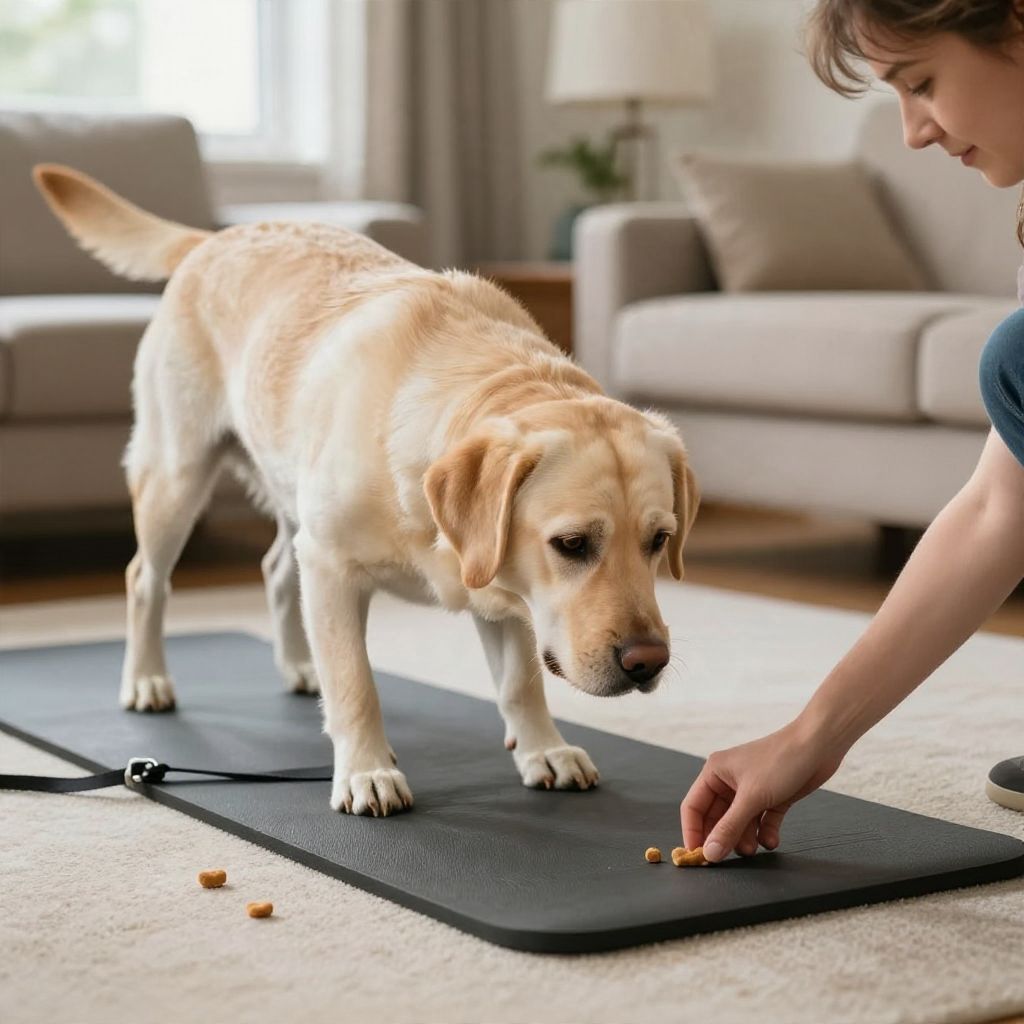
How to teach a dog to lay down starts with making the behavior easy to understand and rewarding. Most dogs learn fastest with a lure, a clear cue, and short practice sessions.
Use calm repetition, keep treats small, and stop before your dog gets frustrated. If your dog has pain, stiffness, or trouble moving, check with a veterinarian before training.
How do you teach a dog to lay down?
To teach a dog to lay down, lure their nose toward the floor with a treat, then move the treat slowly between their front paws until their elbows and chest touch the ground. Mark the moment, reward right away, and repeat in short sessions until you can add a verbal cue.
Step-by-step method for teaching “down”
This method works for many dogs because it uses a natural movement instead of force. Keep sessions brief, upbeat, and low-distraction.
- Start with your dog in a sit or standing position. Have a few soft treats ready.
- Hold a treat at your dog’s nose. Let them notice it, but don’t give it yet.
- Lower the treat straight down toward the floor. Then slowly move it away from your dog, close to the ground, between the front paws.
- Wait for the body to follow. Many dogs will drop their elbows or slide into a down position to keep tracking the treat.
- Mark the behavior the instant they lie down. Use a clicker or a short word like “yes.”
- Reward immediately. Give the treat and praise calmly.
- Repeat several times. Keep the first practice round very easy.
- Add the cue. Say “down” just before you lure, then reward when your dog lies down.
- Fade the lure. After your dog understands, use only the hand motion or verbal cue before rewarding.
Helpful training details
- Train on a non-slip surface so your dog feels stable.
- Use tiny treats so your dog stays interested without getting full too quickly.
- Reward a full down, not just a partial crouch, if your goal is a true “lay down.”
- End on a success to keep the lesson positive.
What if your dog won’t lie down?
Some dogs need a different approach. If your dog is confused, excited, or physically uncomfortable, adjust the setup instead of pushing harder.
- Try a quieter space. Reduce distractions so your dog can focus.
- Use better rewards. Some dogs need higher-value treats, such as small pieces of cooked meat or cheese if they tolerate those foods.
- Slow down the lure. Moving the treat too fast can make the dog stand up or lose interest.
- Start from a sit. Many dogs find it easier to fold into a down from sitting than from standing.
- Check for discomfort. A dog with sore joints, a stiff back, or nail pain may avoid lying down.
If your dog seems reluctant to lower the front end, pants heavily, limps, or resists normal movement, stop and ask your veterinarian whether pain could be involved.
How long does it take to teach a dog to lay down?
Some dogs learn the basic movement in one session, while others need several days or weeks of short practice. Age, attention span, previous training, body shape, confidence, and comfort with the floor all affect the pace.
Puppies may learn quickly but can also get wiggly and distracted. Adult dogs with little training history may need more repetition. Senior dogs or dogs with mobility issues may need a modified approach and a veterinary check first.
Common mistakes that slow progress
Most training problems come from making the cue unclear or the exercise too difficult too soon.
- Repeating the cue over and over. Say it once, then help the dog understand with the lure.
- Rewarding too late. Timing matters; reward the exact moment the elbows and chest touch down.
- Training too long. Many dogs do better with 3- to 5-minute sessions.
- Using pressure or forcing the body down. This can create fear and resistance.
- Practicing on slippery floors. Dogs often struggle to position themselves on slick surfaces.
- Expecting one method to fit every dog. Temperament, size, and physical ability all matter.
How to make “down” more reliable
Once your dog can lie down in a quiet room, practice in slightly harder situations. Gradual proofing helps the behavior hold up in real life.
Practice in small steps
- Move from indoors to a different room.
- Practice near mild distractions, such as a family member walking by.
- Try the cue when your dog is standing, then sitting.
- Use the cue before meals, walks, or play if your dog is calm enough to focus.
Fade the treat lure
After your dog understands the motion, begin using an empty hand gesture, then reward from your other hand. This helps your dog learn the cue itself instead of following food every time.
You can also vary the reward. Sometimes use a treat, sometimes praise and a short game, as long as your dog stays motivated and successful.
Age, breed, and body-type considerations
Different dogs may learn “down” in different ways. Breed tendencies can influence energy level, focus, and physical comfort, but they do not determine how any individual dog will behave.
- Puppies: Keep sessions very short. Young dogs have limited attention spans and may need frequent breaks.
- Large or deep-chested dogs: Some may find the motion awkward at first and benefit from slower luring and a non-slip surface.
- Small dogs: They may follow the lure quickly, but they still need clear timing and consistent rewards.
- Senior dogs: Watch for stiffness, arthritis, or reluctance to lie on hard floors. Use a soft mat if helpful, and ask your vet if pain is a concern.
If your dog has recently had surgery, has known orthopedic disease, or seems sore after lying down, get veterinary guidance before working on this cue.
When to get professional help
A certified force-free trainer or veterinary behaviorist can help if your dog is fearful, highly distracted, reactive, or physically uncomfortable with the movement. Professional support is also useful if training has stalled and you want a clearer plan.
Seek veterinary care sooner if your dog shows any of these red flags:
- Sudden pain when lowering the body
- Limping, stiffness, or trembling
- Refusal to lie down on any surface
- Whining, yelping, or guarding when touched
- Weakness, collapse, or trouble standing up afterward
Those signs can point to an injury or medical problem that should not be trained through.
How to keep training humane and effective
The best way to teach a dog to lay down is with patience and reward-based training. Your dog should feel safe, not pressured.
- Use food, praise, or play as rewards.
- Keep your tone calm and encouraging.
- Stop if your dog becomes stressed or shut down.
- Return to an easier step if needed.
- Celebrate small progress, especially during the first few sessions.
With a clear cue, good timing, and short practice sessions, most dogs can learn to lie down reliably. If movement seems uncomfortable or the behavior suddenly changes, pause training and consult your veterinarian.
If you want to build more basic manners after this, you may also find how to teach a dog to roll over and how to discipline a puppy helpful for positive, practical training ideas.