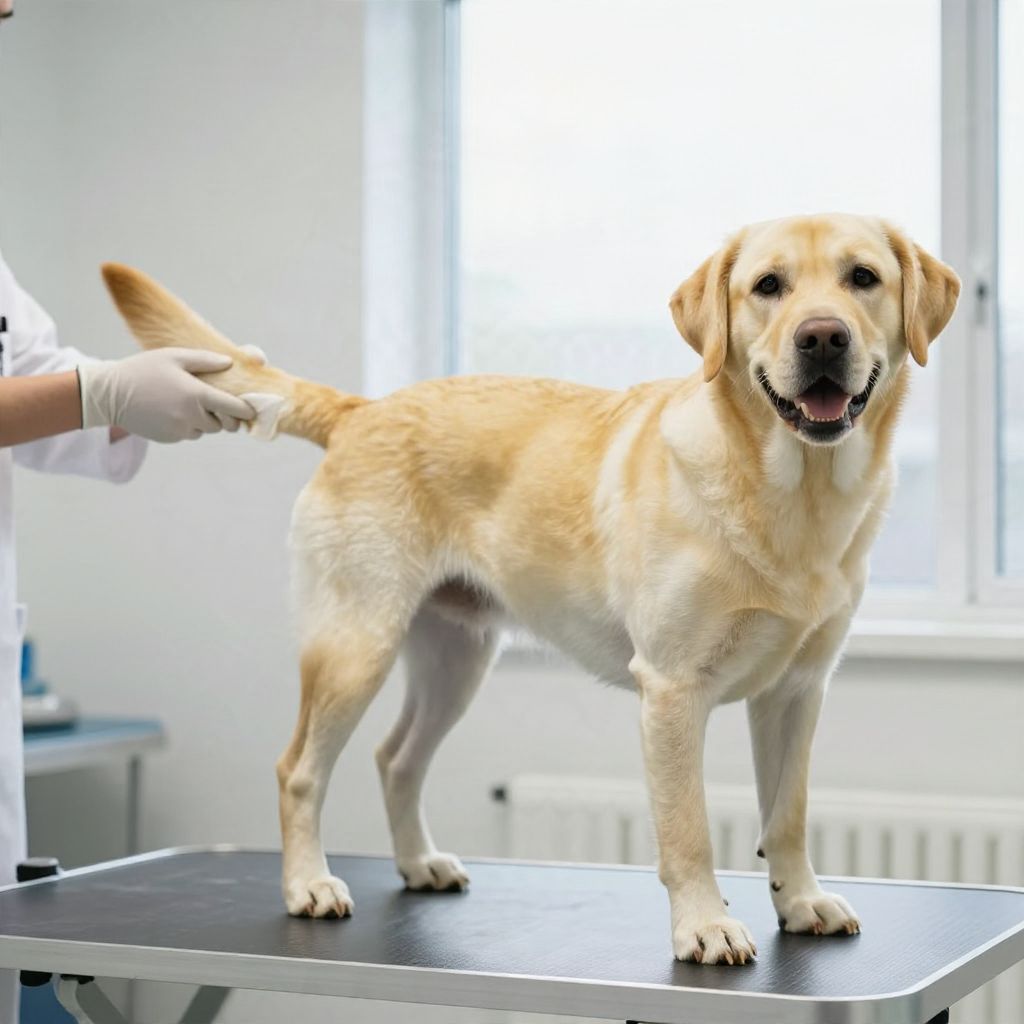
What is happy tail in dogs? It is a tail injury caused by repeated wagging against hard surfaces, often leading to a split, cut, or bleeding tip. The problem is painful and can keep reopening because dogs keep wagging, even when the tail is injured.
It most often affects active dogs with strong, fast tails, but any dog can develop it. If you notice bleeding, swelling, or your dog suddenly guarding the tail, it is time to take the injury seriously and contact your veterinarian.
What Is Happy Tail In Dogs?
Happy tail is a traumatic tail injury caused when a dog repeatedly hits the tail against walls, crates, furniture, or other hard objects. The skin at the tip or along the tail can split open, bleed, and heal poorly because wagging keeps reopening the wound.
How Happy Tail Happens
Dogs use their tails to communicate excitement, greeting, and alertness. In some dogs, especially those with long, strong, or powerful tails, enthusiastic wagging can act like a whip and strike nearby surfaces hard enough to injure the skin.
Common situations that can trigger it include:
- Narrow hallways or small rooms
- Crates with hard edges
- Furniture, walls, or door frames close to the tail
- Excitement during greetings or play
- Repeated wagging on a hard floor or kennel surface
Some dogs are more likely to develop happy tail because of their body build, tail length, energy level, or tendency to wag forcefully. That said, it is not limited to one breed, and individual habits matter a lot.
Signs Your Dog May Have Happy Tail
The earliest sign is often a small wound at the tail tip that keeps reopening. Because the tail moves so much, the injury can look minor at first and then suddenly become messy or painful.
Common symptoms
- Bleeding from the tail tip or side of the tail
- A visible cut, split, or scab that keeps breaking open
- Swelling or redness
- Your dog licking or chewing the tail
- Pain when the tail is touched
- Blood spots on walls, bedding, or floors
If the tail injury is severe, you may also notice your dog holding the tail still, avoiding wagging, or acting uncomfortable when sitting or lying down.
Why Happy Tail Needs Prompt Attention
Happy tail is more than a nuisance. The repeated trauma can make the wound deeper, increase pain, and raise the risk of infection. Tail injuries can also be difficult to manage at home because the dog’s natural movement keeps disrupting healing.
In some cases, a veterinarian may need to clean the wound, control bleeding, bandage the tail, or prescribe treatment for pain and infection prevention. Severe or chronic cases may require more intensive care.
When To Call The Veterinarian
You should contact your veterinarian if the wound is bleeding, swollen, painful, or not improving quickly. Even a small-looking cut can worsen if your dog keeps wagging and reopening it.
Seek urgent veterinary care right away if you see any of the following:
- Bleeding that will not stop
- Deep gashes or exposed tissue
- Severe swelling or obvious deformity
- Signs of infection such as pus, foul odor, or increasing redness
- Your dog seems very painful, lethargic, or unwilling to move
- The tail appears cold, pale, or damaged beyond the skin
Do not wait if the bleeding is heavy or your dog seems distressed. Tail wounds can look simple but become complicated fast.
What Treatment Usually Involves
Treatment depends on how deep the injury is and how much the tail continues to strike objects. A veterinarian may recommend cleaning the wound, trimming hair around it, protecting the area, and addressing pain or infection risk.
Possible veterinary steps
- Wound cleaning and assessment
- Bandaging or protective covering
- Instructions to limit tail movement and impact
- Medication for pain or infection, if needed
- Follow-up visits to monitor healing
Because every dog and wound is different, treatment should be guided by a veterinarian rather than guessed at home. Avoid using human medications unless your vet specifically instructs you to do so.
How To Help Your Dog Heal Safely
Once your veterinarian has examined the wound, your main job is to prevent repeated trauma and keep the area clean and protected. Healing often depends on reducing the tail’s contact with hard surfaces.
Helpful management steps
- Follow your veterinarian’s wound-care instructions exactly.
- Limit access to tight spaces, hard corners, and rough crate surfaces.
- Use soft bedding and create more room where your dog rests.
- Keep the tail area dry and monitor it daily for bleeding or swelling.
- Prevent licking or chewing if your veterinarian recommends an e-collar or other barrier.
Some owners try to wrap the tail at home, but a poor bandage can slip, trap moisture, or create more injury. If bandaging is needed, it should be done with veterinary guidance.
Preventing Happy Tail From Coming Back
Prevention focuses on reducing impact, especially in dogs that wag hard and often. If your dog has had happy tail once, the same pattern can happen again unless the environment changes.
Practical prevention ideas
- Move crates and beds away from walls and furniture edges
- Use padded crate supports or safer resting spaces when appropriate
- Give your dog more room in narrow areas
- Watch for overexcited greetings that lead to hard wagging
- Supervise high-energy play near hard surfaces
For some dogs, training calmer greeting routines can help reduce the force of wagging in tight spaces. Reward-based training is the safest approach. You can teach your dog to settle on a mat, wait at the door, or greet people in a less cramped area.
Common Mistakes To Avoid
Happy tail can be frustrating because the wound may seem minor but keeps reopening. A few common mistakes can slow recovery or make the problem worse.
- Ignoring repeated bleeding because the dog still seems happy
- Using harsh punishment for wagging or excitement
- Letting the dog keep bumping the tail against hard surfaces
- Applying unapproved ointments or medications
- Waiting too long to get veterinary help for a deep or painful wound
Remember that wagging is normal dog behavior. The goal is not to stop your dog from expressing happiness, but to protect the tail and manage the environment safely.
Is Happy Tail Painful For Dogs?
Yes, it can be painful, especially when the wound is fresh or repeatedly reopened. Dogs may not always show pain in obvious ways, so a wagging dog can still be uncomfortable.
Signs of pain can include flinching when touched, guarding the tail, avoiding sitting, becoming less active, or reacting strongly when the area is cleaned. If you suspect pain, veterinary care is important.
Can Happy Tail Heal On Its Own?
Small injuries may improve if the tail is protected quickly, but many cases do not heal well without intervention because the dog keeps hitting the same spot. Repeated trauma is the main reason happy tail becomes a persistent problem.
If the wound is not closing, keeps bleeding, or seems worse after a day or two, do not assume it will resolve on its own. A veterinarian should assess it.
What To Watch For After Treatment
Even after treatment, keep an eye on the tail for any sign that the wound is reopening. Early follow-up matters because a small setback can become a bigger problem if it is missed.
Contact your veterinarian if you notice:
- Fresh blood on the bandage or bedding
- Increasing redness or swelling
- Bad odor or discharge
- Your dog licking, chewing, or rubbing the tail
- The wound not improving as expected
Conclusion
Happy tail in dogs is a repetitive tail injury caused by hard wagging against surfaces, and it should be taken seriously because it often keeps reopening. If you see bleeding, swelling, or pain, contact your veterinarian promptly and make changes to your dog’s environment to help the tail heal.
If you want to learn more, you may also find this guide on happy tail in dogs helpful for additional background and practical prevention tips.